
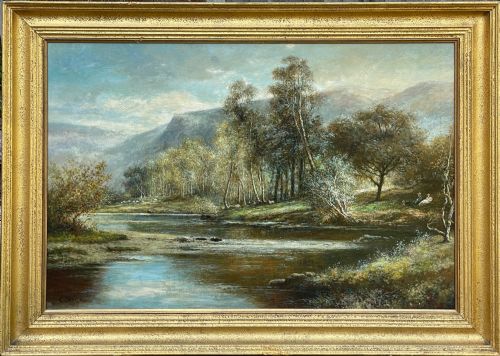


Traditional Nature Landscape Art
Traditional nature landscape art captures open countryside, rivers and woodland scenes through oil and watercolour.
Traditional Nature Landscape Art
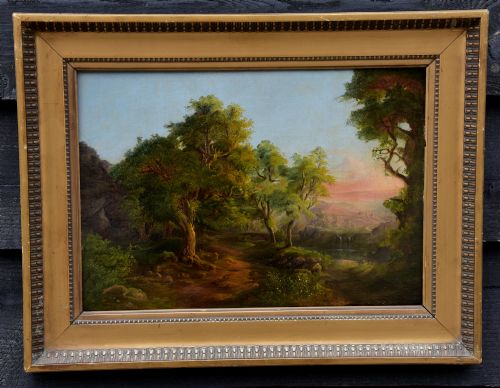
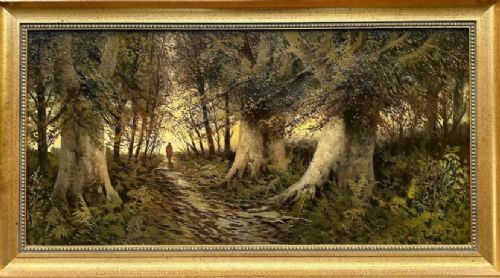
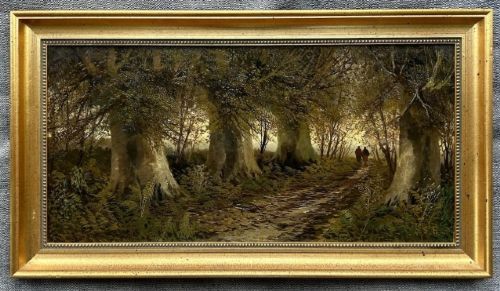
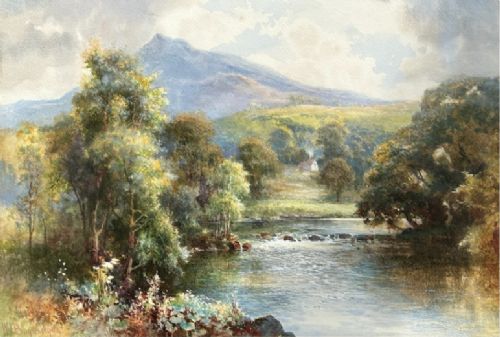
Traditional nature landscape art comprises paintings depicting rural views, rivers, woodlands and hills from the nineteenth and twentieth centuries. Works span the Victorian period through to the mid-twentieth century, recording British scenery from Wales and Scotland to English country lanes.
Buyers meet canvas paintings, board works and watercolours executed in styles ranging from Victorian naturalism and romanticism to British impressionism. Framed artworks showcase pastoral scenes, lochs and river valleys observed directly from nature.
Judging Quality
Quality rests upon the handling of light, atmosphere and perspective within the natural scene, alongside the sensitivity of brushwork in foliage and water. Stronger examples demonstrate confident draftsmanship and tonal balance across the canvas or paper.
The integration of the composition, the preservation of the original paint surface and the quality of the period framing contribute to the standing of an individual work.
Geese frequently paddle across river scenes, adding domestic life to quiet nineteenth century waters.
Thomas W Lascelles·William Joseph Boyes·William Mellor·George Arthur Fripp·William Langley·John Hobson Nicholson·Owen Bowen·James Kinnear·James Poole
The Traditional Nature Landscape Art Glossary
- Oil on Canvas
- Pigment suspended in drying oil applied to a woven fabric stretched over a wooden frame. This medium allowed artists to build rich textures and deep tones in landscape scenes.
- Watercolour
- Paint consisting of colour pigments suspended in a water-soluble binder, traditionally applied to paper. It permits delicate washes of light and translucent effects in river and hill views.
- Gouache
- An opaque water-based paint that includes a white pigment filler, creating a heavier matte finish than standard watercolour. Artists utilised this medium for solid colour blocks and bright highlights.
- Victorian Naturalism
- An artistic approach focusing on the detailed observation of the natural world without idealisation. Practitioners aimed to render flora, geology and light with botanical and topographical accuracy.
Traditional Nature Landscape Art: Frequently Asked Questions
What subjects appear in these landscapes?
Paintings show British countryside scenes, woodland paths, rivers, lochs and Welsh or Scottish hills. Many depict specific locations such as river glens and abbey views.
Artists focused on natural light, seasonal changes, and rural topography during the Victorian and Edwardian eras.
How do I care for antique watercolours?
Watercolour paintings require protection from direct sunlight to prevent the fading of delicate pigments on paper. Glazing with conservation glass helps shield the medium from ultraviolet light and ambient moisture.
Keep framed works away from damp walls and extreme temperature fluctuations to preserve the paper support.
How do I distinguish oil paintings from watercolours?
Oil paintings utilise thick pigments on canvas or board, creating visible brush texture and a reflective surface. Watercolours employ translucent washes on paper, usually displayed behind glass.
Oils are heavier and robust, whereas watercolours rely on the white of the underlying paper for luminosity.
Where were these landscape scenes painted?
Artworks record views across England, Scotland and Wales, capturing specific rural sites like the river Wharfe, Loch Lomond and Welsh river valleys. Painters worked outdoors or developed studio pieces from field sketches.
Topographical accuracy combined with atmospheric mood defined regional British landscape painting.