








Green Patinated Sculpture
Green patinated sculpture brings living history to your interior, capturing centuries of classical form, animalier movement, and modernist poise in rich bronze, spelter, and terracotta.

Green Patinated Sculpture
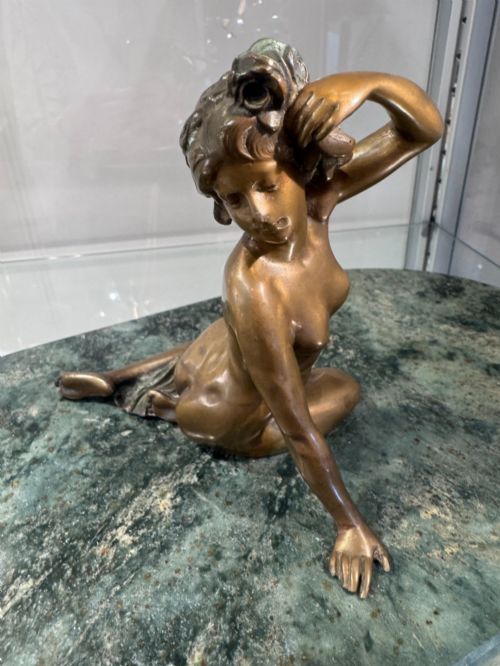
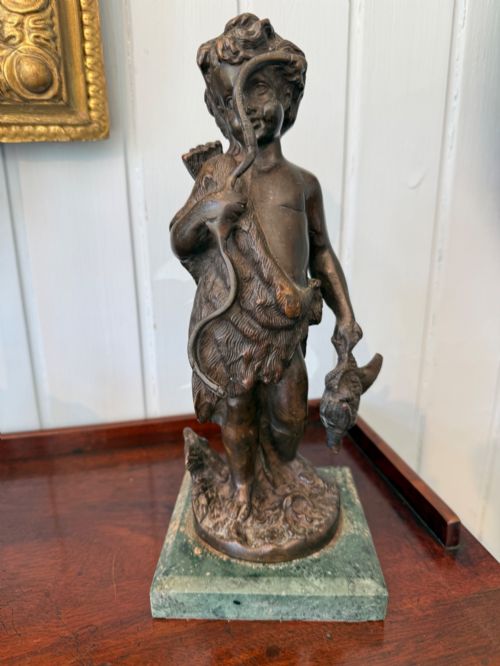
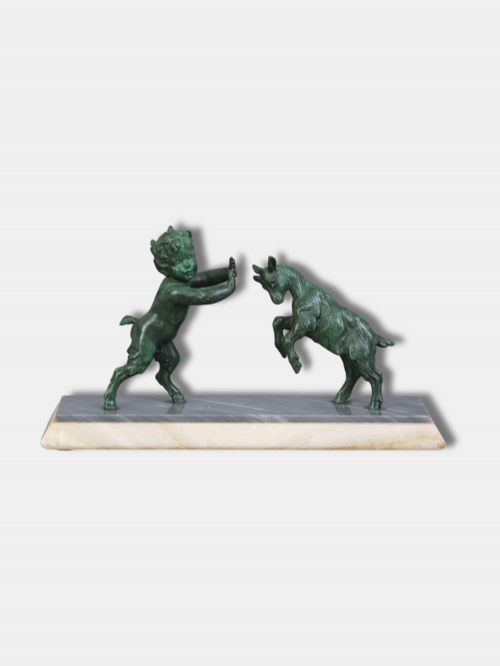
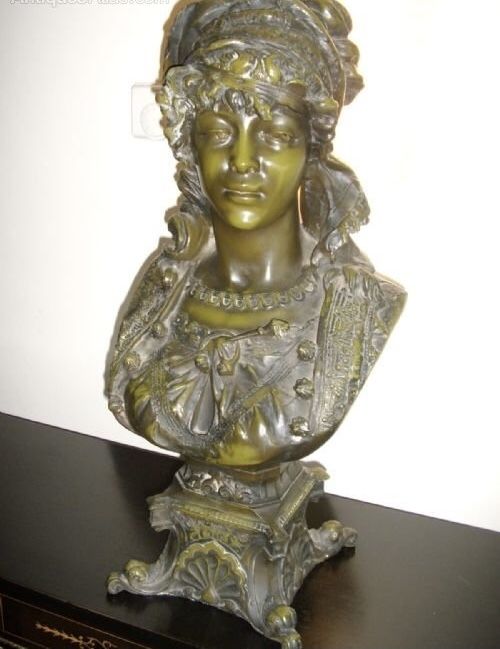
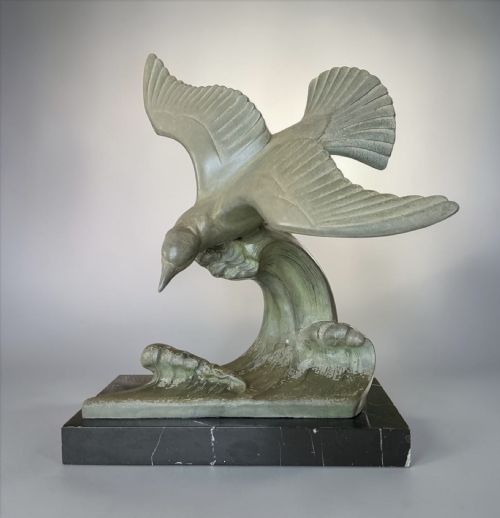
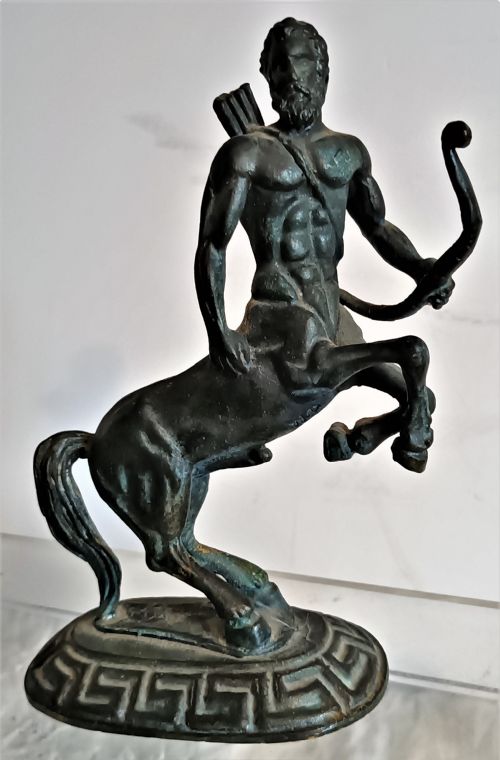
When searching for green patinated sculpture, buyers encounter a diverse range of figures, busts, and animals spanning the nineteenth century through the art deco era. The most common manifestations on this page are French animalier studies, grand tour antiquities, and decorative figures cast in bronze or spelter.
These pieces encompass various cultural traditions and stylistic movements, from Tibetan Buddhist deities and Japanese temple vases to neoclassical depictions of mythological figures. Forms range from miniature cold-painted frogs and cherubs to monumental busts and seated female figures resting on marble or onyx bases.
The aesthetic is defined by its distinct surface treatment, where verdigris and green tones give metal and terracotta the appearance of aged antiquity. Whether originating from an English Victorian workshop or an early twentieth century Parisian foundry, each piece captures a distinct moment in sculptural history.
How They Were Made
The primary material underpinning these works is cast metal, predominantly bronze and spelter, often paired with solid marble or onyx bases for structural stability. Artisans utilised traditional casting techniques, subsequently applying chemical treatments to produce the characteristic green patination or verdigris finish.
A tiny cold-painted bronze frog brings a touch of unexpected whimsy to a collection dominated by solemn classical busts and monumental deities.
What Varies in Quality
The distinction between tiers of work rests upon the crispness of the casting and the depth of the chisel work applied after the metal leaves the mould. Superior examples retain intricate details in hair, expression, and drapery, whereas lower grades exhibit softened contours and uniform surface textures.
The integration of the patination dictates the visual success of the piece, with chemical patinas that penetrate the metal scoring above simple surface paints. Furthermore, the quality of the supporting stone base, whether veined marble or polished onyx, correlates directly with the ambition of the original commission.
Josef Lorenzl·Emile Carlier·Henry Wissen Senior·P. Sega·Paul Édouard Delabrièrre·Antoine L Barye·Rene Andre Varnier·Willems·Elizabeth Anna Clapp·Auguste Moreau·Georges Van De Voorde·Jules Dalou·Susse Freres·Bruno Zach·Plagnet·E. Drouot
The Green Patinated Sculpture Glossary
- Patination
- The chemical or natural process that alters the surface colour of metal, producing the characteristic green tones seen on antique bronzes. This layer protects the metal while adding visual depth.
- Animalier
- A nineteenth century artistic movement focused on the realistic depiction of animals, particularly in motion. French sculptors popularised this genre through dynamic bronze castings.
- Grand Tour
- Souvenirs and miniature bronzes acquired by affluent travellers visiting classical sites in Italy and Greece during the nineteenth century. These pieces typically replicate ancient statues.
- Spelter
- A zinc-based alloy utilised as an economical alternative to bronze for decorative figures and clock garnitures. It is softer than bronze and often bears a bronze-coloured or painted finish.
- Verdigris
- A green crust or patina formed naturally on copper, brass, or bronze through atmospheric exposure. Makers often replicate this effect artificially to simulate ancient age.
Green Patinated Sculpture: Frequently Asked Questions
What is green patination?
Green patination is a chemical or natural surface layer on metal that mimics the effects of age and oxidation. It ranges from soft verdigris to deep olive tones.
This coloration highlights the contours and textures of sculpted figures, adding visual warmth and historical character to the material.
How do I clean a bronze sculpture?
Dusting gently with a dry, soft microfibre cloth is generally sufficient for regular maintenance. Avoid using harsh chemical cleaners or abrasive cloths that can strip the patina.
Applying a very light coat of microcrystalline wax by professionals can help protect the metal surface over time.
What is a grand tour sculpture?
Grand tour sculptures are smaller-scale replicas of classical antiquities produced in the nineteenth century. Wealthy travellers purchased them as souvenirs during educational tours through Italy and Greece.
Subjects frequently include mythological figures, ancient busts, and famous architectural models cast in bronze.
How can I tell bronze from spelter?
Bronze is a heavy, durable copper alloy that feels cold to the touch and rings clearly when tapped gently. Spelter is a softer zinc alloy that feels lighter and warms up more quickly.
Inspect the underside or areas of wear to see the base metal colour beneath the patination.