
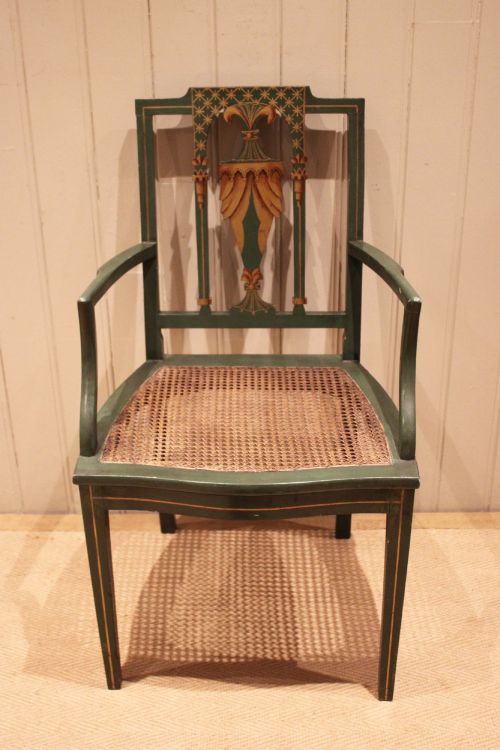
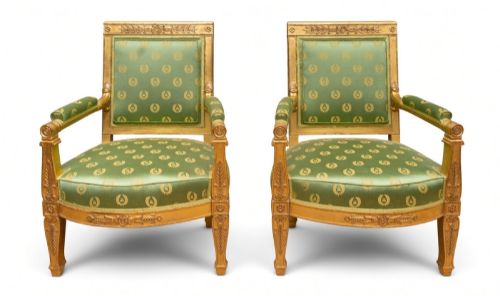
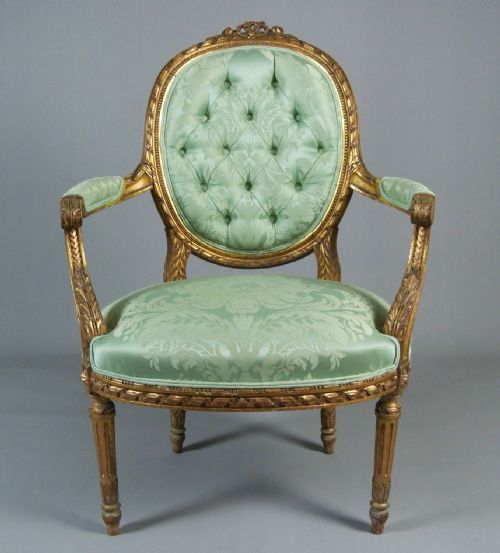
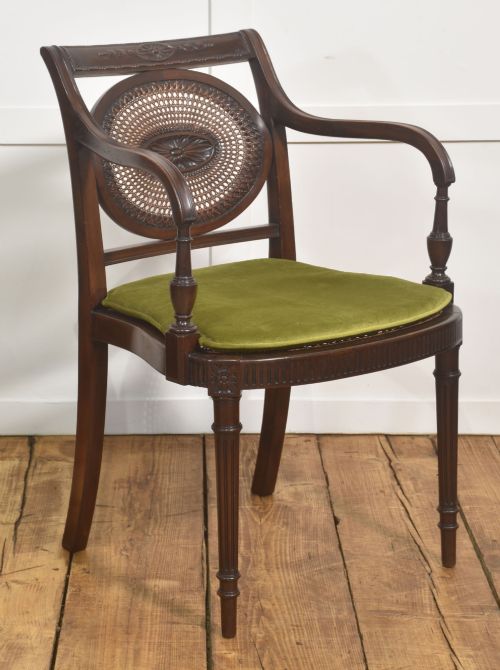
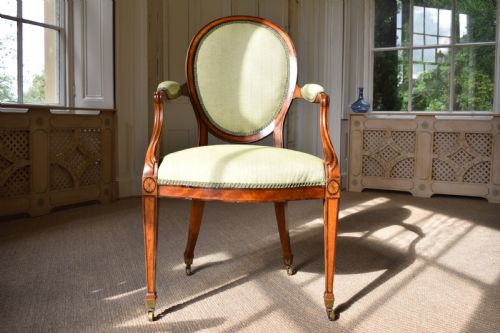


Green Neoclassical Armchair
A green neoclassical armchair brings together disciplined classical lines and rich upholstery, offering a striking seat for any traditional interior.
Green Neoclassical Armchair
When you search for a green neoclassical armchair, you find seating defined by restrained classical motifs, straight or tapered legs, and verdant upholstery. The pieces on this page span from the eighteenth century through the early twentieth century, encompassing both original period examples and later revivals.
Origins vary across English, French, and Swedish workshops, reflecting regional variations in neoclassical design. Whether upholstered in silk velvet or woven fabric, each green neoclassical armchair relies on balanced proportions and refined carving for its visual impact.
How they were made
Carpenters and cabinet makers shaped these frames from dense hardwoods such as mahogany, walnut, and birch, often finishing them with giltwood or painted surfaces. Joinery relied on traditional mortise and tenon techniques to ensure the structural integrity of the open arms and raked backs.
Upholstery methods involved webbing, stuffing, and stitching layers of horsehair or natural fibres before applying the final velvet, tapestry, or woven fabric covering. Details like brass tacks, cane panels, and hand-carved classical details completed the construction.
What varies in quality
The distinction between ordinary and exceptional examples lies in the crispness of the wood carving and the integrity of the original frame structure. Superior pieces display deeply defined classical ornament and tight, uncompromised joinery that has survived generations of use.
Material selection also dictates overall grade, with finely figured mahogany, genuine giltwood, and period textiles elevating a piece above standard painted or later revival variants. The harmony between the architectural frame and its upholstery determines the lasting presence of the chair.
Jacob Desmalter·Thomas Chippendale
The Green Neoclassical Armchair Glossary
- Fauteuil
- An open-framed upholstered armchair originating in France, typically featuring exposed carved wood armrests and legs. These chairs were designed for formal reception rooms.
- Neoclassical
- A style spanning the mid-eighteenth to early nineteenth centuries that drew inspiration from the classical art and architecture of ancient Greece and Rome. It prioritises symmetry, straight lines, and understated ornamentation.
- Giltwood
- Timber coated with a thin layer of gold leaf or gesso and gold paint. This technique added brilliant reflective highlights to ceremonial and high-status seating.
- Cane
- Woven rattan or split plant material used to form light, breathable panels for chair backs and seats. It became particularly popular during revival periods.
- Hepplewhite
- A late eighteenth-century English furniture style associated with graceful curves, shield backs, and tapered legs. George Hepplewhite's published designs heavily influenced subsequent cabinet makers.
Green Neoclassical Armchair: Frequently Asked Questions
How do I identify a neoclassical armchair?
Look for straight tapered legs, geometric symmetry, and carved motifs derived from classical architecture like fluting and paterae. These design elements distinguish the style from the curving exuberance of earlier rococo furniture.
Proportions remain balanced and restrained, with rectilinear or oval backs providing a clear architectural silhouette.
Are these armchairs comfortable for daily use?
Most period and revival armchairs offer a supportive, upright seat designed for parlour or library use rather than deep lounging. The firm stuffing characteristic of traditional upholstery keeps the sitter in an upright posture.
Using a supportive footstool or adding a matching scatter cushion can increase comfort for modern reading habits.
How do I care for antique wood and fabric?
Keep wooden frames away from direct sunlight and radiators to prevent the timber and giltwood from drying out and cracking. Dust regularly with a dry, soft cloth rather than using harsh liquid polishes.
Protect upholstered velvet and fabric sections by gentle vacuuming with a soft brush attachment and professional cleaning when necessary.
What is the difference between original and revival pieces?
Original pieces date from the specific historical period of the design, such as the eighteenth or early nineteenth century. Revival pieces were manufactured later, often during the late nineteenth or early twentieth centuries, copying earlier aesthetics.
Both categories utilise traditional hand-craftsmanship, but original period examples carry greater historical age.