


Classical Painted Chair
A classical painted chair brings architectural lines and decorated surfaces into a room, offering elegance alongside practical seating.
Classical Painted Chair
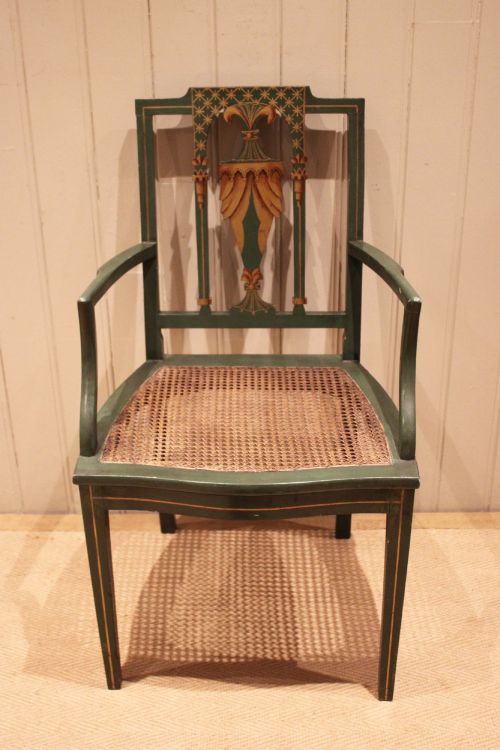
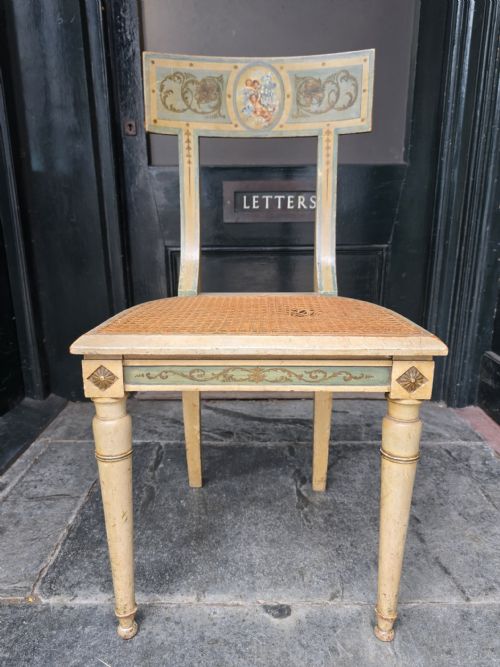
A classical painted chair draws upon historical design movements such as Regency, Neoclassical, and Louis XVI revival styles. These seating pieces combine structured wooden frames with decorative painted or gilt finishes, creating visual lightness compared to heavy dark timber.
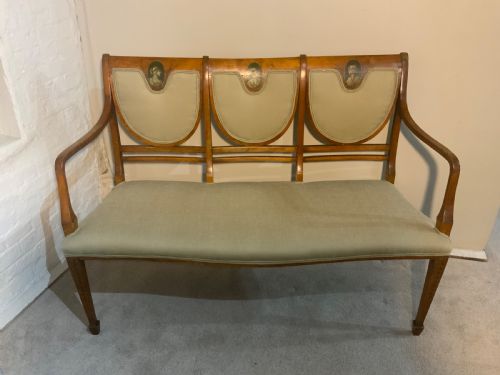
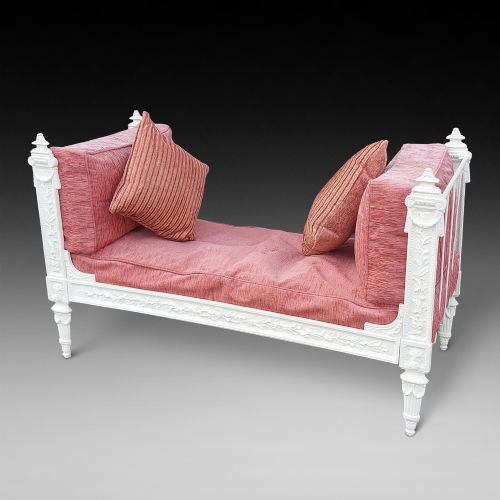
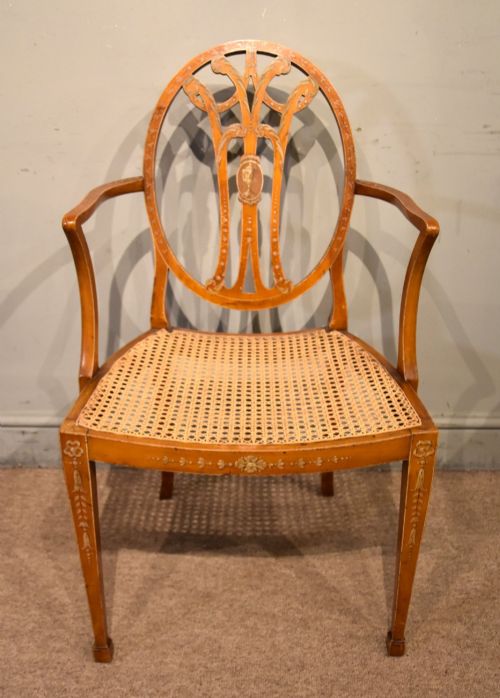
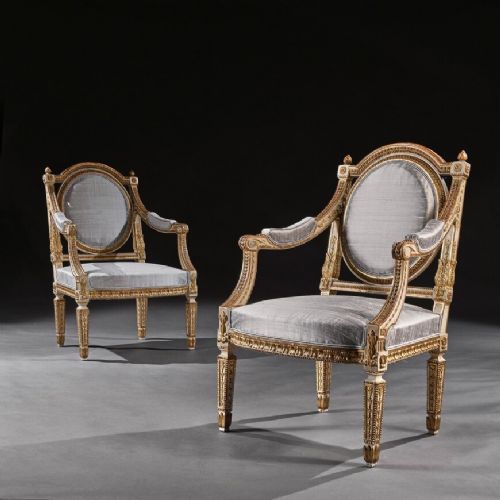
The selection ranges from single armchairs and side chairs to sets of dining chairs, alongside associated forms like settees, daybeds, and window seats. Buyers most frequently encounter nineteenth century examples, including painted satinwood pieces and ebonised elbow chairs with decorative motifs.
Origins span British, French, and Italian workshops, reflecting diverse regional interpretations of classical antiquity. Whether cane seated or upholstered in fabric, each piece relies on painted decoration to define its character.
Materials and Construction
Wood serves as the primary structural foundation, with cabinetmakers utilising standard timber alongside fine satinwood for specific decorative grain effects. Frames are shaped through traditional joinery techniques to create chair backs, arms, and structural supports.
Surface decoration relies heavily on paint, parcel gilt, and ebonisation applied directly to the wood. Caning provides a lightweight seat option in several designs, while other pieces incorporate fabric upholstery or brass details.
Italian and French makers frequently employed parcel gilding over painted surfaces to highlight carved classical details. Paint layers range from simple monochrome treatments to intricate hand-painted motifs.
Listings feature wood, paint, satinwood, giltwood, fabric, cane, and brass across nineteenth century and early twentieth century periods.
Evaluating Quality and Execution
The refinement of the painted surface and the crispness of the carved or turned details dictate the standing of a piece. Superior examples display careful brushwork and harmonious proportions that reflect academic adherence to classical design principles.
The integrity of the underlying wooden frame and the survival of original decorative finishes determine the overall substance. Pieces retaining their initial painted schemes command greater interest than those subjected to later redecoration.
The Classical Painted Chair Glossary
- Satinwood
- A durable timber featuring a lustrous, golden-yellow grain utilised extensively for high-status furniture in the eighteenth and nineteenth centuries.
- Giltwood
- Timber treated with gold leaf or gold paint to create a metallic decorative surface. It often highlights specific carved elements on classical seating.
- Caning
- Woven rattan or split cane material utilised to create lightweight and flexible seat panels. This technique appears frequently on nineteenth century painted chairs.
- Neoclassical
- A design style inspired by the art and architecture of classical antiquity, characterised by symmetry, straight lines, and classical motifs.
Classical Painted Chair: Frequently Asked Questions
How do I clean a painted chair?
Dust the surface regularly with a soft, dry cloth to prevent dirt accumulation. Avoid harsh chemical cleaners that can damage the delicate painted finish.
Test any conservation products on a hidden area before general application. Professional advice should be sought for significant conservation work.
Can these chairs be used daily?
Most sturdy nineteenth century frames remain suitable for regular use when placed on even flooring. Lighter caned seats require mindful weight distribution to prevent breakage.
Dining chairs and armchairs function well in reception spaces or studies. Rotating seating usage helps preserve fragile historic structures over time.
Are painted chairs fragile?
The structural stability depends on the underlying timber joinery and the condition of the wood. Well-maintained frames handle normal seating pressures without difficulty.
The primary vulnerability lies in the surface paint and gilt layers rather than the frame itself. Careful handling prevents chipping and surface abrasion.