







Green Marble Statue Base
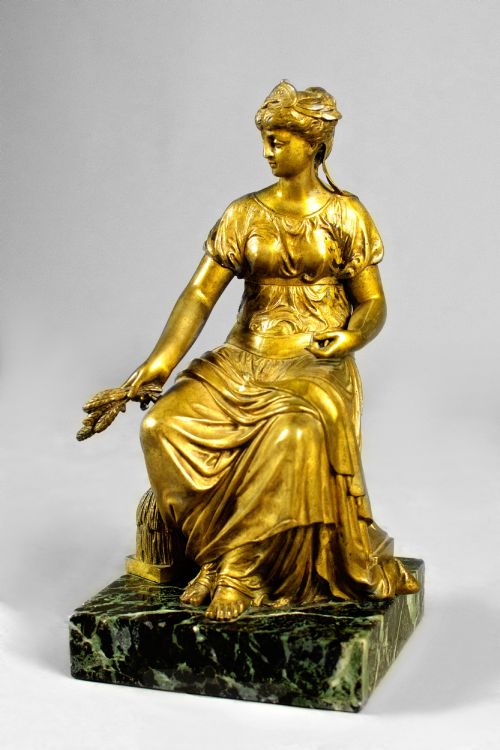
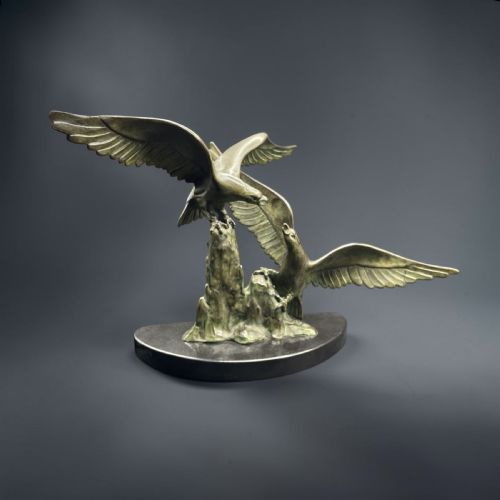
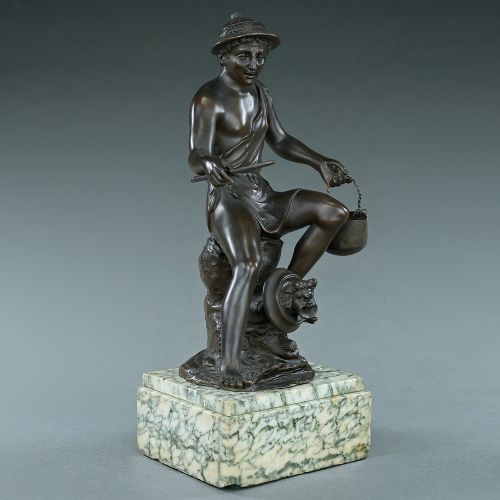
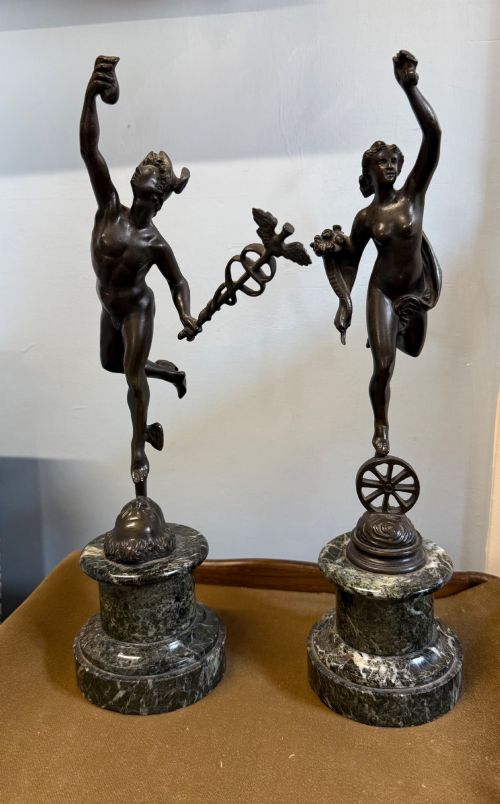
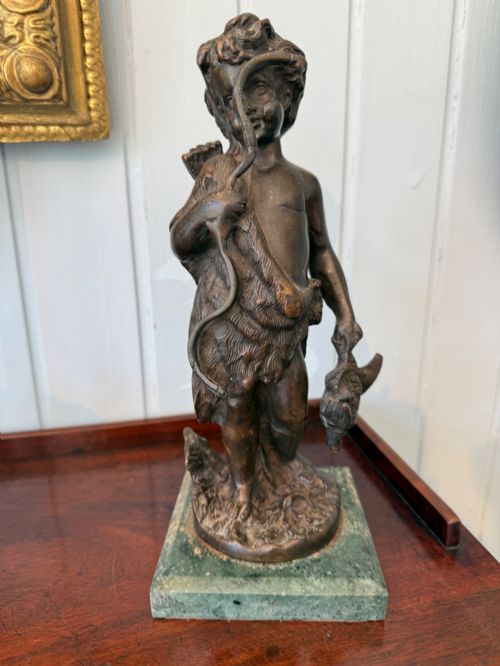
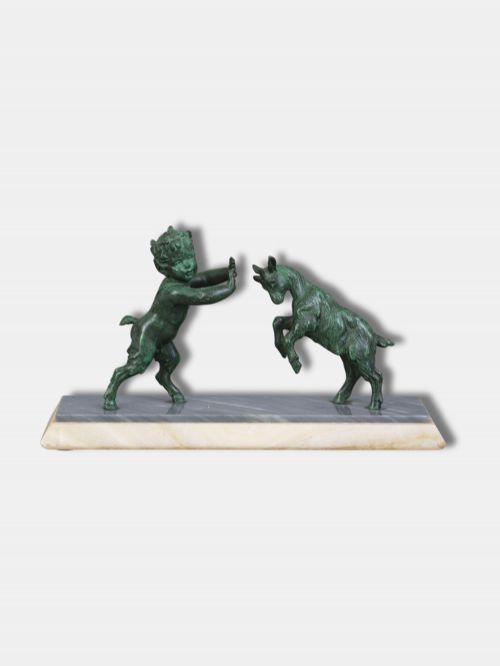
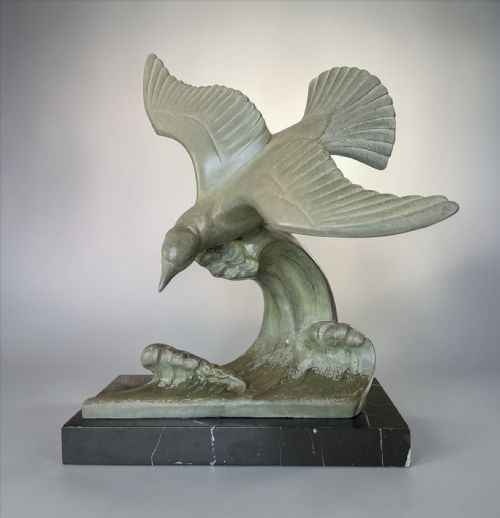
A green marble statue base grounds a bronze or spelter figure, elevating nineteenth-century classical studies and twentieth-century modernist works alike.
Green Marble Statue Base
A green marble statue base supports figurative sculptures, animal bronzes, and architectural reductions originating mainly from nineteenth-century and early twentieth-century French and Italian workshops. When you search for a green marble statue base, you find plinths, socles, and integrated mounts that carry subjects ranging from classical deities and Grand Tour souvenirs to Art Deco dancers and animalier studies.
The objects on this page pair dense stone plinths with metal figures cast in bronze, spelter, or brass, sometimes finished with cold-painting, silvering, or gilt. These mountings function as architectural footings that frame the sculpture above, utilising polished stone surfaces to contrast with textured patinated metals.
The most common versions combine dark green or variegated vert de mer marble with patinated bronze figures dating across the Victorian, Art Nouveau, and Art Deco periods. Such pieces reflect European domestic display traditions where stone plinths stabilized top-heavy metal sculptures on desks, mantelpieces, and pedestals.
How they were made
The stone bases are cut, turned, or slabbed from natural marble and onyx blocks, then ground and polished to a smooth finish to expose the crystalline structure of the mineral. Metal figures mounted upon them are cast using traditional lost-wax or sand-casting methods in bronze, brass, or zinc-alloy spelter.
Makers finished these metal components with chemical patination, cold-painted polychrome details, or electroplated gilding before securing the sculpture to the marble base via threaded rods, pins, or screws running through the stone.
Green Marble Statue Base Retail Price Guide 2026
Typical asking prices for green marble statue base among the pieces listed under this phrase on Sellingantiques today, from the lower quarter to the upper quarter. They describe what is for sale here now, not the wider market.
Several figures abandon human dignity entirely to take the form of theatrical birds, dancing cats, and playful demons.
What varies in quality
Quality depends upon the harmony between the stone selection and the metal sculpture, where finely figured green marble with rich veining complements a crisply chased and deeply patinated bronze casting. Lesser examples pair hastily quarried, dull stone with softer spelter figures showing blurred surface details and heavy painted masking.
The precision of the mechanical fit between the sculpture's base and the marble platform dictates the structural integrity of the piece, distinguishing workshop productions intended for high-end urban interiors from mass-market decorative goods.
Eutrope Bouret·Emile Carlier·E. Drouot·Franz Bergman·Josef Lorenzl·Pierre le Faguays
The Green Marble Statue Base Glossary
- Vert de Mer
- A dark green European marble featuring distinctive pale veining. This stone was frequently utilised for architectural ornaments and sculpture bases during the nineteenth century.
- Spelter
- A zinc alloy used as a less costly alternative to bronze for figurative sculptures. It is often patinated to imitate bronze but remains softer to the touch.
- Grand Tour
- A cultural journey undertaken by nineteenth-century Europeans seeking classical antiquities and souvenirs. Bronzes and marble bases from this tradition emulate ancient Roman and Greek models.
- Cold-painted bronze
- A technique where natural paint is applied to a bronze casting without heat firing. This finish appears on twentieth-century figures and animalier subjects.
- Clock garniture
- A set comprising a mantel clock flanked by matching ornamental pieces. These sets often share coordinated marble and metal bases.
Green Marble Statue Base: Frequently Asked Questions
What periods do these pieces date from?
The listings span the nineteenth century and the early decades of the twentieth century, encompassing Victorian, Art Nouveau, and Art Deco design movements.
Production dates cluster around the late 1800s for Grand Tour and classical revival works, and the 1920s and 1930s for modernist animal and human figures.
How were these stone and metal pieces combined?
Foundry workers secured metal figures to the stone using threaded iron bolts or pins that pass straight through the marble base. This mechanical attachment anchored heavy bronze and spelter sculptures securely to prevent tipping.
Felt or cloth pads were frequently added underneath the marble slab to protect furniture surfaces from scratching.
How should I clean a green marble base?
Dust the stone regularly with a soft, dry cloth to prevent grit accumulation on the polished surface. Avoid abrasive cleaners, acidic solutions, or excessive water, which can dull the polish or seep into unsealed fissures.
Metal figures mounted on the stone require separate care appropriate to their specific finish, such as cold paint or patinated bronze.
How do I distinguish bronze from spelter?
Bronze is a heavy copper alloy that develops a warm, durable metallic patina and rings with a clear tone when tapped gently. Spelter is a softer zinc alloy that feels lighter, shows duller grey metal where surface finishes wear thin, and dents more easily under pressure.