

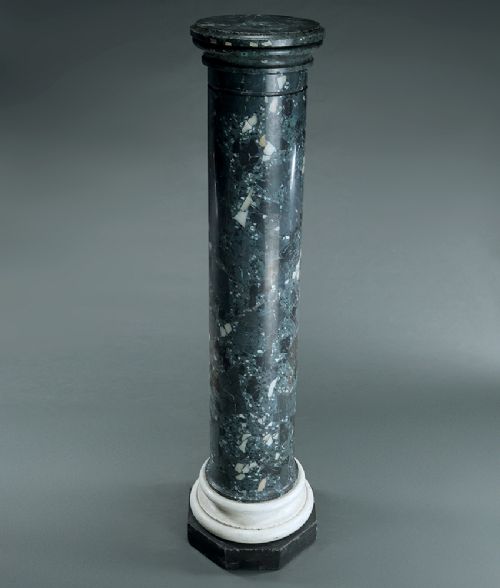


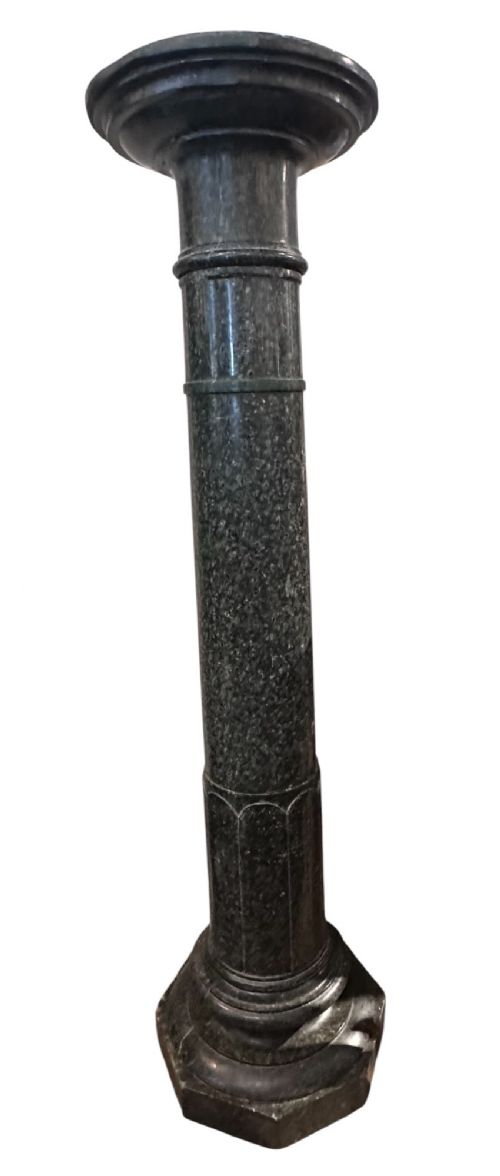
Green Marble Display Stand
A green marble display stand elevates sculpture or plants with classical presence, bringing weighty stone into a room.
Green Marble Display Stand
A green marble display stand is a heavy structural form built to elevate objects, most frequently seen as columns, pedestals, and torchères originating from the nineteenth century. These architectural pieces often take inspiration from Neoclassical and Louis XVI styles, reflecting French and Italian craftsmanship.
Most examples date across the Victorian era up to the early twentieth century, offering sturdy platforms designed originally for statuary or boudoir display.
Materials and construction
Makers shaped solid blocks of serpentine and Verde Antico marble into smooth cylindrical or fluted columns, sometimes utilising scagliola to achieve rich green decorative surfaces. Stone cutting and polishing demanded considerable skill to finish heavy mineral blocks without cracking.
French and Italian workshops combined carved stone with giltwood or cast gilt bronze details, accentuating the capitals and bases of columns with metallic contrast. These mixed-media pieces relied on secure internal dowelling and robust joinery to support the substantial weight of the stone shafts.
Green Marble Display Stand Retail Price Guide 2026
Typical asking prices for green marble display stand among the pieces listed under this phrase on Sellingantiques today, from the lower quarter to the upper quarter. They describe what is for sale here now, not the wider market.
Some nineteenth-century columns secretly wished they were holding up a Roman temple rather than a potted fern.
Assessing quality and finish
Quality rests upon the selection and consistency of the green marble veining, alongside the precision of the turning and carving in the stone shaft. Finer pieces demonstrate crisp detail in the capital and base, whether carved directly into the marble or cast in gilt bronze.
The integration of secondary materials like giltwood separates standard architectural forms from more ambitious decorative commissions. Superior examples maintain structural integrity across heavy joints while preserving a rich, polished mineral surface.
The Green Marble Display Stand Glossary
- Verde Antico
- An ancient dark green serpentine breccia marble prized for its mottled appearance. It was frequently revived by nineteenth-century Italian and French makers for classical columns.
- Scagliola
- A composite material made from selenite, glue, and pigments, mimicking natural marble. Craftsmen applied this technique to achieve complex decorative surfaces on columns and pedestals.
- Torchère
- A tall ornamental stand originally designed to carry a candle or light. In nineteenth-century interiors, these functioned primarily as pedestals for small sculptures and urns.
- Neoclassical
- A style drawing inspiration from the classical art and architecture of ancient Greece and Rome. It defines the clean fluted columns and symmetrical geometry seen across these pedestals.
Green Marble Display Stand: Frequently Asked Questions
What were green marble display stands used for?
These tall stands served primarily to elevate sculptures, bronze figures, or large ceremonial vases within nineteenth-century drawing rooms and halls. By raising art pieces to eye level, they created a focal point in domestic interiors.
They also functioned as plant stands or torchères for decorative lighting, combining architectural authority with practical display surfaces in grand homes.
How do I style a pedestal at home?
A stone column works best as a standalone architectural element in a corner, hallway, or flanking a fireplace. Placing a single bronze figure, bust, or heavy ceramic vessel on top completes the traditional display arrangement.
Ensure the weight of the placed object matches the robust load-bearing capacity of the marble shaft and base to maintain visual and physical balance.
How can I tell a nineteenth-century column apart?
Nineteenth-century pieces often display specific regional characteristics, such as Italian Verde Antico turning or French Louis XVI gilt bronze mounts. Examining the joinery beneath the capital and the weathering of the marble reveals the age of the stone.
Most examples date between the eighteen-sixties and nineteen-10, showing hand-finished turning marks and traditional material combinations unique to that period.
Are these stands made of solid stone?
Many columns and pedestals feature solid blocks of serpentine or Verde Antico marble, while others incorporate internal support structures to manage the immense weight. Scagliola examples use a composite plaster mix over a core to imitate solid stone.
Metal mounts in gilt bronze or wooden elements in giltwood are usually applied separately to the capitals and plinths of the marble shafts.