





Nineteenth Century Marble Stand
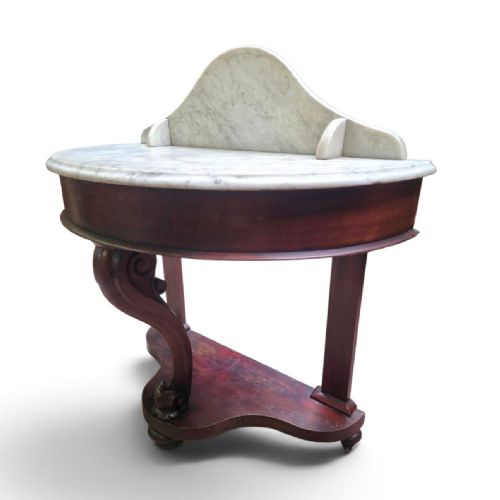
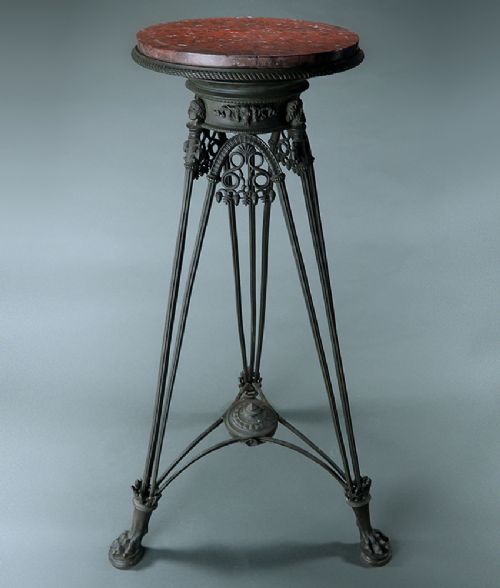
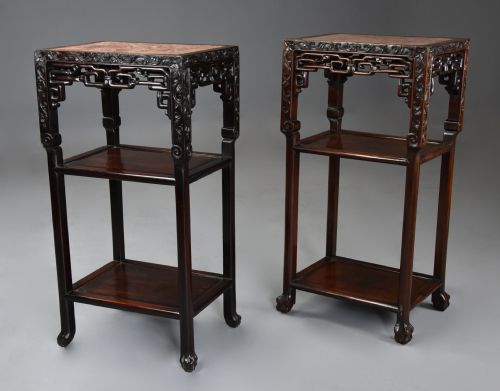
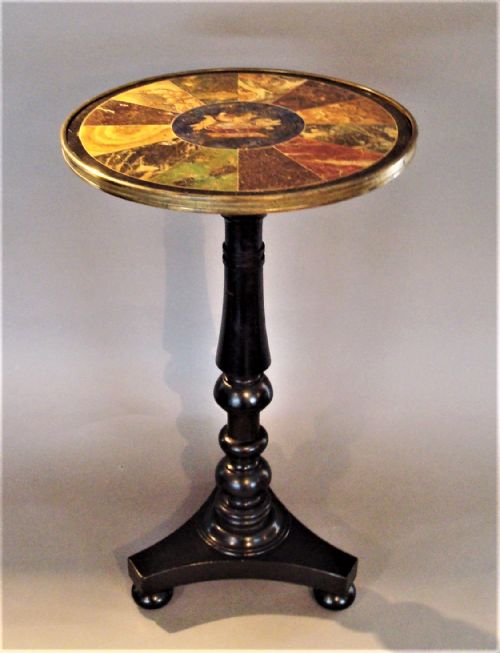
These nineteenth century marble stand examples range from French guéridons to Chinese hardwood plant supports, offering sturdy display surfaces suited for sculpture and foliage alike.
Nineteenth Century Marble Stand
A nineteenth century marble stand encompasses a diverse group of domestic furnishings designed primarily to elevate decorative objects, plants, or desk accessories. The selection spans cylindrical columns, guéridons, tripod occasional tables, and carved plant supports.
Origin points divide broadly between European workshops and Chinese export production, drawing on styles from Neoclassical and French Empire to Qing Dynasty aesthetics.
The most prevalent formats on this page combine natural stone tops with hardwood, brass, bronze, or cast iron structures, functioning as jardinière tables, pedestals, or side tables.
Materials and Construction
Makers utilised heavy natural stones including white carrara, verde antico, and rouge marble, cut and polished to form flat tops or recessed inserts for vessels.
Structural frameworks combine carved hardwoods, mahogany, walnut, and rosewood with cast metals such as brass, bronze, and ormolu, employing traditional joinery and metal-mounting techniques.
Nineteenth Century Marble Stand Retail Price Guide 2026
Typical asking prices for nineteenth century marble stand among the pieces listed under this phrase on Sellingantiques today, from the lower quarter to the upper quarter. They describe what is for sale here now, not the wider market.
Several stands feature serpentine stone bases originally intended to survive the enthusiasm of heavy nineteenth century indoor palm trees.
Craftsmanship and Proportion
Quality rests in the precision of the stone cutting, the weight and thickness of the marble slab, and the stability of its junction with the base.
Finely cast ormolu mounts, intricate hand-carved hardwood details, and harmonious proportions between the supporting column and the upper surface distinguish the finer examples from standard production.
Georges Van Der Straeten·Negretti and Zambra
The Nineteenth Century Marble Stand Glossary
- Guéridon
- A small French table, often round, supported by a central column or tripod base. It typically serves for holding lamps, small sculptures, or decorative items.
- Jardinière
- A decorative stand or container designed to hold plants or floral arrangements. They frequently incorporate waterproof stone or marble inserts.
- Ormolu
- Gilded bronze mounted onto furniture or decorative objects during the eighteenth and nineteenth centuries. The technique involves applying a mercury and gold amalgam to bronze.
- Qing Dynasty
- The final imperial dynasty of China, spanning the seventeenth to early twentieth centuries. Pieces from this era often display intricate carved hardwood frames.
Nineteenth Century Marble Stand: Frequently Asked Questions
What were nineteenth century marble stand pieces used for?
These pieces served as functional surfaces in period interiors for displaying potted plants, bronze sculptures, heavy table lamps, and desk accessories.
Their solid stone tops provided protection against moisture from foliage and stability for heavy sculptural objects.
How do I identify French Empire from Chinese export styles?
French Empire and Neoclassical designs typically feature mahogany, ormolu mounts, and classical architectural columns derived from Greco-Roman forms.
Chinese export pieces rely on carved dense hardwoods like rosewood or huanghuali, incorporating inset marble panels and organic motifs.
How do I care for antique marble tops?
Clean the stone surface using a soft, damp cloth with neutral soap, avoiding acidic cleaning agents that etch polished calcium carbonate.
Apply a microcrystalline wax periodically to protect the polish from moisture rings and stains.
Are these stands suitable for heavy sculptures?
Many of these stands were specifically engineered to bear heavy loads, utilising robust cast iron, solid bronze, or dense hardwood frameworks.
Pedestals and columns offer the highest weight capacity for large stone or bronze figures.