


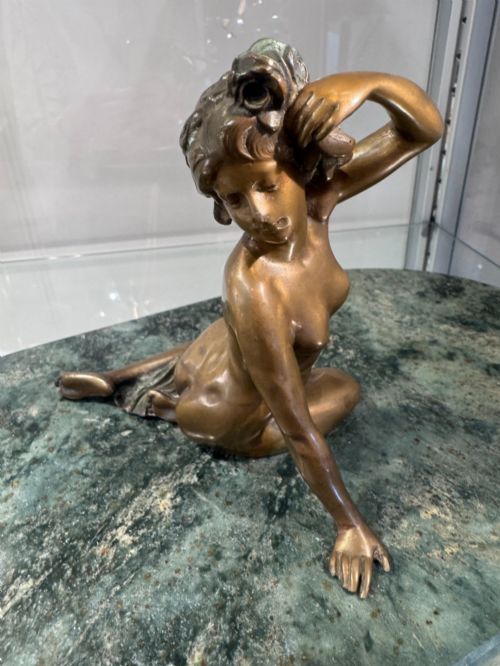
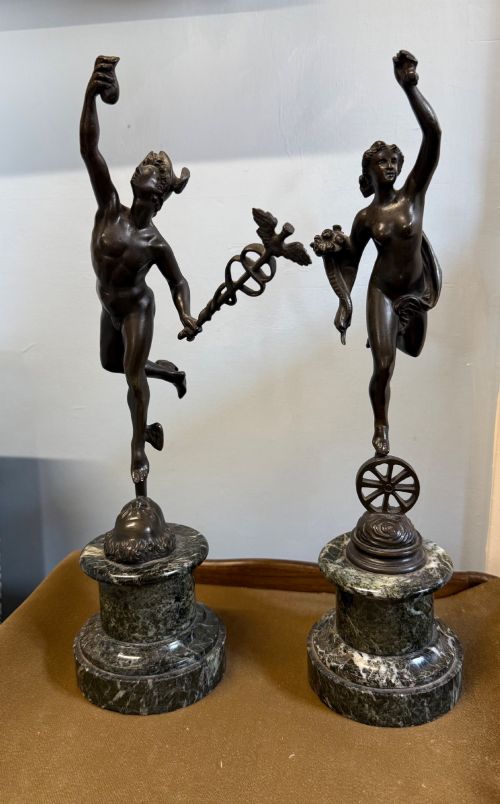
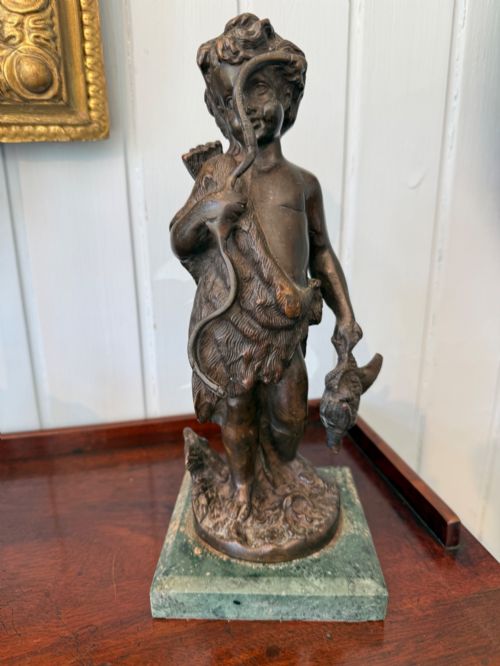
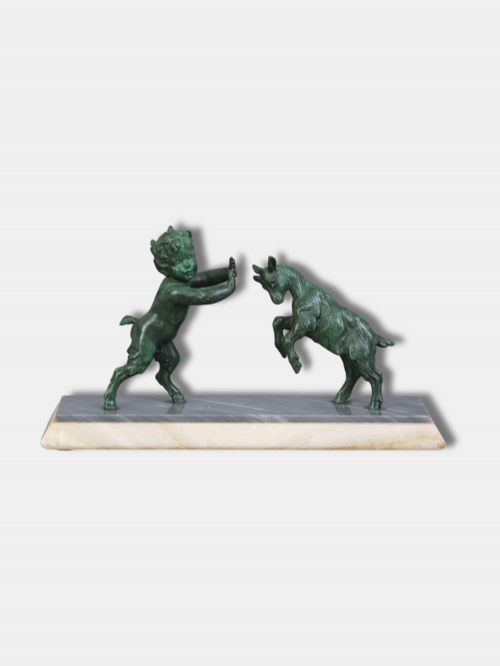




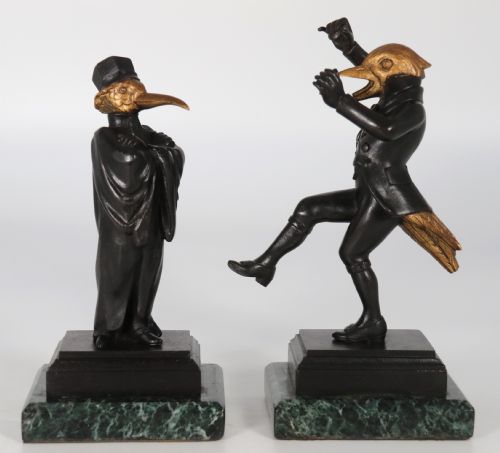
Green Marble Bronze Figure
These pieces combine cast metal figures with stone bases, and a green marble bronze figure brings weight and classical contrast to a mantelpiece or desk.
Green Marble Bronze Figure
A green marble bronze figure brings together cast metalwork and polished stone bases, uniting figurative sculpture with architectural support. When searching this phrase, buyers encounter works ranging from compact desk ornaments to grand mantel centrepieces created across the nineteenth and early twentieth centuries.
The assortment spans diverse aesthetic movements, including Neoclassical reductions of classical antiquities alongside French Animalier studies of wildlife. Art Deco dancers and Art Nouveau female forms also appear frequently, often mounted directly onto variegated stone plinths.
Makers utilised these contrasting materials to elevate the visual presence of each subject, whether depicting mythological deities, historical figures or naturalistic animals. The resulting objects function simultaneously as independent works of sculpture and as decorative accessories for period interiors.
How They Were Made
Foundry workers cast the metal components using traditional methods, most notably the lost-wax technique, before finishing the surfaces with patination, cold-painted enamel or gilt. This process allowed artisans to capture fine details in hair, drapery and musculature.
Stonemasons cut and polished the supporting plinths from natural mineral blocks, selecting varieties that displayed rich veining and colour variation. Bronze figures were then secured to these heavy bases via threaded rods or pinned fixings to ensure stability.
Listings feature nineteenth-century and early twentieth-century pieces incorporating bronze, spelter, marble and onyx across Art Deco and Neoclassical styles.
What Varies in Quality
The refinement of the chasing work dictates the clarity of expression and texture across the metal surface after casting. Master founders spent additional hours hand-tooling details that lesser workshops left soft or indistinct.
The selection and preparation of the stone base reveal much about the standard of production. Uniform polishing, tight joins and harmonious mineral patterns distinguish superior examples from utilitarian mounts.
Charles Louis Malric·Susse Freres·Emile Carlier·Jules Bonheur·Reiche·E Drouot·Delabrierre·Gotthilf Jaeger·F De Luca·P Sega·Paul Edouard Delabriere·C Masson·Antoine L Barye·Rene Andre Varnier·Willems·Ferdinand Preiss·Josef Lorenzl·Franz Bergman
The Green Marble Bronze Figure Glossary
- Bronze
- An alloy of copper and tin traditionally used for casting durable sculptures. It takes patination well and accepts fine surface detail.
- Spelter
- A zinc-based alloy utilised as an economical alternative to bronze. It is softer and often heavier than copper alloys.
- Patina
- The surface sheen and coloration developed through oxidation or chemical treatment over time. Collectors value authentic aged finishes.
- Animalier
- A nineteenth-century artistic genre focused on realistic depictions of animals. Practitioners specialised in capturing dynamic movement in motion.
- Grand Tour
- Souvenirs and classical reductions collected by travellers in Italy during the nineteenth century. These objects emulate ancient Roman and Greek sculpture.
Green Marble Bronze Figure: Frequently Asked Questions
Are these pieces heavy?
The combination of dense metal alloys and solid stone plinths results in substantial weight for most sculptures. Larger examples require sturdy furniture capable of supporting concentrated loads.
Lighter alternatives often incorporate spelter rather than bronze, though the stone bases still contribute significant heft.
How can I tell the period?
Stylistic indicators such as Neoclassical drapery or Art Deco geometric lines provide the initial chronological framework. Foundry marks and artist signatures cast into the base offer further documentary evidence.
Examining the underside reveals construction methods, screw types and the ageing characteristics of the metal.
Where should I display them?
Place figures away from direct sunlight and excessive humidity to protect patinated surfaces and painted details. Stable mantelpieces, sideboards and dedicated display cabinets provide secure environments.
Ensure the placement allows adequate light to catch the contours of the casting and the veining of the stone.