
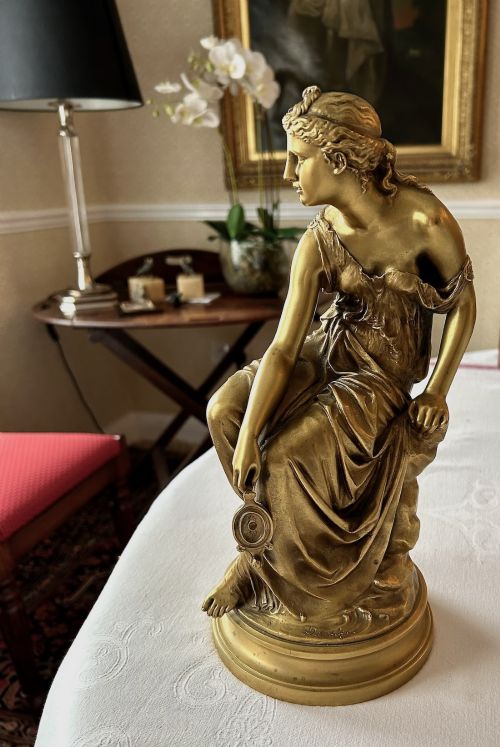

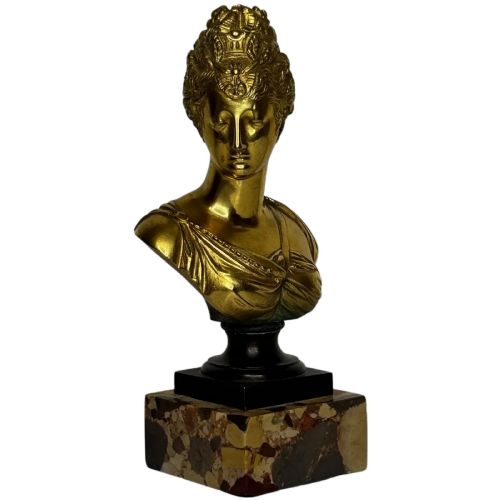
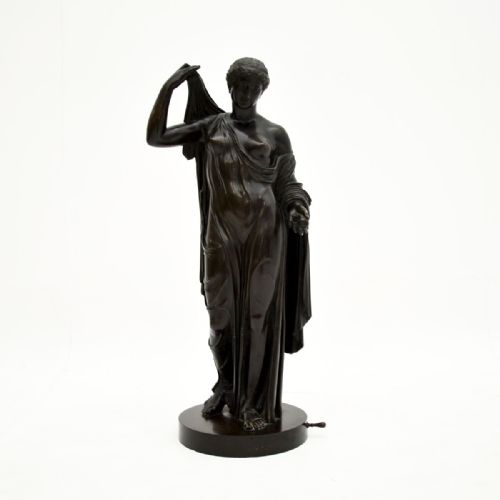
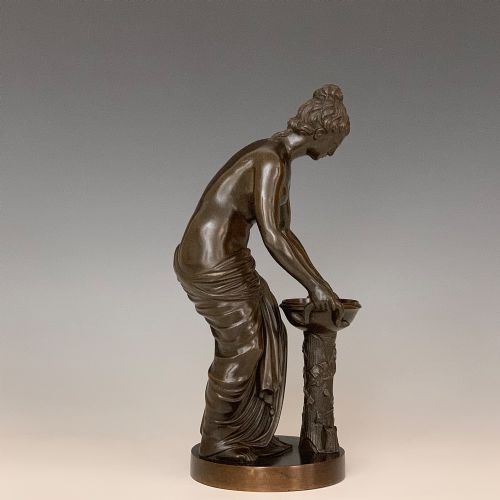


Neoclassical Female Bronze Sculpture
These neoclassical female bronze sculpture pieces capture classical mythology and antiquity in metal, bringing enduring artistic weight to a room.
Neoclassical Female Bronze Sculpture
A neoclassical female bronze sculpture represents classical maidens, goddesses, and allegorical figures drawn from ancient mythology and the Grand Tour tradition. The selection encompasses freestanding statues, busts, fitted lamps, torcheres, and functional bookends.
The prevalent origins span nineteenth century French workshops alongside Regency and Victorian interpretations of classical forms. Figures such as Venus, Diana, and Danaides appear frequently across the material evidence.
Makers and founders utilised traditional casting methods to render robed ladies, musicians, and dancers with striking classical detail. These works connect modern interiors directly to nineteenth century revival aesthetics.
Materials and Technique
Foundries utilised bronze, gilt bronze, and patinated bronze as primary casting metals, frequently mounting figures upon marble bases. Terracotta, plaster, glass, and paint also appear among the listed works alongside metal.
Casting techniques involved shaping molten metal into complex figures of robed ladies, nudes, and mythological characters. Artisans applied patination and gilding to achieve nuanced surface finishes on the bronze.
Object forms span freestanding sculptures, figural torcheres, table lamps, and bookends depicting classical female subjects.
Evaluating Quality
Quality rests in the crispness of the chasing and the subtlety of the patination across the bronze surface. Finer castings display meticulous attention to drapery folds, facial expressions, and anatomical proportions.
The distinction between standard workshop production and master foundry output lies in the sharpness of detail and the quality of the underlying metalwork. Signed pieces from established founders demonstrate superior finishing techniques.
Etienne-Henri Dumaige·Ferdinand Barbedienne·Carrier-Belleuse·Humphrey Hopper·James Pradier·Jean-Jules Cambos·Mercié·Coutan
The Neoclassical Female Bronze Sculpture Glossary
- Grand Tour
- A cultural journey undertaken by wealthy young Europeans to view classical antiquities, inspiring miniature bronze souvenirs. These small sculptures mirror famous statues seen abroad.
- Patination
- The chemical treatment or natural ageing applied to the bronze surface to create colour depth. This process protects the metal while enhancing visual texture.
- Torchere
- A tall ornamental stand or lamp designed to hold lights, often featuring cast bronze female figures. They served functional lighting roles in period interiors.
- Gilt bronze
- Metal coated with a thin layer of gold or gold amalgam to provide a brilliant reflective finish. This technique highlights ornamental details on nineteenth century figures.
- Chasing
- The manual refinement of a raw metal casting using small punches and hammers. Artisans utilise this step to sharpen lines and remove surface imperfections.
Neoclassical Female Bronze Sculpture: Frequently Asked Questions
What subjects do these sculptures depict?
The pieces predominantly portray classical goddesses, mythological figures, and robed maidens from ancient history. Subjects include Venus, Diana, Hebe, and various classical musicians or dancers.
Many of these figures derive directly from famous ancient sculptures encountered during European travels. Artists reinterpreted these classic themes through nineteenth century revival lenses.
Where were these bronze sculptures made?
The majority originate from nineteenth century French foundries and workshops alongside British Regency and Georgian periods. Paris served as a major centre for bronze casting and foundry production.
Italian workshops also produced numerous pieces for travellers undertaking the Grand Tour. These regional origins defined the specific patination styles and casting techniques used.
How do I style a bronze torchere?
Tall bronze torcheres and figural lamps function effectively as statement pieces in corners or flanking architectural doorways. Their vertical presence draws the eye upward while providing ambient illumination.
Pairing these metal figures with stone surfaces like marble enhances their classical aesthetic. They integrate well into both traditional libraries and contemporary living spaces.
How can I tell a Grand Tour piece apart?
Grand Tour bronzes typically represent reduced-scale copies of famous classical statues viewed by travellers abroad. They often feature rich patinated surfaces designed as portable souvenirs.
These study pieces capture the academic interest in antiquity prevalent during the nineteenth century. Founders signed many of these works to denote their workshop origin.