






Green Marble Base Statuette
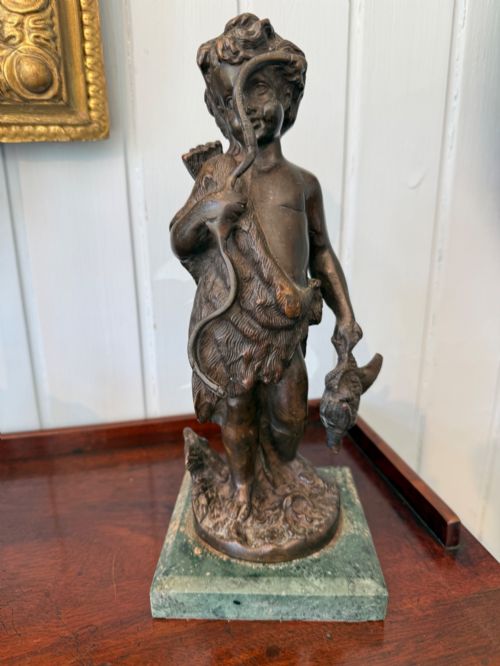
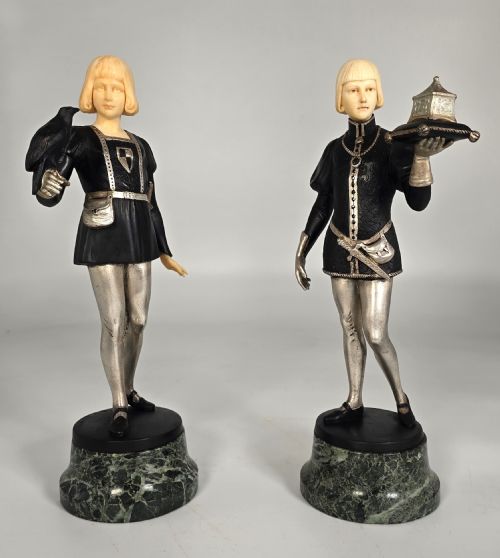
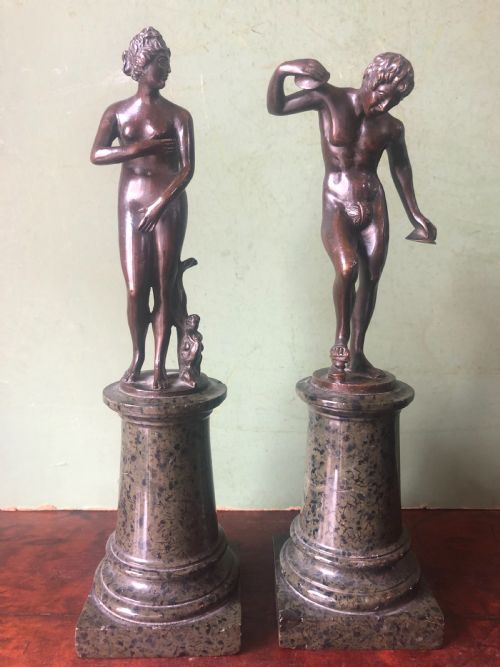
These green marble base statuettes combine cast metal figures with stone plinths, offering a tactile focal point for a collector's desk or mantelpiece.
Green Marble Base Statuette
When you search for a green marble base statuette, you are looking at figural sculptures mounted on stone plinths that span the Victorian era, the Art Deco period, and the late nineteenth century. These works originate from European and Japanese workshops, encompassing subjects from theatrical birds and classical figures to demons and dancers.
The versions most likely to meet you on this page combine cast bronze figures with contrasting marble or black marble plinths. Such pieces reflect styles ranging from French nineteenth-century casting and Animalier studies to Neoclassical Grand Tour souvenirs and Meiji period bronzes.
How they were made
The figures rely on metal casting techniques, utilising bronze, silvered bronze, gilded bronze, or parcel-gilt bronze, occasionally paired with carved ivory. Makers often added cold paint finishes or detailed surface patination to accentuate the subjects.
The bases consist of marble or black marble, shaped into plinths to support the heavier metal sculptures and anchor the composition.
Among the bronze fauna resting on stone, theatrical birds strike dramatic poses as if waiting for the curtain to rise.
What varies in quality
Quality rests upon the crispness of the metal chasing and the fidelity of the cast, where finer examples preserve minute anatomical details and delicate plumage. The integration between the figure and its stone plinth also dictates the overall success of the piece.
The nuance of the patination, whether silvered, gilded, or cold-painted, distinguishes standard production from more accomplished studio work.
Gotthilf Jaeger·P. Marec·Pierre le Faguays
The Green Marble Base Statuette Glossary
- Animalier
- A nineteenth-century artistic focus on the realistic depiction of animals. This style prioritises accurate anatomy and natural behaviour in bronze casting.
- Grand Tour
- A traditional trip through Europe undertaken by upper-class scholars and travellers. Souvenirs from these journeys included small-scale bronze sculptures after antique models.
- Patina
- The surface coloration and sheen developed naturally over time or applied chemically by the maker. It protects the metal and adds depth to the sculpture.
- Parcel-gilt
- A decorative technique where only specific portions of a metal object are covered in gold leaf or gilt. This creates contrast against the darker bronze surface.
Green Marble Base Statuette: Frequently Asked Questions
Are these sculptures signed by the artist?
Some pieces feature signatures or foundry marks cast directly into the metal base or body. These inscriptions help attribute the work to specific sculptors or workshops from the period.
Many period items remain unsigned, as makers often relied on paper labels or simple casting numbers that have worn away over the decades.
How can I tell the period?
Dating relies on the stylistic markers of the sculpture, such as the geometric lines of Art Deco or the naturalism of Animalier bronzes. The material composition, including the use of silvered bronze or ivory, also points to specific decades.
Examining the underside of the marble base and the method used to mount the figure provides further clues about the age of manufacture.
Where should I display these?
These statuettes suit stable surfaces like desks, side tables, or mantelpieces where they can be viewed closely. Position them away from direct sunlight and strong heat sources to protect the patination and any delicate surface details.
Because the marble bases add substantial weight, ensure the furniture supporting the piece is sturdy and level.