



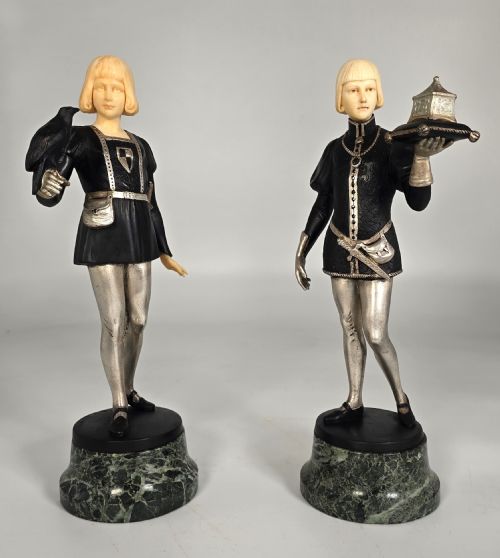


Green Marble Base Statue
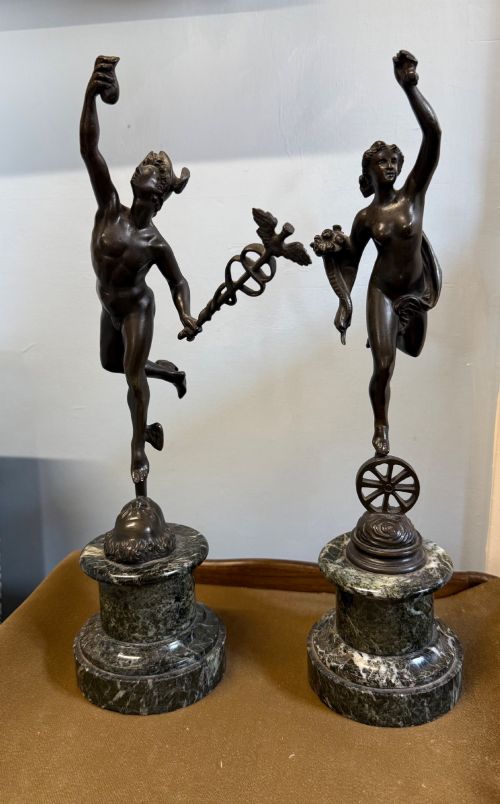
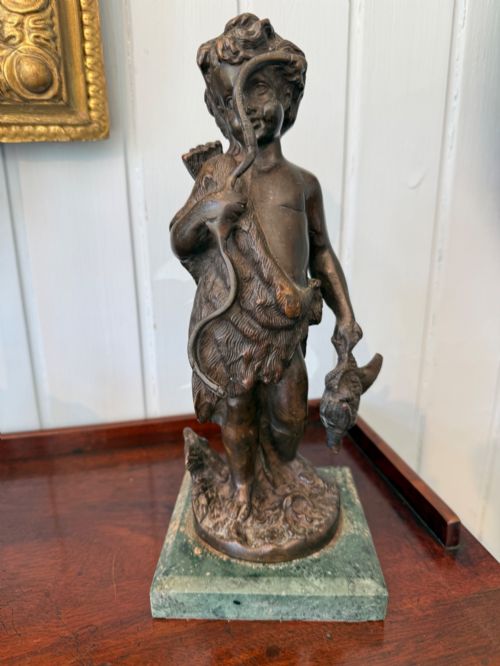
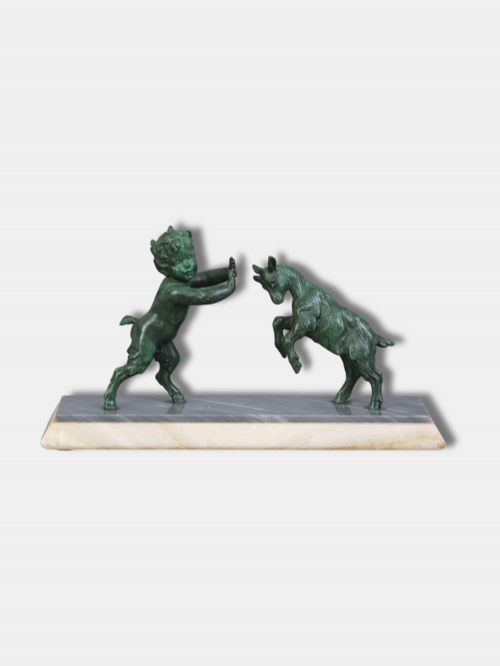
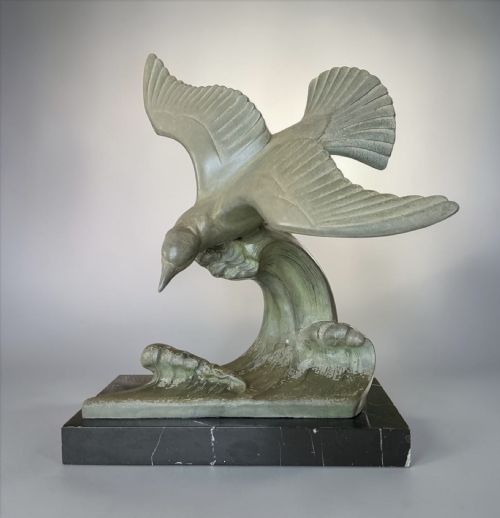
A green marble base statue brings together solid stone and cast metal to anchor classical figures, animals and dancers in lasting display.
Green Marble Base Statue
When searching for a green marble base statue, collectors encounter figural works spanning the nineteenth century into the art deco period. These pieces frequently pair cast metal figures with distinct green stone plinths.
The selections on this page range from grand tour bronze reductions and classical nudes to dynamic animalier studies and athletic figures. French workshops and Italian makers dominate the sculptural forms found here.
Whether mounted on a simple plinth or integrated into a garniture set, the green marble base provides a substantial visual contrast to the metal above.
Materials and Construction
Figures are commonly produced using the lost-wax casting method in bronze, or formed from spelter for later commercial models, sometimes finished with cold-painted details or silvering.
The supporting bases utilise green marble varieties, occasionally complemented by brass mounts, onyx, or gilt bronze elements that secure the metal sculpture above.
Several dogs appear caught mid-action, frozen in bronze while chasing pheasants or glowering from their green marble pedestals.
Judging Quality
The distinction between tiers rests upon the crispness of the metal chasing, the depth of the casting detail in hair and fabric, and the structural integrity of the stone base.
Earlier nineteenth-century bronzes exhibit finer hand-finished tool work, whereas later spelter pieces display softer surface contours and simpler casting seams.
Emile Carlier·E. Drouot·Delabrierre·Gotthilf Jaeger·P. Sega·Paul-Édouard Delabrièrre·C Masson·Josef Lorenzl·Franz Bergman·Pierre le Faguays·Jose Dunach·L. Bureau
The Green Marble Base Statue Glossary
- Spelter
- A zinc alloy used as a less costly alternative to bronze, frequently painted or patinated to imitate darker metals. It was widely utilised for decorative figures.
- Grand Tour
- A nineteenth-century tradition where travellers collected bronze reductions of classical antiquities in Italy. These souvenirs formed the basis of many home collections.
- Cold-painted bronze
- A technique where paint is applied to a bronze surface without heat fixation. It requires careful handling to preserve the pigment over decades.
- Garniture set
- A matching centrepiece clock accompanied by matching side ornaments or vases. They often feature prominent marble and metal construction.
- Animalier
- A nineteenth-century artistic focus on the realistic depiction of animals in action or repose. Bronze sculptures in this style capture musculature and movement with precision.
Green Marble Base Statue: Frequently Asked Questions
How do I clean green marble?
Use a soft, dry microfibre cloth to remove dust from the stone surface. Avoid acidic cleaners or excess water, which can penetrate porous marble.
For stubborn marks, a damp cloth with mild soap can be applied sparingly, followed immediately by thorough drying.
What is spelter?
Spelter is a zinc-based alloy commonly used in nineteenth and early twentieth-century decorative figures. It is softer and lighter than bronze.
Pieces made from this material were often given a metallic finish to resemble genuine bronze or patinated metal.
Are these figures detachable?
Many figures are secured to their marble bases via threaded rods and nuts accessible from the underside. However, dismantling them is generally discouraged.
Altering the fixings can strain the metal or chip the stone edges if not handled with professional care.
How do I date these sculptures?
Dating relies on stylistic markers such as art deco geometric lines, Victorian realism, or nineteenth-century patination techniques. Signatures and foundry marks also help establish the era.
Comparing the casting methods and the type of marble used provides further context for the period of manufacture.