




Bronze Napoleon Sculpture
A bronze napoleon sculpture brings the presence of the emperor into a room through nineteenth-century metalwork.
Bronze Napoleon Sculpture
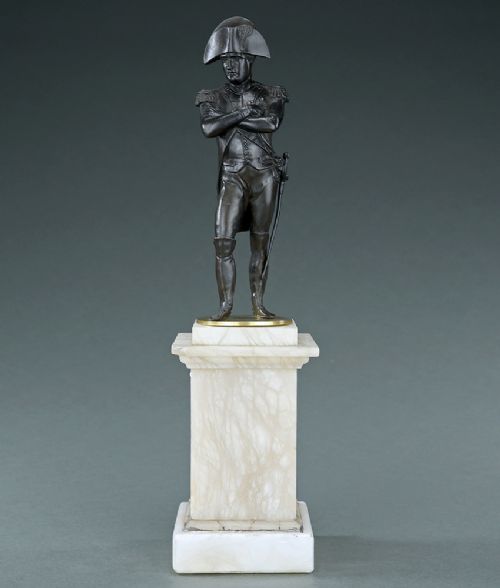
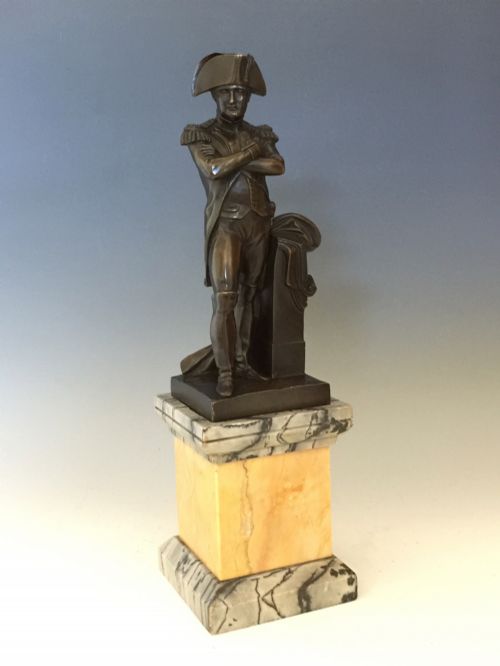
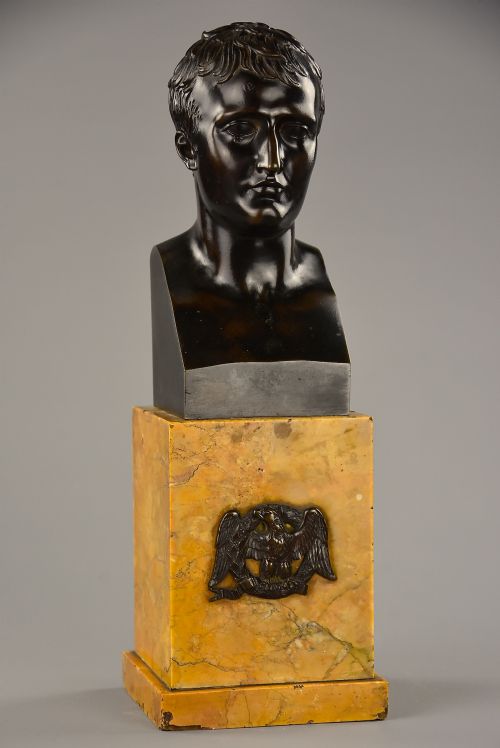
A bronze napoleon sculpture captures the likeness of Napoleon Bonaparte in cast metal, frequently mounted upon a marble base or integrated into functional library objects such as inkstands and mantel clocks. Buyers searching this phrase encounter nineteenth-century French works spanning the Second Empire and Napoleon III periods.
The assortment includes busts, standing figures, and equestrian groups cast in bronze and gilt bronze. Many pieces date from the 1850s to the 1890s, reflecting both contemporary French tastes and revivals of earlier imperial styles.
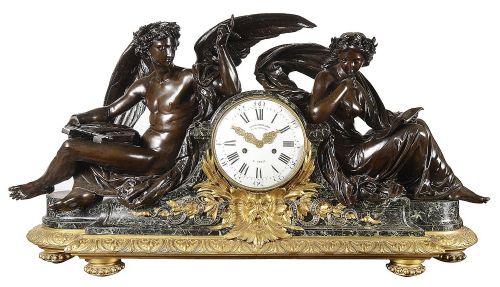
The most common formats on this page are cabinet bronzes and sculptural clocks where the emperor stands or rides above the dial. These objects served as desk accessories and mantel ornaments in nineteenth-century studies and drawing rooms.
How they were made
Heavy bases of green marble, slate, or walnut support the metal figures, providing stability and visual contrast to the dark or gilt bronze. Clocks incorporate glass bezels and mechanical movements housed alongside the sculptural group.
Several pieces quietly place the emperor atop a clock, ensuring he keeps time while watching the study.
What varies in quality
The integration of materials also separates standard works from finer examples, particularly where multi-patinated bronzes or gilt elements meet carefully fitted marble or slate plinths without gaps.
Emile Guillemin·Victor Paillard·Deniere and Cailleaux
The Bronze Napoleon Sculpture Glossary
- Ormolu
- Gilded bronze applied to ornamental objects and furniture mounts. The technique involves coating metal in a gold amalgam and heating it to leave a rich finish.
- Patina
- The surface sheen and coloration developed on bronze over time or applied chemically by the founder. It protects the metal and defines the visual texture of the sculpture.
- Chasing
- The process of refining a metal casting by hand using small punches and chisels. This step restores lost detail and sharpens lines after the bronze leaves the foundry.
- Plinth
- The heavy base supporting a bust, figure, or clock. In these listings, they are frequently formed from green marble, slate, or polished walnut.
Bronze Napoleon Sculpture: Frequently Asked Questions
Are these sculptures period pieces?
The works listed here originate in the nineteenth century, spanning decades from the 1850s to the late Victorian era.
They reflect the French imperial revivals and decorative arts of that specific century rather than modern reproductions.
Why are figures mounted on marble?
Nineteenth-century founders mounted bronze sculptures onto heavy stone bases like green marble or slate to provide physical stability.
This also created a formal architectural frame that suited library desks and drawing-room mantelpieces.
How do I care for bronze?
Bronze requires only occasional dusting with a soft, dry cloth to prevent the accumulation of grit in the chased recesses.
Avoid liquid cleaners, polishes, or oils, as these can strip the historical patina from the metal surface.
What is an equestrian sculpture?
An equestrian sculpture depicts the subject mounted on a horse, a format frequently used for Napoleon to emphasise military command.
These pieces require larger marble bases to support the balanced weight of the charger and rider.