


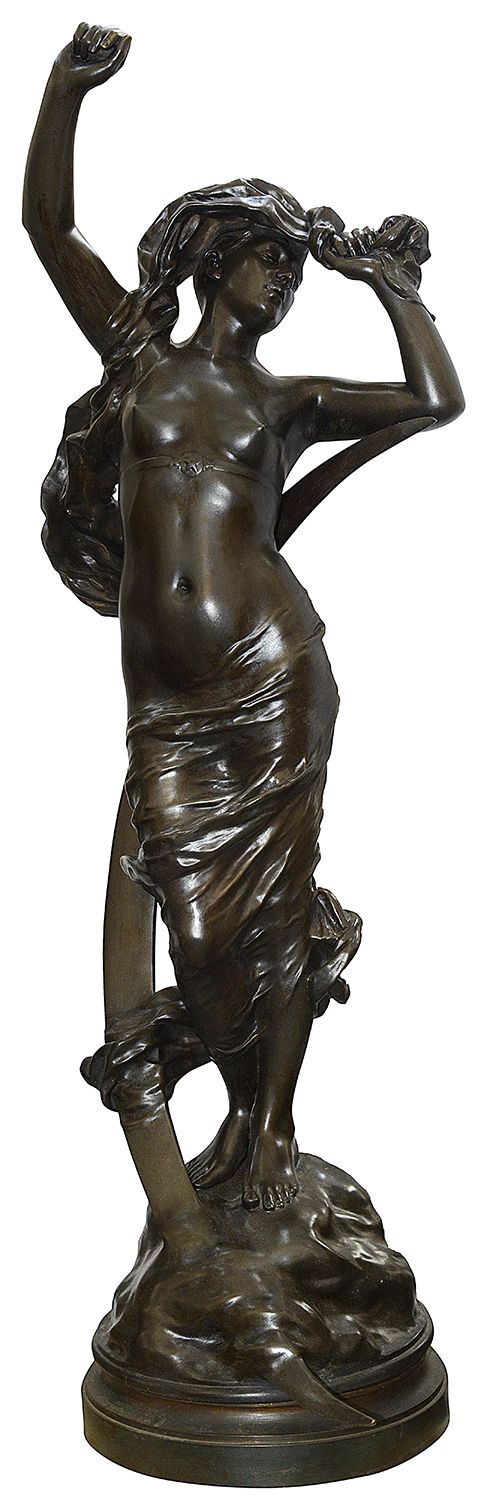


Classical Nymph Bronze Statue
A classical nymph bronze statue brings mythological grace into a room through enduring metalwork and fine foundry skill.
Classical Nymph Bronze Statue
A classical nymph bronze statue represents figures from mythology, frequently appearing as dancing maidens, pipers, or semi-nude maidens across various forms. These sculptures draw upon French Neoclassical, Art Nouveau, and Rococo Revival styles to create dynamic poses that capture movement in solid metal.
Most examples originate from the nineteenth century, including works dated from eighteen hundred through the nineteen twenties. The pieces manifest as single figures, grouped maiden compositions, or sculptural vases cast in France.
Materials and Casting Techniques
Foundries utilised cast bronze as the primary medium, frequently applying patinated finishes to achieve dark tonal depths, while other pieces feature silvered bronze or gilt brass. Several works incorporate marble bases to support the heavier metal sculptures.
Classical Nymph Bronze Statue Retail Price Guide 2026
Typical asking prices for classical nymph bronze statue among the pieces listed under this phrase on Sellingantiques today, from the lower quarter to the upper quarter. They describe what is for sale here now, not the wider market.
Listings combine bronze, patinated bronze, silvered bronze, and gilt brass, frequently paired with marble components.
Distinguishing Quality in Bronze Sculpture
Quality rests upon the crispness of the chase work and the subtlety of the patina, where superior examples retain sharp facial expressions and fluid drapery folds. The involvement of documented Parisian foundries and named sculptors elevates the stature of a piece significantly.
The complexity of the composition also dictates worth, as multi-figure groups like dancing maidens demand greater foundry skill than single standing figures.
Auguste Moreau·S. Kinsburger·Clodion·Eugène Désiré Piron·Houdebine, Paris·Carrier·Antoine Coysevox·Barbedienne
The Classical Nymph Bronze Statue Glossary
- Patinated bronze
- Bronze treated with chemical solutions to produce a specific surface colour, most commonly deep brown or green tones. This finish protects the metal and highlights sculptural contours.
- Silvered bronze
- Bronze coated with a thin layer of silver to give a bright metallic finish. It creates a lighter appearance distinct from traditional dark patinas.
- Gilt brass
- Brass treated with a gold wash or mercury gilding to simulate solid gold. The technique imparts a reflective, luminous surface to decorative elements.
- Neoclassical
- An artistic style inspired by the classical art and culture of ancient Greece and Rome. It emphasises restraint, proportion, and mythological subjects.
Classical Nymph Bronze Statue: Frequently Asked Questions
What periods do these bronzes come from?
The listings span the nineteenth and early twentieth centuries, with dates clustered around eighteen eighty and nineteen twenty. French ateliers produced the majority of these pieces during the height of academic and revivalist sculpture.
Collectors encounter works reflecting nineteenth century French classical and Art Nouveau movements. Each era brought subtle shifts in patination and surface treatment.
How do I identify a cast after a famous sculptor?
Signatures or foundry marks cast directly into the bronze base usually indicate the maker or the workshop responsible for the edition. Many nineteenth century pieces bear the names of renowned sculptors like Clodion or Coysevox even when cast posthumously.
Foundry stamps, such as those from Barbedienne, verify the commercial origin of the casting. These stamps help separate studio-approved editions from later reproductions.
Where should I place a bronze statue at home?
These sculptures require stable surfaces like marble consoles, wooden sideboards, or dedicated pedestals that can support substantial weight. Placing them away from direct moisture preserves the chemical patination on the metal surface.
Good lighting from a side angle enhances the modelled musculature and drapery of the figures. This positioning brings out the fine details of the cast work.