



Green Highland Oil Painting
A green highland oil painting brings the rugged beauty of northern terrain indoors through layered brushwork and muted earth tones.
Green Highland Oil Painting
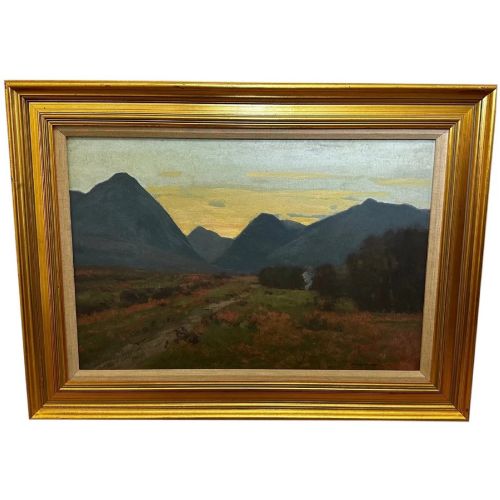
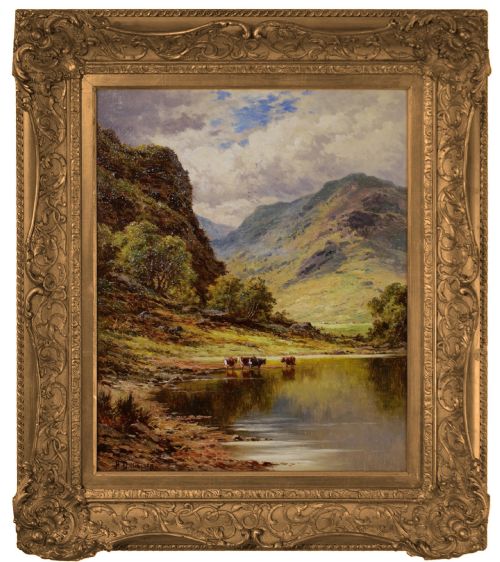
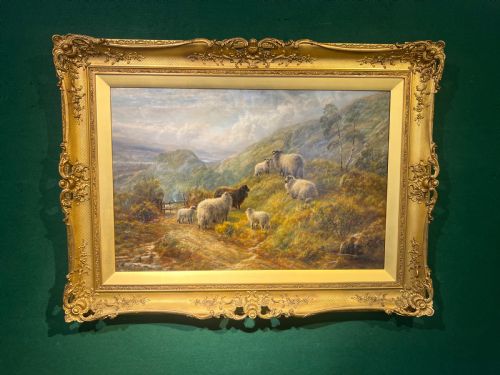
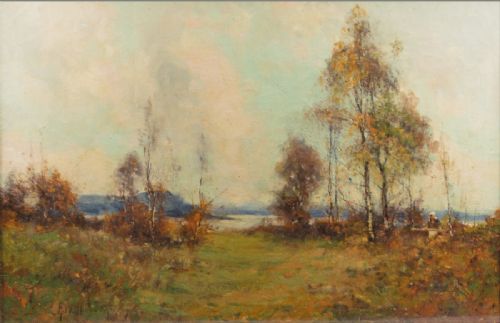
A green highland oil painting captures the dramatic scenery of mountainous terrain, tranquil lochs, and rural valleys through the brush of nineteenth and early twentieth-century artists. These works frequently depict recognizable Scottish vistas complete with grazing sheep, highland ponies, and distant peaks under shifting northern skies.
Buyers encountering this selection will find framed artworks spanning the Victorian era into the early twentieth century. These pieces range from intimate wood panel studies to large canvases executed within the traditions of Scottish landscape realism and impressionism.
Materials and execution
Artists relied primarily on oil paint applied to prepared canvas or wooden panels, building up rich textures to render heather, rock, and water. These works are typically housed in period wooden frames, often featuring moulded gesso and gilt finishes that complement the atmospheric depth of the painted scene.
The technique balances fine brushwork for distant topography with bolder, more expressive application for foreground elements like livestock and foliage. Pigments lean heavily into natural greens, ochres, and muted browns characteristic of upland environments.
Framing materials recorded across the collection include traditional wood, gesso, and giltwood mouldings.
Distinctions in quality
Quality rests upon the artist's ability to render atmospheric light and atmospheric perspective across rugged terrain rather than relying on formulaic topographical recording. Stronger examples demonstrate confident handling of natural phenomena such as mist, shadow, and cloud cover over highland lochs.
The integrity of the original support and the subtlety of the colour palette further differentiate superior works from routine studio output. Masterful composition guides the viewer's eye naturally through the glen while maintaining proportion and depth.
William Beattie Brown·Tom Campbell·George Houston·Henry H Parker·Robert Watson·Alexander Wellwood Rattray·William George Tennick·Archibald Kay·William Henry Mander·Henry Hillier Parker·William Grant Murray·George Melvin Rennie·Robert Cleminson·Daniel Sherrin·Frederick Richard Lee·Thomas Sidney Cooper·George Cole·Henry Birtles·Benjamin Williams Leader·James Kay·Benjamin Marshall·James Greenlees
The Green Highland Oil Painting Glossary
- Canvas
- A heavy woven fabric stretched across a wooden frame to serve as a durable support for oil paint. It provides a slightly flexible surface that responds well to layered impasto and glazing techniques.
- Wood Panel
- A rigid flat support made from timber, frequently utilised by nineteenth-century painters for smaller landscape studies. Panels offer a stable ground that prevents the cracking often seen in aged canvas.
- Giltwood
- Timber carved and coated with gold leaf or metallic powder, commonly used for traditional picture frames. This finish enhances the luminous quality of oil paintings when displayed in domestic interiors.
- Impasto
- Paint applied thickly to a canvas or panel so that it stands proud of the surface. This technique adds tactile dimension to elements like rough rocks, vegetation, and choppy water.
Green Highland Oil Painting: Frequently Asked Questions
What periods do these highland paintings date from?
The works span the nineteenth century through the early decades of the twentieth century. Many originate during the Victorian period when romantic depictions of northern scenery reached peak popularity.
Later pieces extend into the 1920s and 1930s, showing early shifts toward impressionist techniques while retaining traditional rural subjects.
How should I frame and display these artworks?
These pieces generally require traditional wooden frames finished with gilt or gesso to match their historical period. Hang them away from direct sunlight to protect the oil pigments and varnishes from fading.
Ensure wall fixings are secure, particularly for larger canvases and heavier framed works that require balanced support.
How do I identify a Scottish school landscape?
Look for distinctive regional topography such as named glens, lochs, and specific mountain ranges combined with characteristic northern light effects. Artists working within these traditions often incorporated local rural elements like highland cattle, sheep, and crofts.
Signatures, exhibition labels on the reverse, and stylistic ties to nineteenth-century landscape realism provide further context for attribution.
What is the difference between canvas and panel works?
Canvas supports allow for larger compositions and a textured surface weave that catches light beneath translucent paint layers. They are flexible and require careful tension management over decades.
Wood panels offer a rigid surface suited for smaller plein air studies and detailed brushwork, remaining stable against atmospheric changes.