


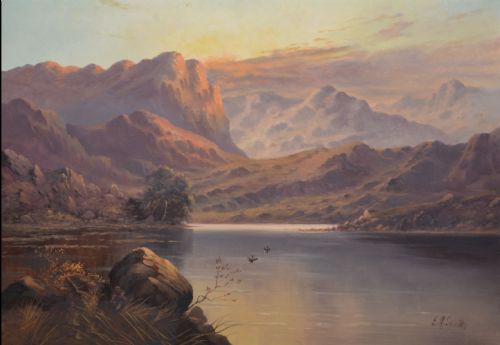

Framed Highland Loch Scene
These framed highland loch scene works capture the moody grandeur of Scottish waters, offering buyers a window into nineteenth-century landscape realism.
Framed Highland Loch Scene
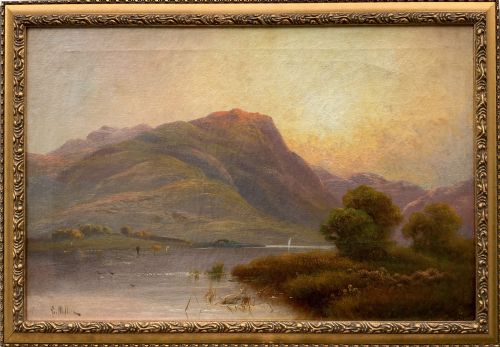
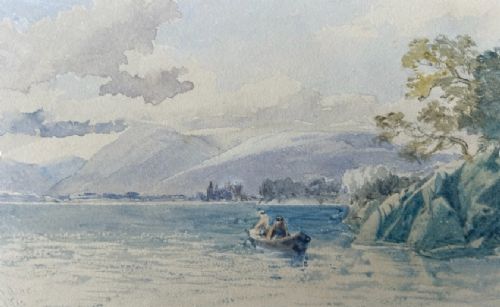
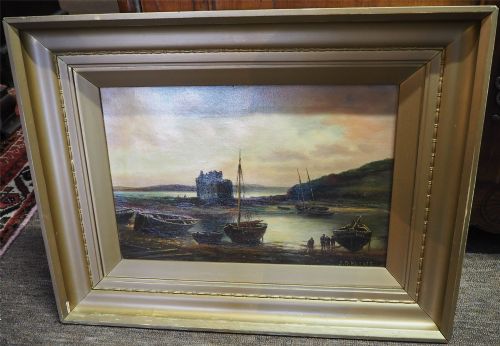
A framed highland loch scene presents sweeping vistas of Scottish water and mountains, created during the Victorian and Edwardian periods. These artworks range from intimate watercolours to large oil paintings on canvas.
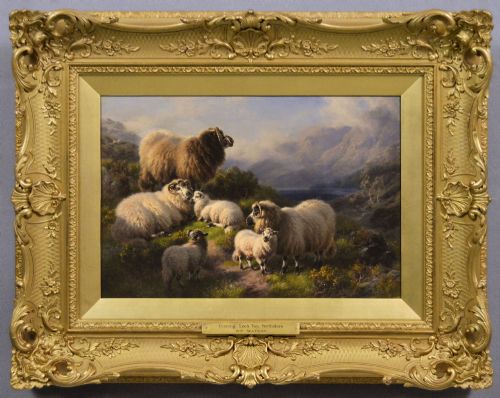
The most common examples on this page date from the nineteenth century, often capturing atmospheric morning mists, highland cattle, or sheep by the shore. Such pieces reflect a period fascination with the wild beauty of the Scottish landscape.
Buyers encounter subjects such as Loch Tay and Loch Awe, framed in original wood and gilt frames that complement the romantic realism of the era.
How they were made
Artists painted these scenes primarily in oil or watercolour on canvas or paper, applying pigment to build depth in the mountains and water. Many works utilise gouache alongside oil to achieve specific tonal effects in the sky and mist.
The finished paintings are housed within wooden frames, frequently finished in gilt to enhance the visual warmth of the landscape. These frames are integral to the presentation, often showing the period craftsmanship contemporary with the canvas.
Several sheep appear to have spent the entire nineteenth century standing very still in the rain near Loch Tay.
What varies in quality
Quality in a framed highland loch scene lies in the artist's handling of light and atmosphere, particularly the rendering of mist over water and the texture of highland hills. Finer works display confident brushwork and a balanced composition that draws the eye deep into the valley.
The preservation of the original canvas and the integrity of the period gilt wood frame contribute significantly to the standing of a piece. Stronger examples maintain their original pigments without excessive restoration, preserving the intended mood of the nineteenth-century painter.
Thomas Miles Richardson Jnr RWS·William Watson Jnr·Daniel Sherrin·AJ Thornton·George Cole·Alfred de Breanski Sr·E. M. Seaton
The Framed Highland Loch Scene Glossary
- Oil on Canvas
- A painting medium where pigments are bound with drying oil and applied to stretched fabric. This technique allows for rich colour blending and textured brushwork.
- Gilt Wood
- Wood treated with gold leaf or metallic gilt paint to create a shiny, decorative surface. Frames finished in this manner were standard for substantial nineteenth-century oil paintings.
- Watercolour
- A painting method where paint is made of pigments suspended in a water-based solution, typically applied to paper. It yields transparent washes well suited to misty highland skies.
- Gouache
- An opaque water-based paint that includes a binding agent and white filler, creating a heavier matte finish. It is often found in works needing solid highlights on water and rock.
- Victorian Landscape Realism
- An artistic style focused on depicting the natural world with close attention to detail and light. In these pieces, it emphasises the authentic topography and weather of Scotland.
Framed Highland Loch Scene: Frequently Asked Questions
What periods do these paintings come from?
The listings span the Victorian and Edwardian eras, predominantly covering the nineteenth and early twentieth centuries. Dates range from mid-century watercolours to works from the nineteen-twenties.
Collectors will find that the majority of pieces align with nineteenth-century landscape realism, reflecting the period's romantic interest in remote Scottish scenery.
How were these artworks traditionally displayed?
These paintings were designed to hang in principal rooms of period homes, often enclosed in substantial wood and gilt frames. The framing was chosen to complement the deep tones of the canvas and project an air of substance.
Today, they suit traditional interiors, libraries, or studies where their substantial scale and atmospheric subjects can be appreciated at a distance.
What subjects feature in these scenes?
Common subjects include expansive mountain and lake views, specific Scottish locations such as Loch Tay and Loch Awe, and atmospheric effects like morning mist. Figures of highland cattle or sheep frequently animate the foreground.
Artists focused on capturing the changing weather and rugged topography of the highlands, creating a strong sense of place.
Are the frames original to the pieces?
Many works retain their period wooden or gilt frames, which provide context and support the presentation of the artwork. These frames show the craftsmanship typical of the Victorian and Edwardian eras.
Inspecting the frame alongside the canvas helps confirm the period integrity of the overall piece.