


Green Glaze Porcelain
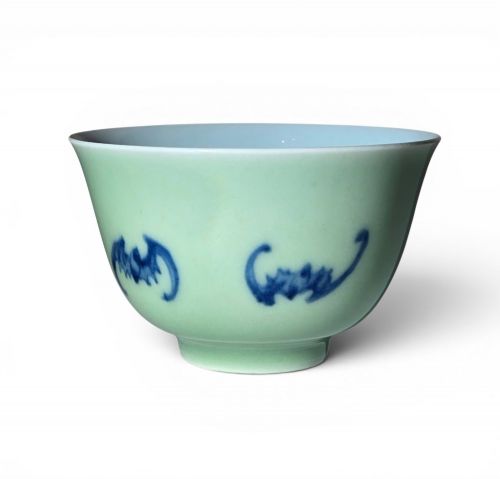
Green glaze porcelain brings together centuries of ceramic history, offering everything from Song dynasty celadon bowls to Art Deco figurines in rich verdant tones.
Green Glaze Porcelain
Green glaze porcelain spans millennia of production, taking the form of figures, vessels, and decorative objects created across diverse Asian and European workshops. Collectors encounter functional wares alongside sculptural pieces, reflecting shifts in taste from ancient traditions to twentieth-century design.
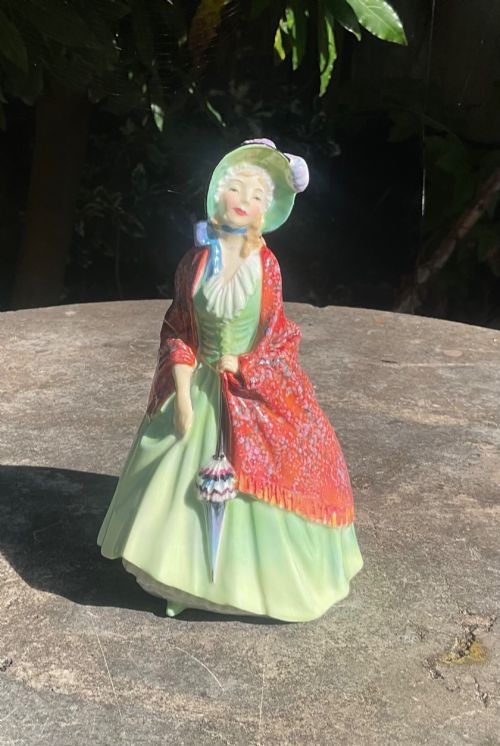
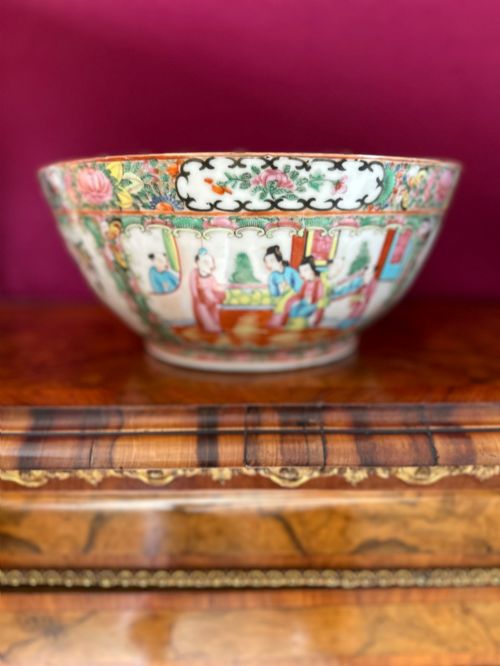
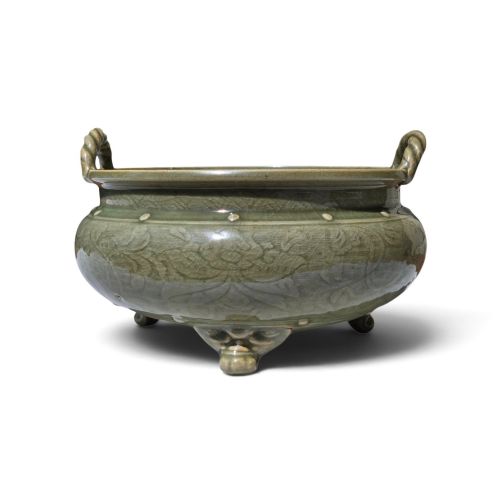
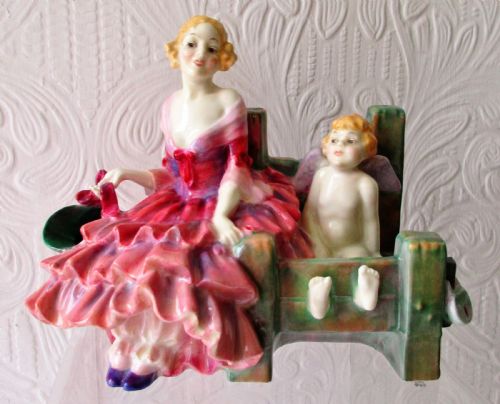
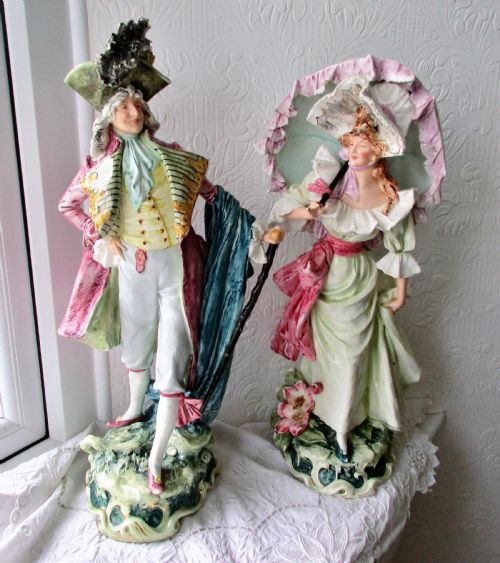
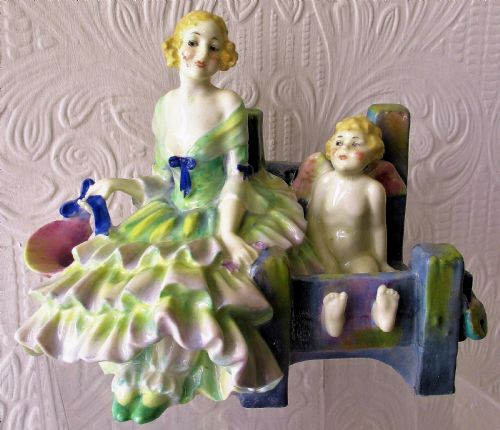
The selection ranges from early Chinese celadon dishes and incense burners to Victorian Staffordshire figures and Art Deco ceramic ladies. Buyers most frequently meet nineteenth-century Chinese export items and European earthenware alongside twentieth-century porcelain figurines.
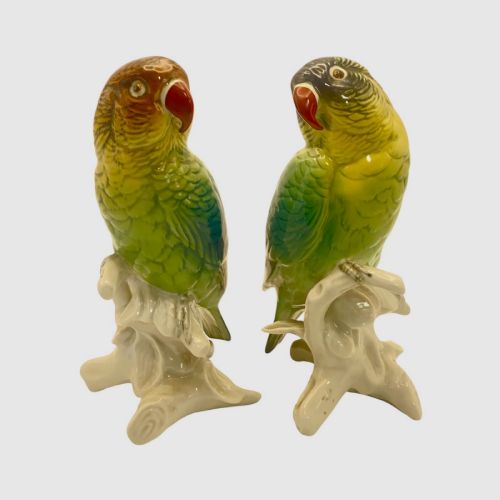
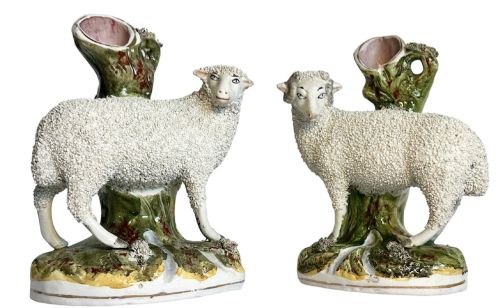
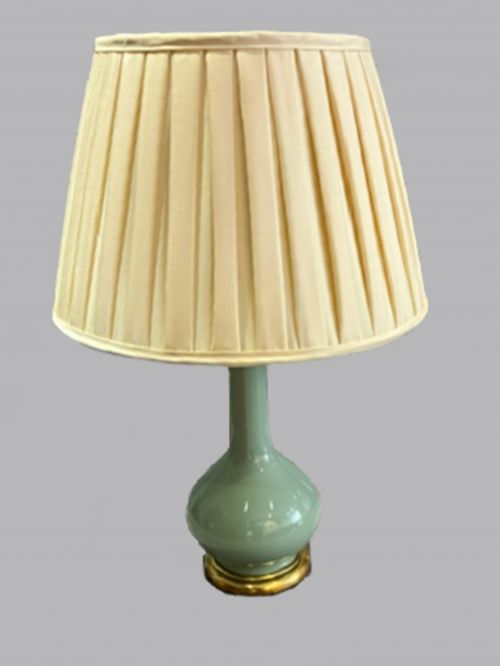
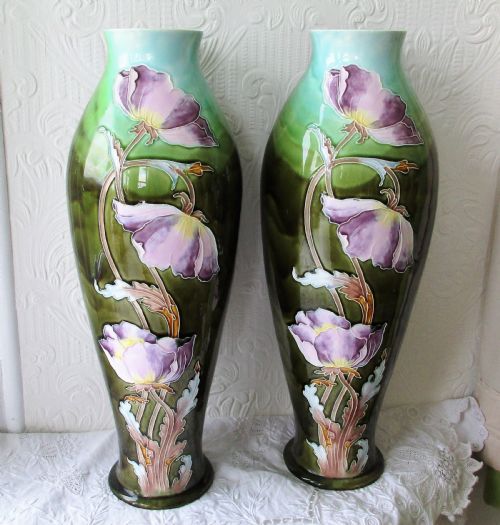
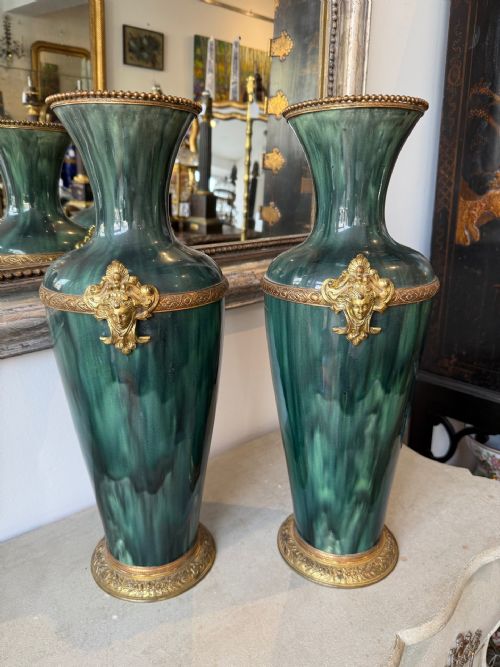
Forms include large chargers, twin fish dishes, spill vases, and table lamps, often modelled as animals, figures, or architectural cottages. Each piece demonstrates how makers utilised coloured glazes to accentuate sculptural contours and surface textures.
How they were made
Potters applied mineral-rich liquid coatings to ceramic bodies before firing, producing translucent celadon surfaces or dense mottled finishes depending on the kiln temperature and chemical composition. Artisans achieved varied green tones through iron oxides in reduction atmospheres or through specialised copper and lead compounds.
Many items combine moulded porcelain or earthenware bases with hand-painted enamel details, underglaze blue, or applied gold leaf to enrich the final appearance. Some complex forms utilise separate stands or multi-part construction joined prior to the final glaze firing.
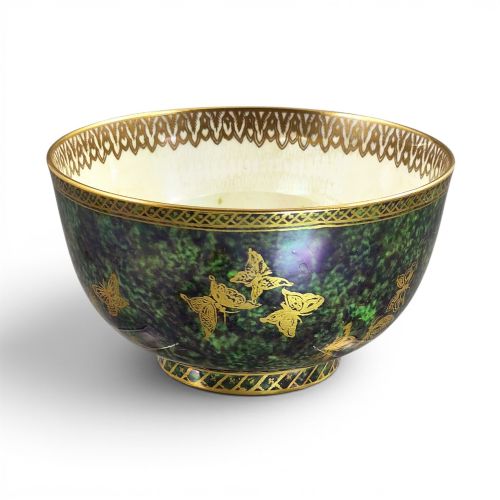
Materials recorded across the inventory include celadon glaze, sancai glaze, tea dust glaze, enamel, and gold leaf.
What varies in quality
Quality rests upon the depth and uniformity of the surface coating, where superior examples exhibit an even, luminous celadon or rich tea dust finish without distracting pooling or dry patches. The crispness of moulded or carved details also defines the better pieces, separating sharp floral scrolls and distinct facial expressions from softer, blunter casts.
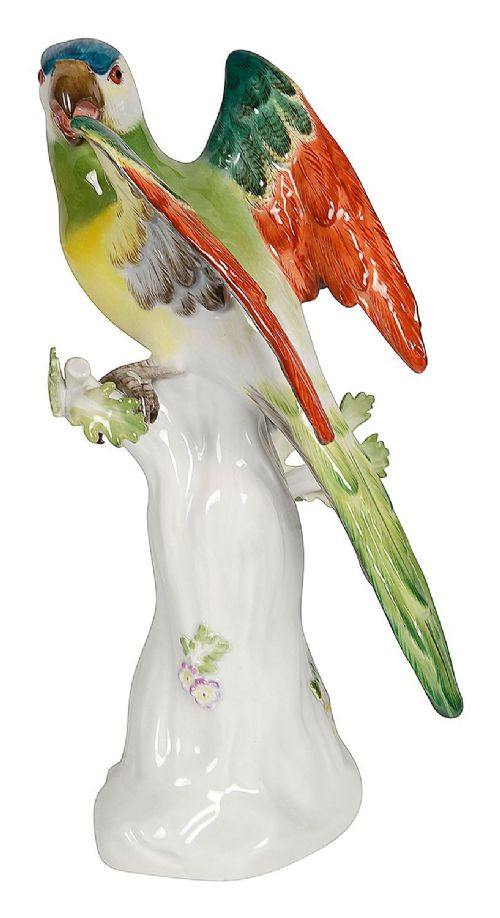
The prestige of the producing kiln or pottery significantly influences value, with historically important Chinese dynasties and documented European factories commanding greater attention. Furthermore, the preservation of original polychrome enamels and gilding dictates the overall integrity of the finished work.
Karl Ens·Royal Doulton·Meissen·Makuzu Kozan·Kato Sanhei·Royal Dux·Daisy Makeig-Jones
The Green Glaze Porcelain Glossary
- Celadon
- A term for ceramics with a pale green or grey-green glaze, originating in China and emulated globally. This finish derives from iron oxides interacting within the kiln fire.
- Faience
- European tin-glazed earthenware, often brightly painted with figures or floral motifs. It provides an opaque white or tinted ground for decorative pigments.
- Famille verte
- A Chinese ceramic palette dominated by green enamels, developed during the Qing dynasty. Artisans combined this hue with iron red, blue, and yellow to create detailed pictorial scenes.
- Spill vase
- A small hollow container designed to hold wooden spills used for lighting candles or fires. These items sat on mantelpieces and frequently took whimsical animal or figural forms.
- Sancai
- A traditional Chinese three-colour glaze technique typically combining green, amber, and creamy white. It appears frequently on Tang and later revival wares such as pottery ducks and lions.
Green Glaze Porcelain: Frequently Asked Questions
How do I identify celadon?
Celadon identifies by its characteristic jade-like green or grey-green glaze, which often pools softly around incised patterns or foliate rims.
This finish results from iron oxide reacting in the kiln, creating a smooth, tactile surface that imitates precious jade.
Were these figures meant for display?
Most figurines, spill vases, and decorative bowls served primarily as ornamental items in nineteenth and twentieth-century interiors. Makers designed them to catch the light on mantelpieces, tables, and cabinets.
Some forms retained a practical function, such as brush washers, chamber pots, or incense burners, alongside their decorative appeal.
How do I date an antique piece?
Dating relies on examining the ceramic body, glaze characteristics, factory marks, and stylistic clues like Art Deco geometry or Victorian realism. Comparing base textures and potting techniques provides further context.
Reference marks, signatures, and reign stamps help narrow the origin to specific dynasties or European manufacturing periods.
What is tea dust glaze?
Tea dust glaze is a specialised ceramic coating that produces a mottled, micro-crystalline olive or brownish-green surface resembling powdered tea leaves. Potters achieved this effect through precise iron and magnesium compositions.
It appears predominantly on fine Chinese globular vases and scholarly vessels from imperial periods.