


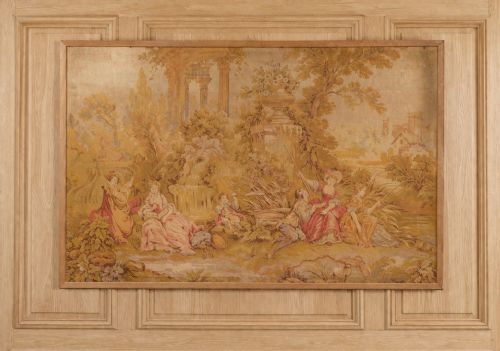


Green and Ochre Art
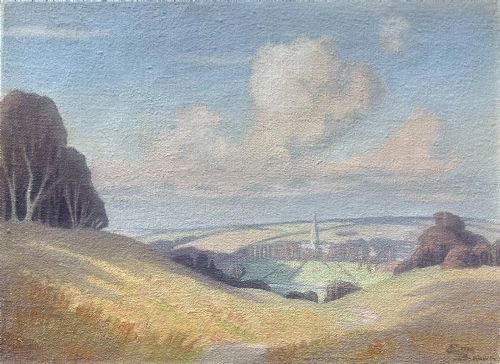
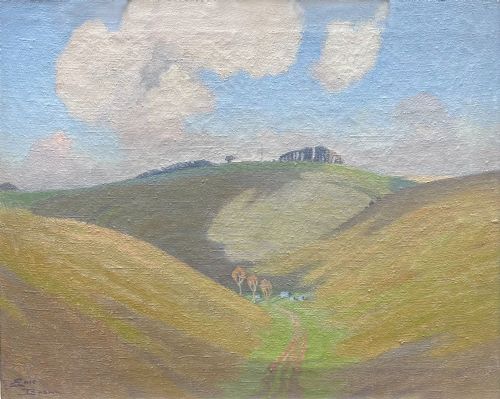
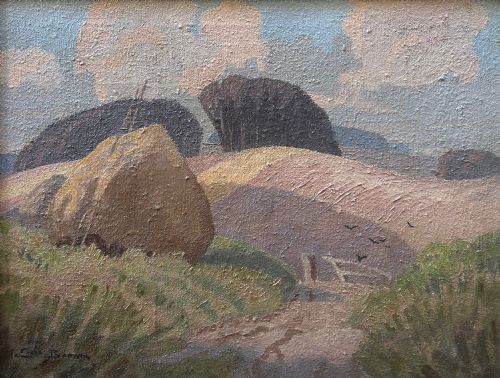
Green and ochre art brings together earthy landscapes and tactile painted surfaces spanning Victorian, Edwardian, and mid-century modern periods.
Green and Ochre Art
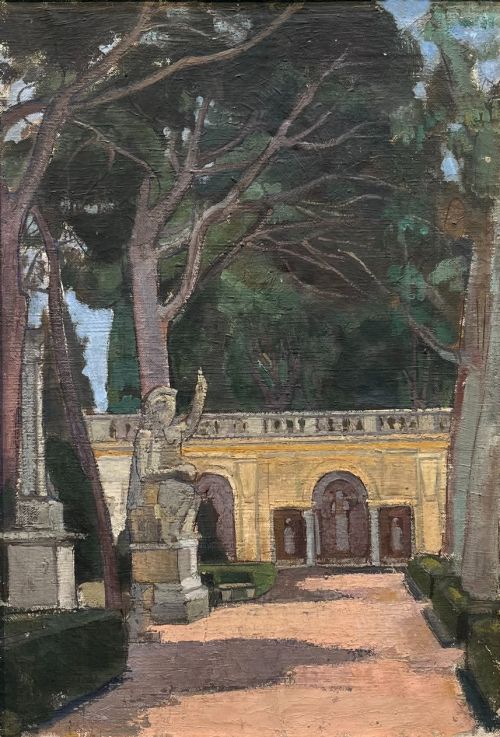
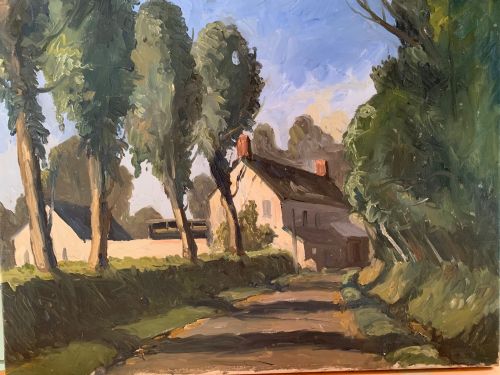
Oil paintings on canvas and wood panel dominate the category, alongside watercolours and earthenware pottery. Buyers encounter works by named artists alongside pieces attributed to regional British and French schools.
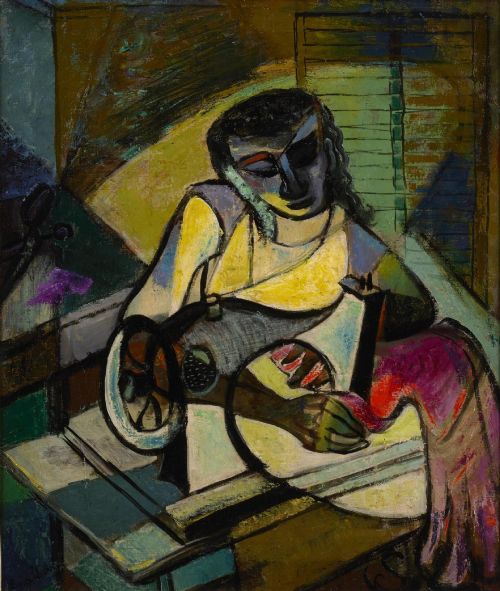
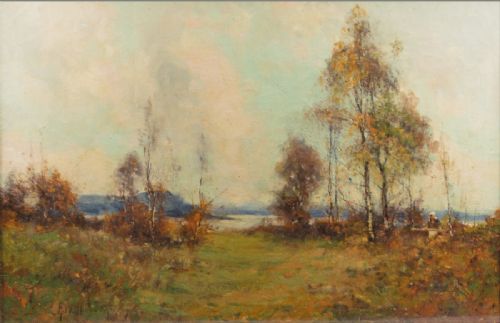
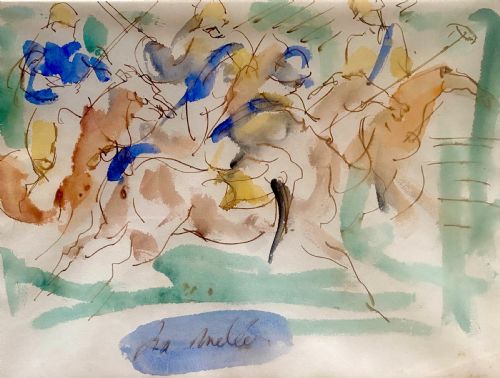
The aesthetic bridges naturalistic pastoral views and early modernist abstractions. Pieces span from Victorian watercolour studies to mid-century oil paintings.
Materials and methods
Artists applied oil paint and watercolour onto stretched canvas, wooden panels, and heavy paper supports. Earthenware pieces demonstrate moulded construction finished with slip and glaze.
Brushwork ranges from detailed plein air application to expressive modernist strokes. Pigments rely on traditional earth tones, combining deep greens and warm ochres.
Materials in this selection include oil paint, canvas, wood, paper, and earthenware spanning the nineteenth and twentieth centuries.
Assessing quality
Quality rests upon the confidence of the brushwork and the preservation of the pigment layer. Superior works display deliberate composition and stable surfaces free from extensive overpainting.
The strength of the provenance and the clarity of the artist's hand elevate individual pieces. Ceramics and tapestries depend on crisp moulding and intact woven structures.
Eric Brown·Lena Gurr·Alexander Wellwood Rattray·Reginald Grange Brundrit·James William Booth·William Moorcroft·Sidney James Beer·Christopher Dresser·William Lucas·Arthur Claude Strachan·William Greaves·Richards Rubin·Abdul Kadir Al Rassam·Francis Wall
The Green and Ochre Art Glossary
- Impressionism
- A nineteenth-century painting style characterised by visible brushstrokes and an emphasis on light. This approach captures the fleeting qualities of natural outdoor scenes.
- Earthenware
- Porous pottery fired at lower temperatures, commonly used for historical ceramics. It requires a glaze to render the material watertight.
- Watercolour
- A paint consisting of water-soluble pigments applied to paper. It produces transparent washes that rely on the white of the paper for luminosity.
- Post-Impressionism
- An art movement extending impressionist techniques while rejecting its limitations. It places greater emphasis on geometric forms and expressive use of colour.
- Provenance
- The documented history of ownership surrounding a work of art. A clear record helps confirm authenticity and date of origin.
Green and Ochre Art: Frequently Asked Questions
What periods do these pieces date from?
The works span from the nineteenth century through to the mid-twentieth century. They include Victorian watercolours and modernist oils from the 1920s and 1940s.
Earlier examples reflect traditional pastoral landscapes, while later items embrace impressionist and post-impressionist techniques.
Are the paintings signed by the artists?
Many of the works retain original signatures or attribution details inscribed by the creator. Unsigned pieces are categorised by school or period based on style and technique.
Documentation and signatures help place works within specific regional movements such as British Impressionism.
How should I care for oil paintings?
Keep oil paintings away from direct sunlight and extreme humidity fluctuations to protect the canvas and pigment. Dust the surface gently with a soft, dry brush.
Avoid using water or chemical cleaners on the paint layer or the surrounding frame.
What is the difference between oil and watercolour?
Oil paint uses a drying oil binder, allowing for thick impasto application and rich colour depth on canvas or wood. Watercolour suspends pigment in a water-soluble binder applied to paper.
Watercolours require protective framing behind glass, whereas oil paintings on canvas remain open to the air.