


Muted Earth Tone Artwork
Muted earth tone artwork brings quiet, understated palettes into a room, offering genuine historical depth through oil and watercolour paintings.
Muted Earth Tone Artwork
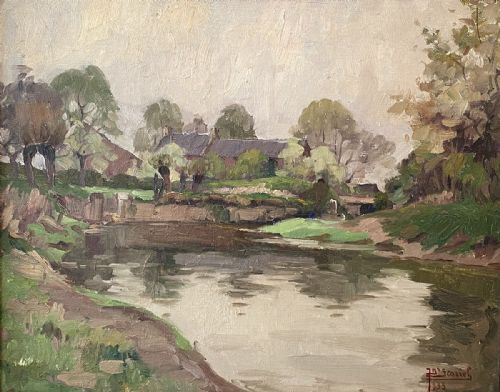
Muted earth tone artwork encompasses paintings created across the nineteenth and twentieth centuries, spanning Victorian, Edwardian, and mid-century periods. These works capture pastoral scenes, coastal views, and rural landscapes using restrained, natural hues.
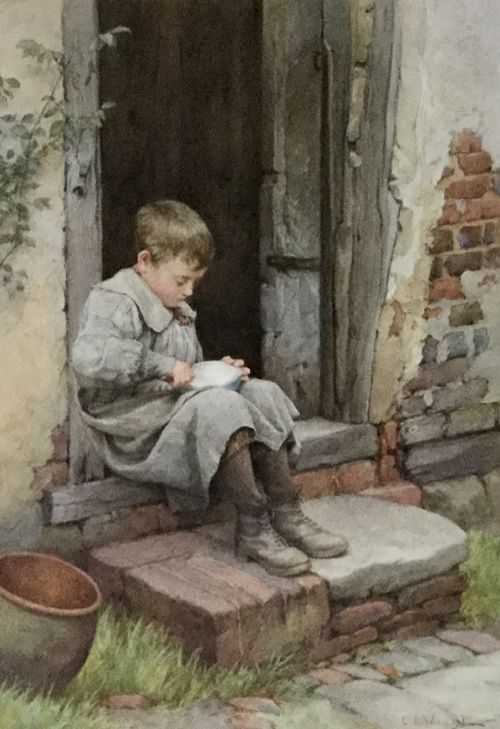
The pieces available here lean towards original watercolours on paper and oil paintings on canvas, reflecting traditional British artistic output. Many examples date from the nineteen-tens and nineteen-twenties, showcasing early twentieth-century fine art and impressionist sensibilities.
Buyers will encounter both signed works by known regional painters and anonymous pastoral studies. Subjects range from Sussex cottages and Welsh rivers to Yorkshire coasts and Irish hill landscapes.
Materials and technique
The works rely upon traditional mediums including watercolour paint on paper and oil paint on canvas. Card mounts frequently frame the watercolours, preserving the delicate pigment layers.
Artists built these compositions through direct brushwork in oil or translucent washes in watercolour. The physical support relies heavily on canvas and paper substrates typical of the nineteenth and twentieth centuries.
Materials across these listings are strictly traditional, featuring pigment, oil paint, watercolour, canvas, paper, and card mounts.
Judging quality
Quality rests in the handling of tone and atmospheric perspective, where subtle colour gradations define the landscape. Stronger pieces demonstrate confident brushwork and secure composition rather than heavy reliance on subject matter alone.
Condition of the paper or canvas also shapes the piece, with well-preserved pigment integrity and clean mounts elevating the visual impact. Named artists command attention through distinctive hand and documented regional provenance.
Ernest Higgins Rigg·Louie Stanley Maurice Prince·Sidney James Beer·Kate E Booth·Henry Charles Fox·Thomas James Lloyd·Fred Stead·Edward Killingworth Johnson·Thomas Swift Hutton·Fred Lawson·Charles Edward Wilson
The Muted Earth Tone Artwork Glossary
- Watercolour
- A paint consisting of pigment suspended in a water-based solution, traditionally applied to paper. It relies on the white of the paper to show through translucent washes.
- Oil paint
- A slow-drying paint made by mixing pigments with a drying oil, typically linseed. It allows for rich texture and deep colour saturation on canvas.
- Card mount
- A protective paperboard border placed around a watercolour painting. It separates the artwork from the glass of the frame.
- Impressionism
- An art movement focusing on accurate depiction of light in its changing qualities. It appears here in British interpretations of rural and coastal scenes.
Muted Earth Tone Artwork: Frequently Asked Questions
What periods do these paintings come from?
The selection spans the nineteenth and twentieth centuries, taking in Victorian and Edwardian examples alongside pieces from the nineteen-tens, twenties, forties, and sixties.
Most items reflect British landscape traditions of those eras.
Are these paintings original works?
Every piece listed is an original painting rather than a reproduction or print. Artists used hand-applied oil paint or watercolour directly onto canvas or paper.
Signatures appear on many examples from known period painters.
How should I frame a watercolour?
Watercolours require framing behind glass with a card mount to keep the paper from touching the glazing. This protects the delicate pigment from moisture and surface damage.
Keep them away from direct sunlight to prevent fading.
What subjects are most common?
Landscapes dominate the selection, featuring rural villages, coastal seascapes, and pastoral river views. Locations range across Yorkshire, Wales, Sussex, and Ireland.
Figures appear occasionally in domestic or outdoor genre scenes.