



Gothic Wooden Lectern
These gothic wooden lectern pieces bring ecclesiastical presence into domestic or church interiors through solid oak and pine construction.
Gothic Wooden Lectern
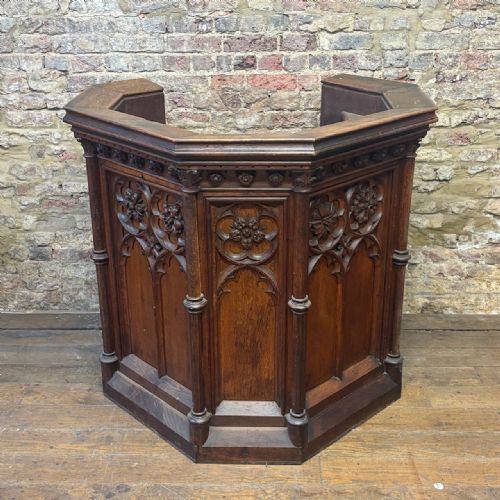
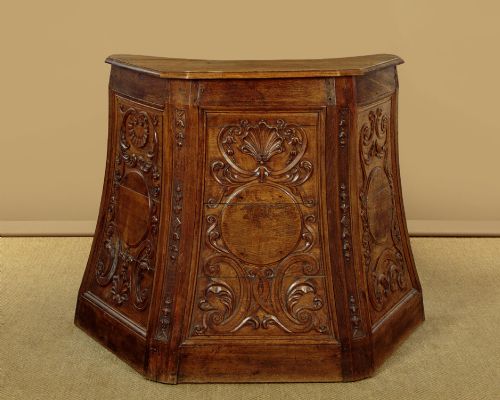
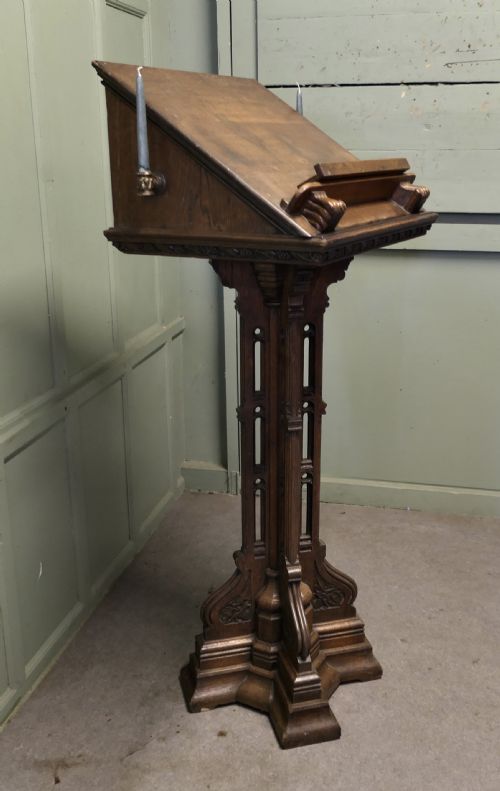
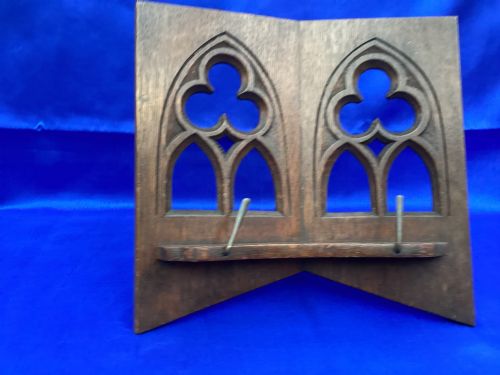
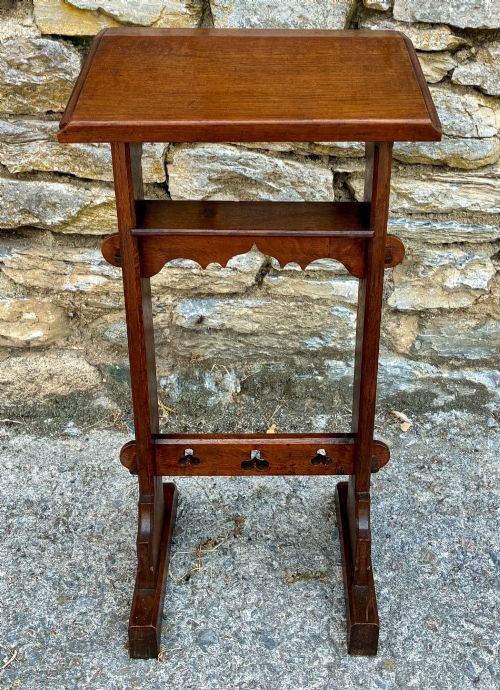
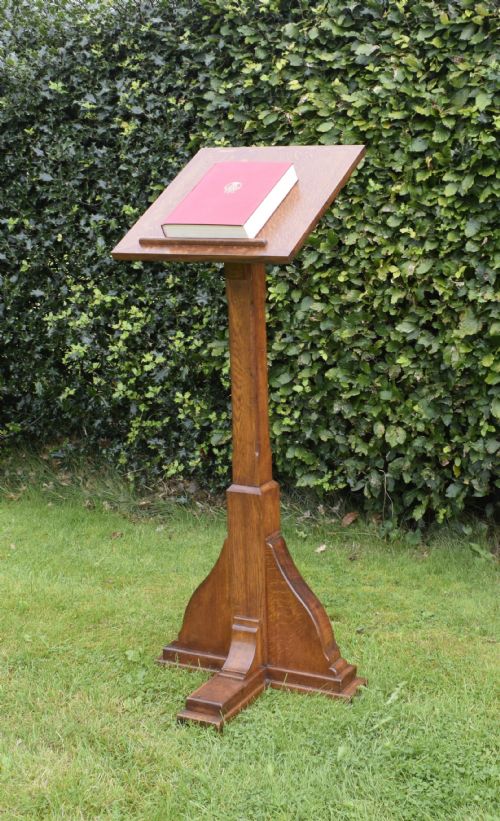
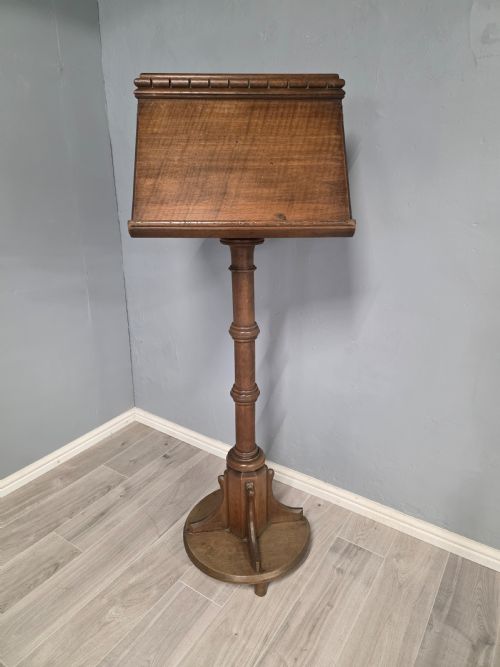
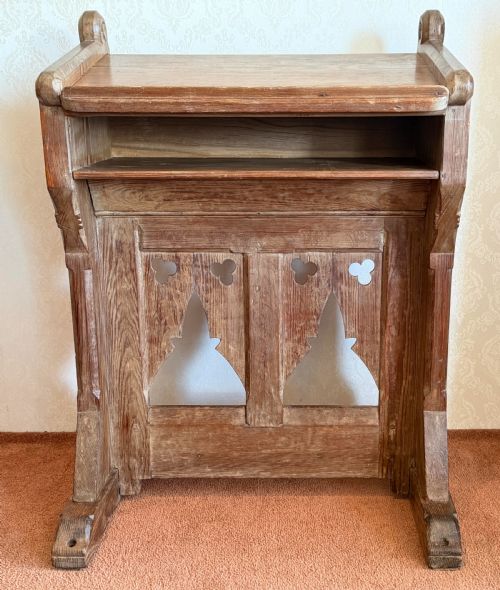
A gothic wooden lectern is a piece of church or study furniture designed to hold books at a readable angle, often featuring pointed arches or carved details. Buyers searching for a gothic wooden lectern encounter church pulpits, prayer desks, and reading stands originating from the nineteenth and early twentieth centuries.
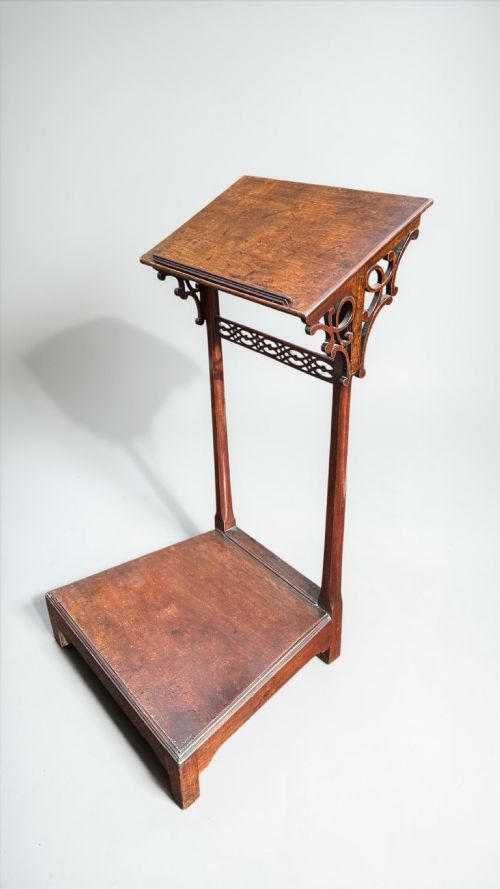
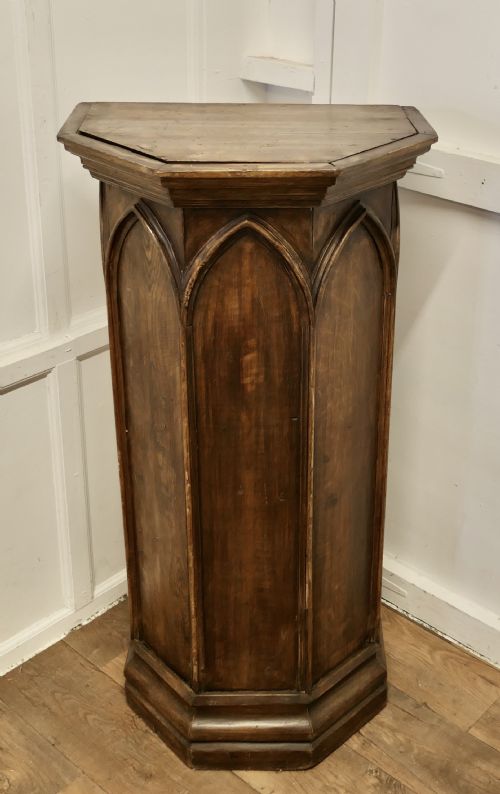
The versions most commonly met on this page are carved oak church pieces from the Victorian era and the Arts and Crafts movement. Some examples take the form of prayer desks or prie-dieu stands, while others stand as tall reading podiums or eagle lecterns.
Makers drew on Gothic Revival styles, producing heavy ecclesiastical furniture alongside domestic book stands and reception desks. Pine and mahogany occasionally appear alongside the predominant oak, reflecting both humble vestry commissions and grander liturgical requirements.
Materials and construction
Makers relied heavily on solid oak, shaping the timber with hand tools to create the heavy framework required for church furniture. Secondary timbers such as pine and mahogany appear in specific structures, while brass and iron components provide hinges, brackets, and book rests.
Carving defines the surface work on these pieces, displaying foliage, tracery, and occasionally detailed figures such as wooden eagles. Joinery techniques prioritize stability and weight, ensuring the stands support heavy folio Bibles and service books without tipping.
Styles range from strict Victorian Gothic Revival to Arts and Crafts simplicity and eighteenth-century Chippendale forms.
Assessing quality and craftsmanship
Quality rests upon the depth and precision of the wood carving, where crisp lines in the oak distinguish master church commissions from simpler utilitarian items. The integrity of the timber joints and the weight of the base dictate how well the stand functions for reading.
Proportion and architectural detail separate standard iterations from exceptional examples of the Gothic Revival style. Pieces that retain their original brass fittings and untouched surface patination command greater attention from collectors.
The Gothic Wooden Lectern Glossary
- Gothic Revival
- An architectural and decorative style popular during the nineteenth century that revives medieval forms like pointed arches and tracery. It heavily influences the design of these ecclesiastical stands.
- Prie-dieu
- A small wooden desk designed for prayer, featuring a sloping shelf for books and a kneeler below. These pieces date back to the eighteenth and nineteenth centuries.
- Pulpit
- An elevated stand from which a minister delivers a sermon in a church. These substantial structures often form part of larger architectural church interiors.
- Arts and Crafts
- A design movement emphasising traditional craftsmanship and simple forms using natural materials like solid oak. It produced functional book stands and reception furniture.
- Tracery
- Openwork stonework or woodwork pattern in the Gothic style, often seen in the panels of these lecterns. It provides decorative support and ventilation for church furniture.
Gothic Wooden Lectern: Frequently Asked Questions
How do I date a wooden lectern?
Dating relies upon examining the timber species, tool marks, and stylistic indicators such as Gothic Revival motifs or Arts and Crafts simplicity. Nineteenth-century pieces typically show hand-sawn elements and distinct Victorian or Edwardian construction methods.
Comparing the hardware, such as iron brackets or brass hinges, also helps narrow down the decade of manufacture. Documentation or provenance from former church use further clarifies the age.
How heavy are these stands?
Solid oak church lecterns are substantial pieces of furniture built to remain stationary during services. Their weight comes from thick timber panels, heavy reading shelves, and wide bases designed to support large books.
Smaller desk variants and pine reading stands are lighter and easier to reposition within a room. Floor-standing pulpits and eagle lecterns require multiple people to move safely.
How do I care for antique oak?
Maintaining antique oak involves keeping the timber away from direct heat sources and sudden humidity changes to prevent splitting. Regular dusting with a soft, dry cloth preserves the natural wax finish and surface patination.
Avoid modern silicone polishes, which build up on the wood and dull the carved details over time. Occasional application of quality beeswax helps nourish the historic timber.