



Ecclesiastical Wooden Lectern
An ecclesiastical wooden lectern brings centuries of church craftsmanship straight into a room, offering a commanding focal point for holding books or displays.
Ecclesiastical Wooden Lectern
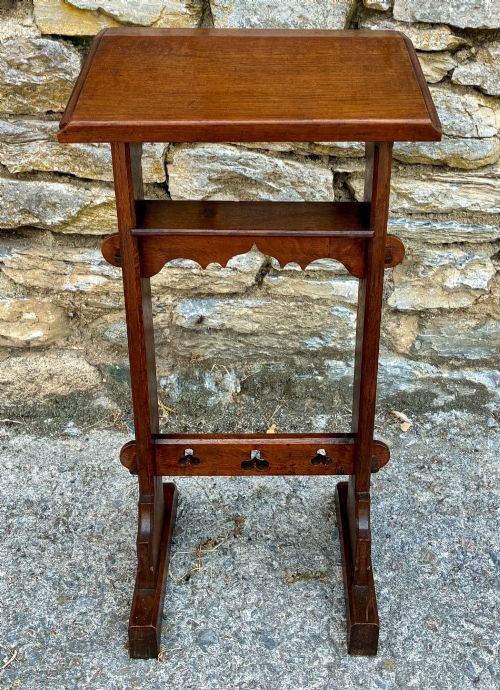
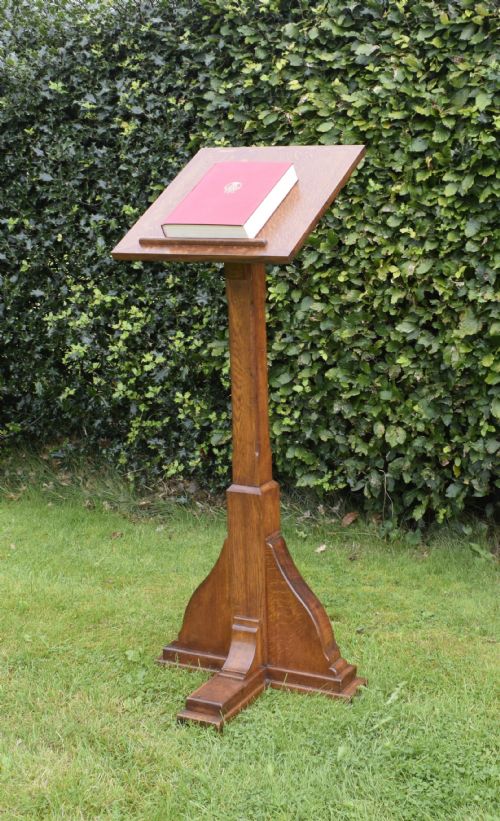
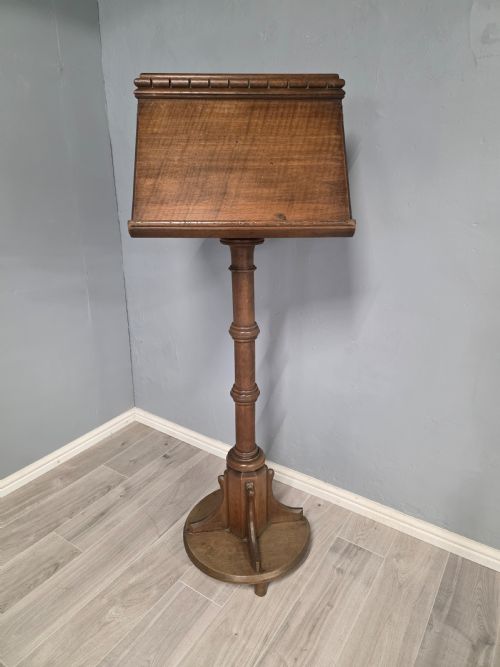
An ecclesiastical wooden lectern serves as a traditional stand for reading texts, taking forms such as standard lecterns, prayer desks, and reading stands. The pieces available here span periods from the eighteenth century through the Victorian era, Edwardian period, and into the nineteen-twenties.
Most examples found on this page are constructed from oak, sometimes paired with pine or enhanced with brass work. Stylistic influences lean heavily toward Gothic Revival and Arts and Crafts designs, reflecting their religious origins.
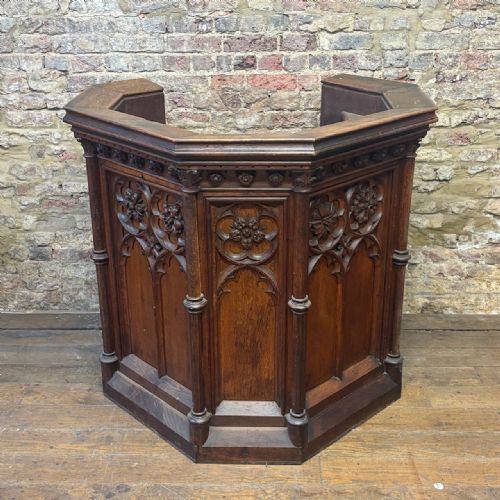
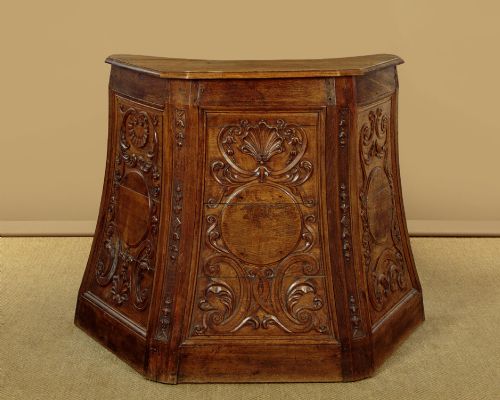
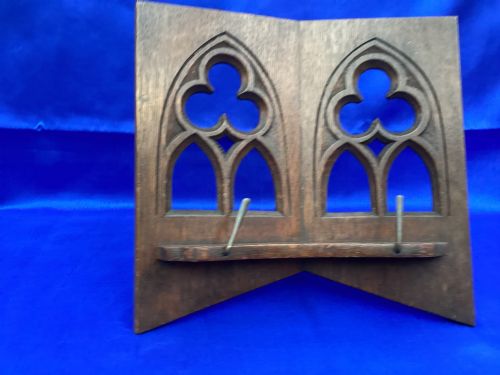
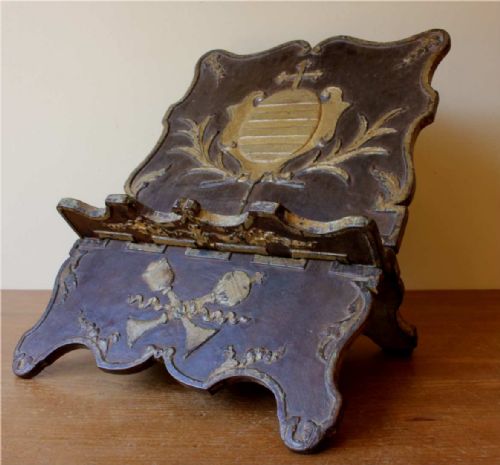
Specialised variations include carved eagle figures with outstretched wings and folding missal stands originating from continental Europe. Buyers also encounter repurposed pieces like pulpit bars and home bars adapted from ecclesiastical furniture.
How They Were Made
Makers relied primarily on solid oak and pine, shaping the timber through traditional joinery and detailed hand carving. Artisans applied sculptural techniques to form complex motifs, particularly the feathered wings of eagles on reading desks.
Metal elements such as brass work and iron reinforcement appear alongside the woodwork to secure structural joints and support book rests. Gilt, gesso, and gold leaf occasionally accent the surfaces, adding decorative contrast to the natural grain of the wood.
Gothic Revival and Arts and Crafts styles define the majority of the wooden reading stands and pulpits.
What Varies in Quality
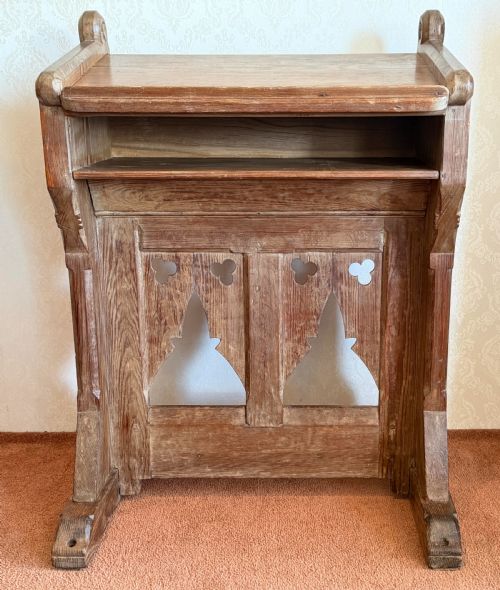
The depth and precision of the wood carving dictate the visual impact of an ecclesiastical wooden lectern. Master carvers produced intricate plumage on eagle lecterns and crisp tracery in Gothic Revival panels, whereas simpler utilitarian pieces display minimal ornamentation.
The choice of primary timber and secondary materials also influences the character of the object. Dense, mature oak provides structural integrity and rich patination over centuries, while combinations of pine and lesser woods suggest more modest regional production or later utility.
The Ecclesiastical Wooden Lectern Glossary
- Gothic Revival
- A nineteenth-century design style that revives medieval architectural forms, featuring pointed arches, trefoils, and heavy carved tracery. This aesthetic dominates much of the ecclesiastical furniture from the Victorian period.
- Missal Stand
- A small, often folding desk designed to hold a liturgical book or bible on an altar or table. French examples from the eighteenth century show compact, portable folding mechanisms.
- Pulpit
- A raised stand from which a minister delivers a sermon in a church. Certain architectural pulpits are later adapted into domestic items such as home bars.
- Prayer Desk
- A piece of religious furniture incorporating a sloping surface for reading and a lower kneeling bench. These items combine private devotional function with sturdy wooden construction.
- Gesso
- A plaster-like material applied to wood as a base for painting or gilding. It provides a smooth ground for gold leaf application in decorative church furnishings.
Ecclesiastical Wooden Lectern: Frequently Asked Questions
How do I date an oak lectern?
Dating relies on observing construction techniques, tool marks, and stylistic clues such as Gothic Revival motifs or Arts and Crafts simplicity. Period markers range from eighteenth-century continental folding stands to nineteenth-century Victorian church furnishings.
Changes in hardware, timber selection, and the wear patterns on the wood further help narrow down whether a piece belongs to the Georgian, Victorian, or Edwardian eras.
Can I use an antique church lectern at home?
These pieces integrate well into modern interiors as book stands, music stands, or distinctive display furniture in studies and living rooms. Their substantial wooden construction provides a stable platform for heavy volumes.
Smaller reading desks and prayer desks suit domestic spaces particularly well, offering practical book storage alongside historical character.
What is the difference between oak and pine lecterns?
Oak is a hard, durable timber with a prominent grain that was favoured for principal church furnishings and intricate Gothic carvings. It patinates deeply over the centuries.
Pine is a softer, lighter wood that appears in more utilitarian church furniture or as secondary framing timber paired with oak.