


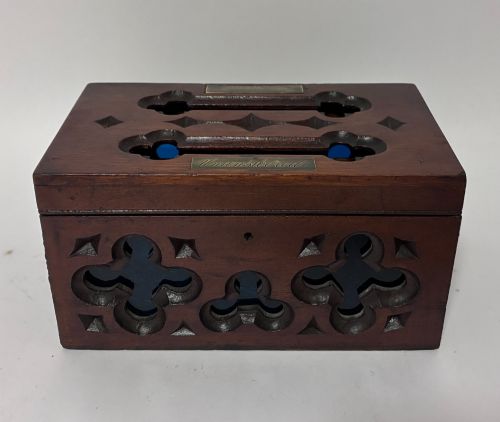
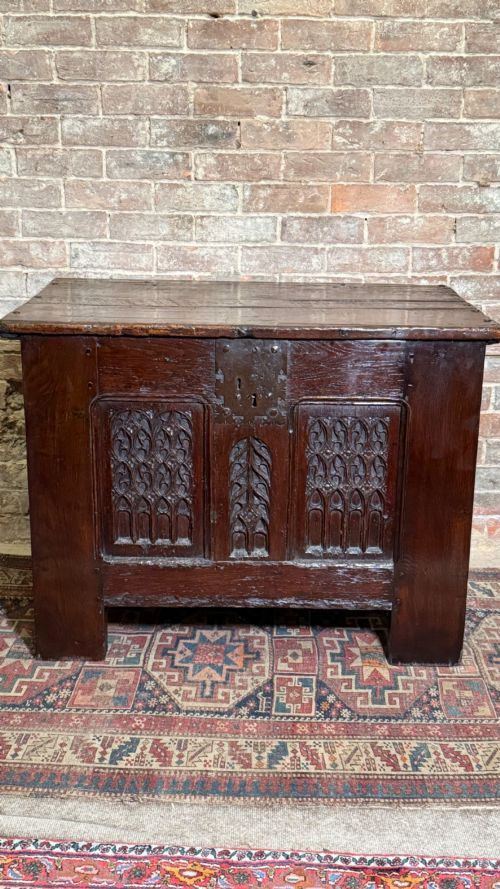
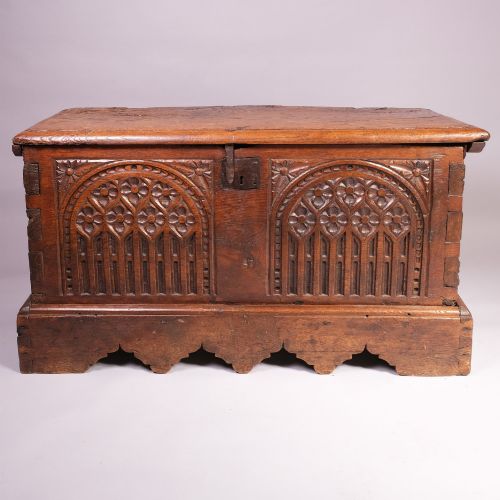


Gothic Style Wooden Box
A gothic style wooden box is a robust storage piece bearing medieval architectural motifs, built to last centuries in heavy oak, iron, and elm.
Gothic Style Wooden Box
When you search for a gothic style wooden box, you encounter heavy storage items ranging from small desk accessories to massive coffers and chests. These items display the architectural tracery, pointed arches, and iron strapwork characteristic of medieval design revived across later centuries.
The versions most commonly met on this page span several distinct periods, including sixteenth-century examples alongside Victorian Gothic revival pieces. Formats vary from iron-bound deed boxes and correspondence chests to large blanket coffers built for utilitarian storage.
How they were made
These items rely on sturdy timbers such as oak, elm, mahogany, and chestnut, often joined using traditional framing techniques suited to heavy domestic use. Carpenters constructed them to withstand daily handling, utilising thick boards and sturdy joints.
Metalwork played a structural role alongside the timber, with wrought iron and brass straps, hinges, and locks securing the lids and corners. Iron-bound surfaces provided both physical protection and decorative contrast against the dark wood.
Gothic Style Wooden Box Retail Price Guide 2026
Typical asking prices for gothic style wooden box among the pieces listed under this phrase on Sellingantiques today, from the lower quarter to the upper quarter. They describe what is for sale here now, not the wider market.
Current listings feature items spanning from the sixteenth century through the Victorian Gothic revival period, constructed in oak, mahogany, and elm.
What varies in quality
Quality rests upon the integrity of the original timber and the crispness of any carved architectural detailing or ironwork. Pieces retain more value when their structural iron straps, hinges, and locks remain original to the box rather than replaced.
Proportion and execution distinguish standard utilitarian storage from finer decorative examples. Earlier sixteenth-century construction methods display distinct joinery that differs significantly from nineteenth-century revival interpretations.
Pugin
The Gothic Style Wooden Box Glossary
- Coffer
- A heavy wooden chest, often bound with iron, used historically for storing valuables and documents. These pieces frequently feature robust construction and hinged lids.
- Gothic Revival
- An architectural and decorative style popular during the nineteenth century that revived medieval forms, pointed arches, and heavy timber framing. Pugin was a prominent designer working within this aesthetic.
- Ironbound
- Describing wooden furniture reinforced with bands, straps, and brackets of wrought iron. This treatment provided structural security against forced entry or splitting.
- Despatch box
- A portable container used for carrying official documents and correspondence. These compact items often include fitted interiors and secure locks.
- Tracery
- Ornamental stone or woodwork resembling lace patterns, commonly adapted into carved panels on medieval and revival furniture.
Gothic Style Wooden Box: Frequently Asked Questions
What were gothic style wooden boxes used for?
These boxes served multiple domestic and administrative functions, holding valuable household goods, correspondence, candles, and legal documents. Larger coffers stored textiles and valuables securely in domestic or institutional settings.
Smaller variants functioned on desks for sorting letters and writing materials. Their sturdy construction protected contents from dampness and theft.
How do I date a wooden box?
Dating relies on examining construction methods, tool marks, timber species, and iron hardware styles. Sixteenth-century pieces display heavy hand-hewn boards and traditional peg joinery.
Nineteenth-century revival items often exhibit machine-sawn timber and different fastening techniques, even when copying medieval decorative motifs.
Are these boxes made of solid oak?
Many examples utilise solid oak, while others employ elm, mahogany, chestnut, or walnut depending on the region and period of manufacture. Regional preferences dictated timber selection across British, French, and German workshops.
Secondary woods sometimes appear in internal compartments or secondary panels, though primary structures remain solid timber.
How should I care for an antique wooden box?
Keep the wood conditioned by avoiding direct sunlight and maintaining stable room humidity to prevent splitting. Occasional application of suitable wax helps preserve the finish.
Handle original iron hinges and locks with care, avoiding excessive force on antique mechanisms that may be brittle.