
Gothic Revival Seat
A gothic revival seat brings architectural timber and ecclesiastical lines straight into a domestic interior.
Gothic Revival Seat
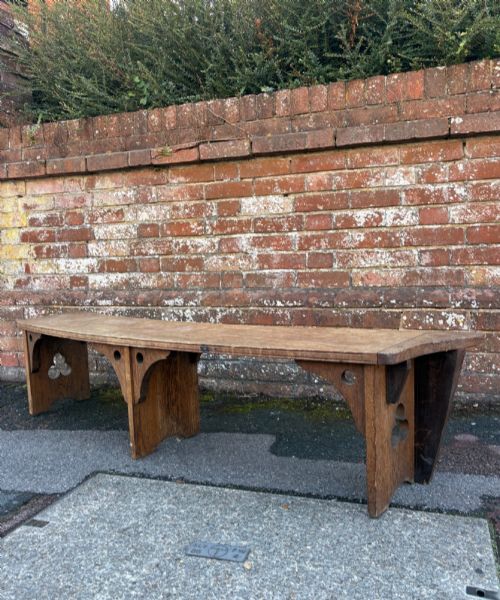
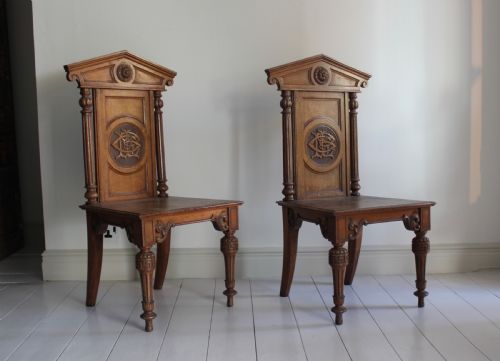
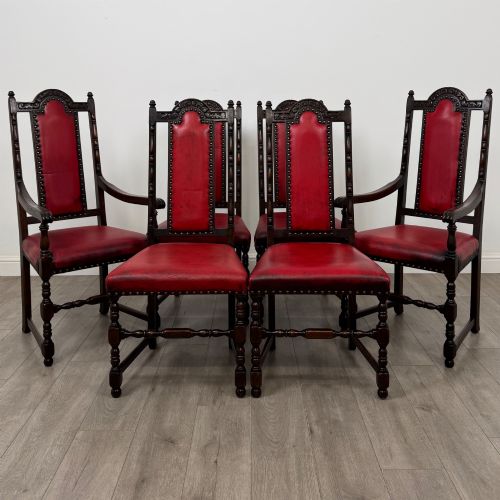
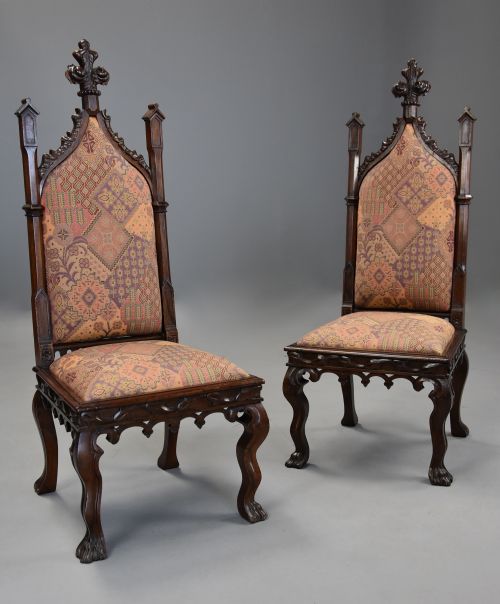
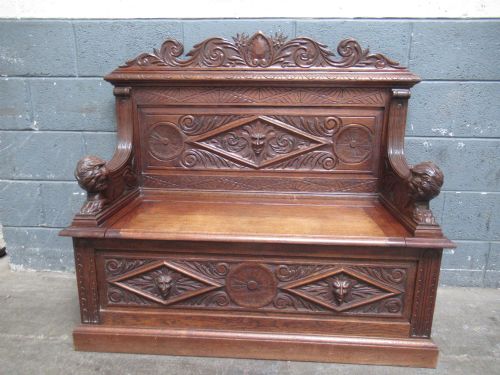
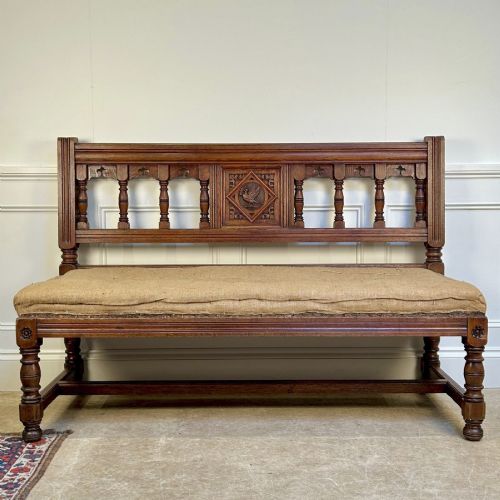
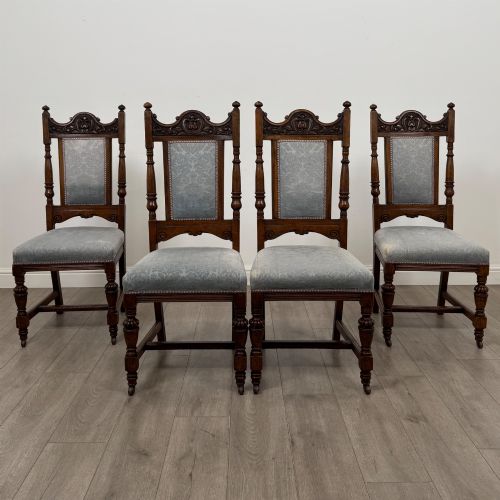
A gothic revival seat encompasses heavy oak benches, hall chairs, dining chairs, and occasional seating produced predominantly during the 19th century. These pieces draw heavily on medieval church architecture, featuring pointed arches, high backs, and structural rigidity designed for formal reception rooms and entrance halls.
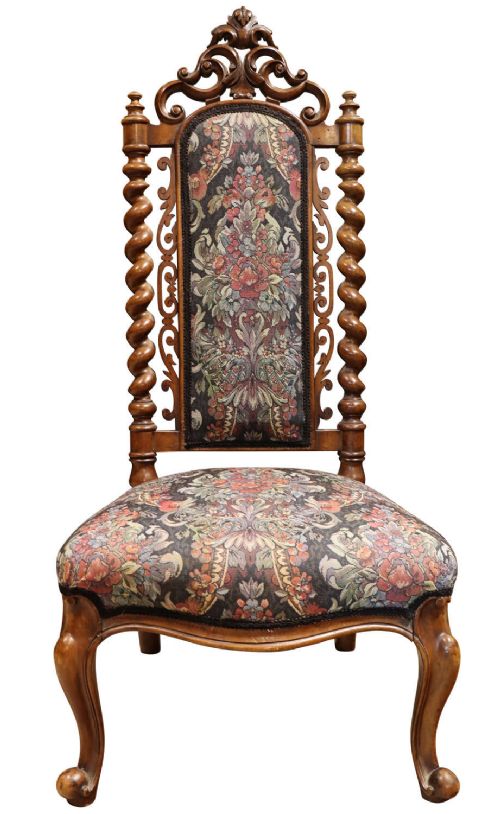
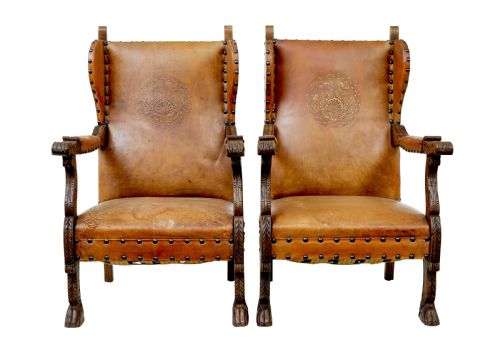
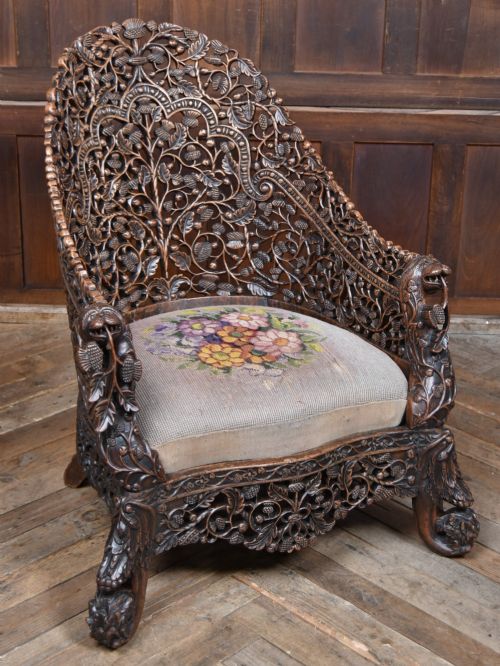
The versions most commonly met here span Victorian and Arts and Crafts interpretations, ranging from simple pitch pine church pews to elaborately carved walnut and rosewood armchairs. Oak remains the dominant timber, often embellished with trefoil cutouts, architectural tracery, and embossed leather or tapestry upholstery.
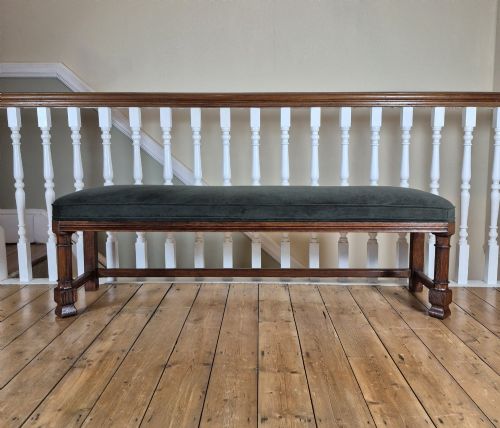
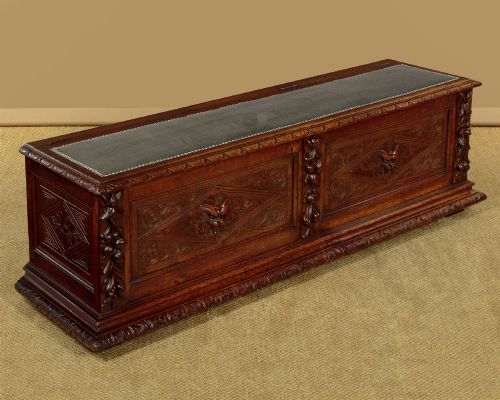
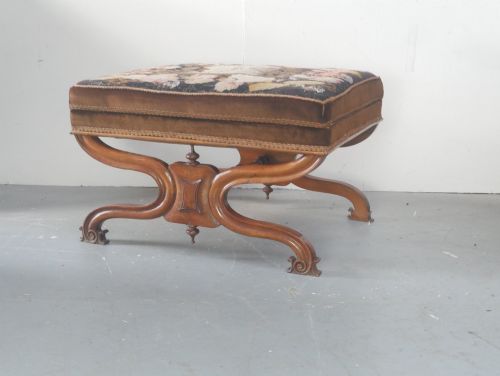
Form follows function across various seating types, including revolving desk chairs, ottoman box seats, and substantial Scottish baronial stools. Whether executed as single hall chairs or complete dining sets, each object references historical ecclesiastical and baronial aesthetics.
Materials and Construction
Solid timbers such as oak, walnut, rosewood, and pitch pine form the structural core of these pieces, selected for their density and capacity to support deep carving. Joinery relies on traditional methods to bear the weight of architectural elements like high pediments and heavy arm supports.
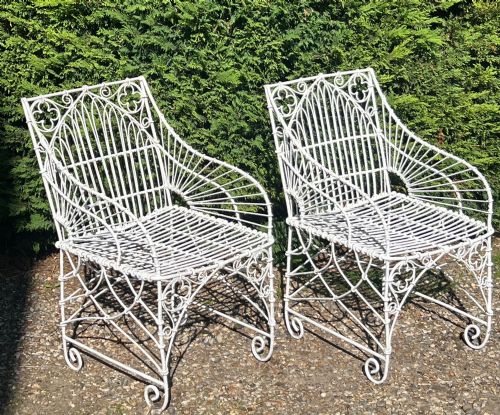
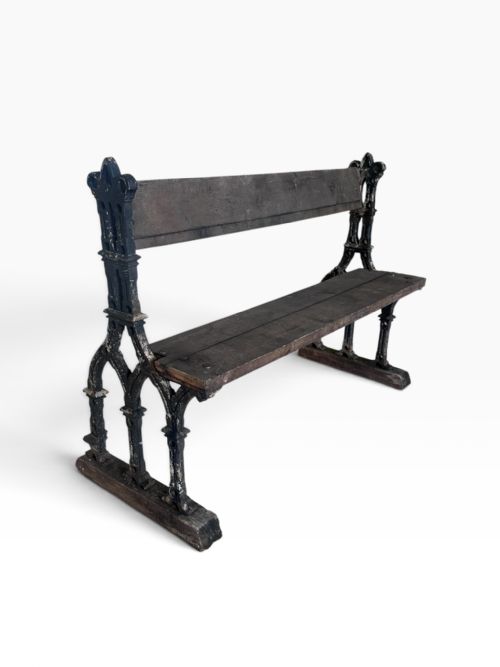
Metal components appear through wrought iron and cast iron in garden benches and metal-framed seats, while secondary materials like brass studs, embossed leather, and woven tapestry provide tactile contrast to the dark wood. Pitch pine and oak often receive surface treatments that accentuate the grain and structural joints.
Carving and turning define the decorative execution, utilising trefoil motifs, linenfold panels, and geometric tracery cut directly into the timber frame. Upholstered sections use horsehair or similar traditional stuffing secured with brass tacks.
Some chairs arrived directly from St Paul's Cathedral bearing their original institutional ownership marks.
Assessing Quality and Execution
Depth and crispness of the timber carving separate standard production items from workshop pieces made for specific commissions or notable designers. Sharp architectural lines, well-defined trefoils, and balanced proportions indicate superior craftsmanship.
The choice of primary wood and the integrity of the joinery dictate longevity, with dense quarter-sawn oak holding fine details better than softer secondary pines. Original upholstery materials and branded maker stamps or labels add documentary weight to individual items.
W.A. Willcocks·Gillows
The Gothic Revival Seat Glossary
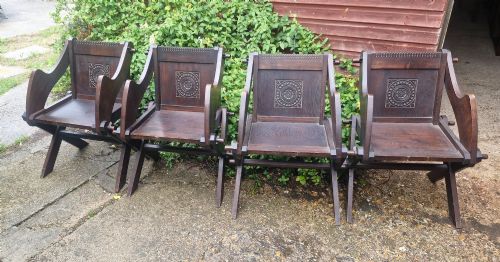
- Glastonbury chair
- A type of folding wooden armchair with X-shaped supports and a sloping back, frequently produced during the 19th century in oak or pitch pine.
- Trefoil
- A three-lobed ornamental design resembling clover leaves, commonly pierced through the wooden splats or supports of gothic seating.
- Scottish Baronial
- An architectural and furniture style drawing on 16th- and 17th-century Scottish castles, characterised by heavy proportions and defensive detailing.
- Hall chair
- A stiff-backed wooden seat placed in an entrance hall, usually featuring a solid wooden panel back and minimal upholstery.
- Linenfold
- A style of wood carving that mimics folded fabric, frequently used on the panels of benches and settles.
Gothic Revival Seat: Frequently Asked Questions
Where were gothic revival seats originally placed?
These pieces generally furnished the entrance halls, libraries, and dining rooms of 19th-century homes, echoing the grand architectural styles of churches and castles.
Larger benches and settles also served practical functions in institutional buildings, churches, and large reception spaces.
How do I care for antique oak seating?
Maintain the timber by applying occasional wax polish and keeping pieces away from direct heat sources and strong sunlight.
Avoid using harsh liquid cleaners on the wood or the original leather and tapestry upholstery.
Are these chairs comfortable for daily use?
Many examples prioritise architectural presence and upright posture over modern cushioning, particularly rigid hall chairs and high-back dining seats.
Upholstered armchairs and padded ottoman box seats offer a softer sit suitable for longer periods.
How can I tell a Victorian piece from later revivals?
Mid-19th-century pieces often display hand-carved detailing and dense, patinated timbers that reflect the initial resurgence of medieval design.
Later Victorian and Edwardian examples sometimes incorporate machine-assisted joinery alongside traditional hand finishing.