
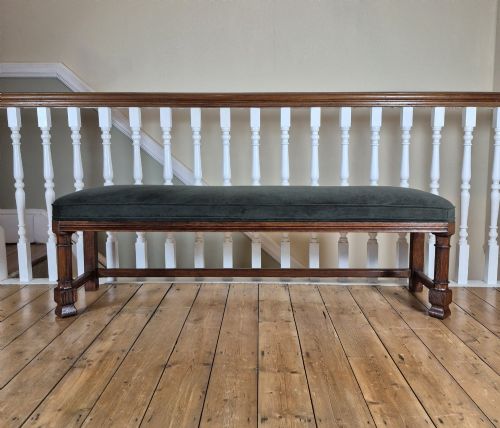
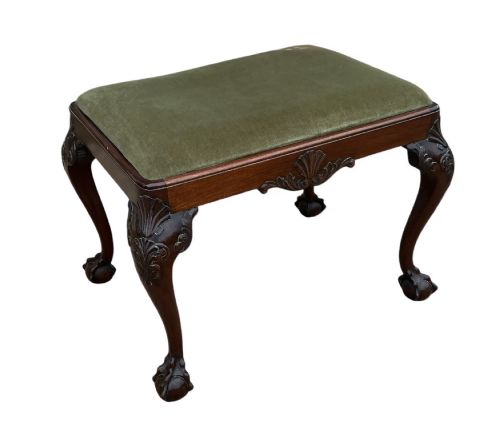
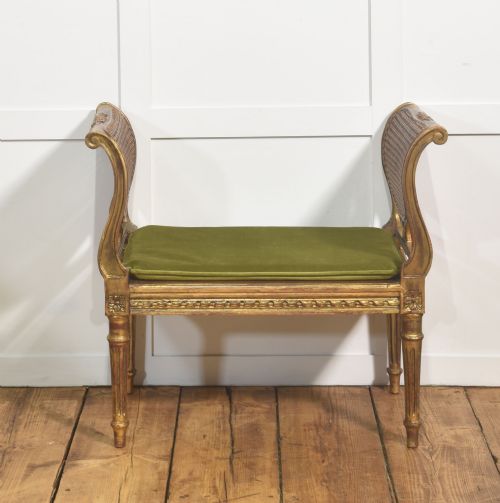
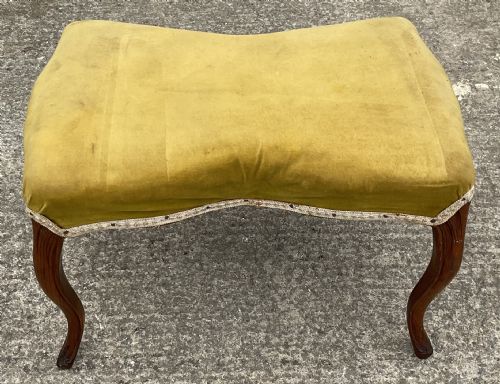


Green Velvet Bench
Green velvet bench seating brings rich upholstery and compact versatility to a room, drawing on Victorian, Edwardian and twentieth-century traditions.
Green Velvet Bench
A green velvet bench combines deep textile upholstery with solid timber frames, appearing across forms such as window stools, piano stools, footstools and small settees. When searching for a green velvet bench, buyers encounter pieces spanning the nineteenth century through to nineteen-thirty, reflecting styles from Gothic Revival and Chippendale Revival to Art Deco and Louis XVI.
The selection ranges from carved walnut and mahogany frames to giltwood and oak structures, encompassing both English workshops and continental makers. Forms vary from simple upholstered centre stools and dressing table seats to club fenders and conversation seats, offering practical seating solutions for halls, bedrooms and reception spaces.
Materials and construction methods
Timber frames form the structural backbone of these pieces, utilising solid walnut, mahogany, oak and rosewood alongside gilded or painted surfaces. Joinery techniques vary from traditional pegging and mortise joints in nineteenth-century examples to later twentieth-century framing methods.
Upholstery relies on high-grade textile velvet stretched over supportive padding, occasionally paired with secondary materials such as brass fittings, cane work or inlaid wood detailing.
The listings span multiple decades from the nineteenth century to nineteen-thirty, incorporating oak, walnut, mahogany, rosewood, and giltwood frames.
Distinctions in craftsmanship
Quality rests in the precision of the timber carving, the integrity of the frame construction and the depth of the wood grain. Finer examples display harmonious proportions, crisp decorative details such as hand-carved foliage or inlay, and robust joinery that sustains daily use.
The standard of upholstery work and the selection of the velvet fabric define the finish, where dense pile and secure tacking distinguish superior execution from simpler commercial production.
John Tesch
The Green Velvet Bench Glossary
- Giltwood
- Timber treated with gold leaf or gesso to create a lustrous decorative surface. This finish frequently appears on formal window stools and French-influenced seating.
- Club fender
- A low, padded seat surrounding a fireplace hearth, typically constructed with brass framework and upholstered top rails. It provides sociable fireside seating.
- Centre stool
- A large freestanding stool designed to stand in the middle of a room rather than against a wall. These pieces feature finished woodwork on all sides.
- Inlay
- Decorative patterns created by fitting contrasting strips of wood or other materials into hollowed-out spaces on the furniture surface. Edwardian makers frequently utilised this technique on mahogany and walnut frames.
- Chaise longue
- An elongated upholstered seat intended for reclining, combining the backrest of a sofa with the extended length of a daybed. Victorian examples often showcase elaborate carved walnut or rosewood frames.
Green Velvet Bench: Frequently Asked Questions
Where should I place a green velvet bench?
These pieces suit positions at the foot of a bed, beneath a window, or beside a fireplace as supplemental seating. Their compact footprint allows them to fit easily into hallways and dressing rooms.
Selecting the right scale ensures the bench complements existing furniture without obstructing movement around the room.
How do I care for velvet upholstery?
Regular gentle brushing maintains the pile and prevents dust from settling into the deep weave. Avoiding direct sunlight protects the green dye from fading over time.
Professional cleaning is recommended for deep maintenance to preserve the texture and sheen of the textile.
What is the difference between a window stool and a piano stool?
Window stools are designed to sit low beneath window frames, often featuring decorative frames like giltwood or carved oak. Piano stools traditionally accommodated musicians, sometimes incorporating adjustable height mechanisms or storage.
Both serve as versatile small-scale seating options within domestic interiors.
How do I identify a Victorian piece?
Victorian seating frequently employs dark dense timbers such as walnut and rosewood, paired with substantial upholstery and robust proportions. Stylistic markers include revival motifs drawing on Gothic, Rococo and classical influences.
Examining the underside and construction joints helps confirm the nineteenth-century origins of the frame.