

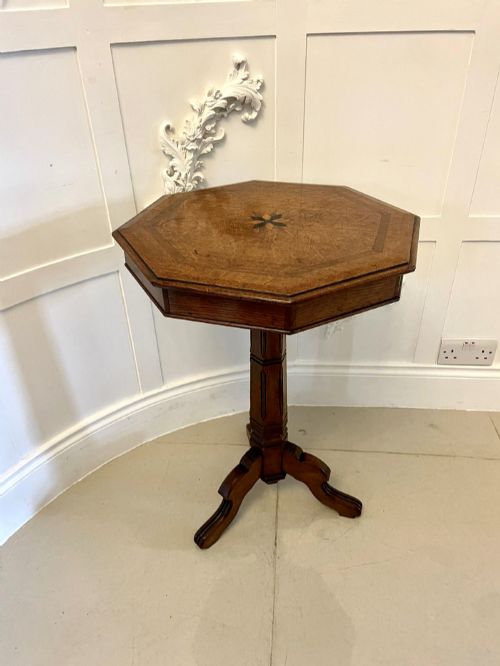
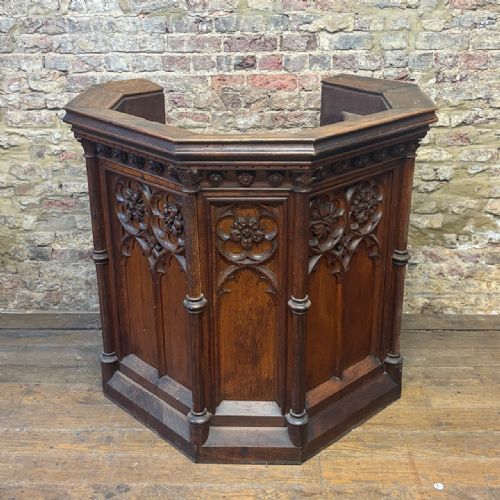
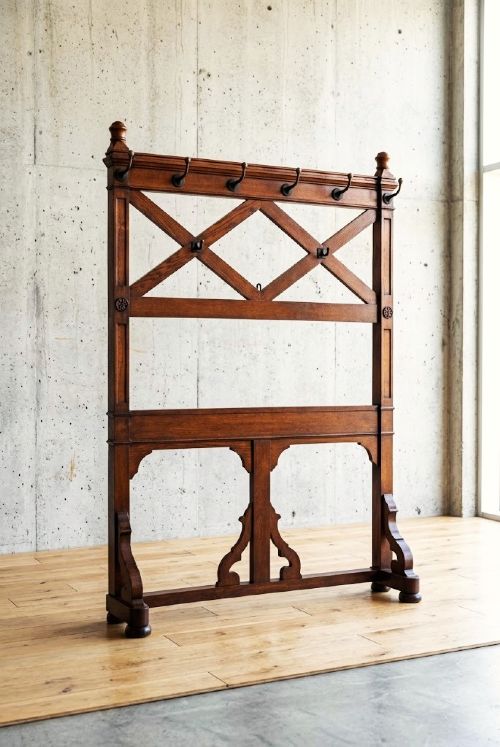
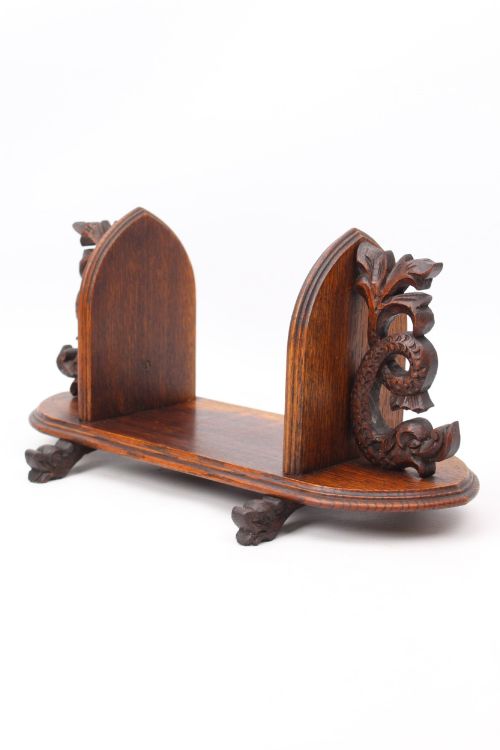

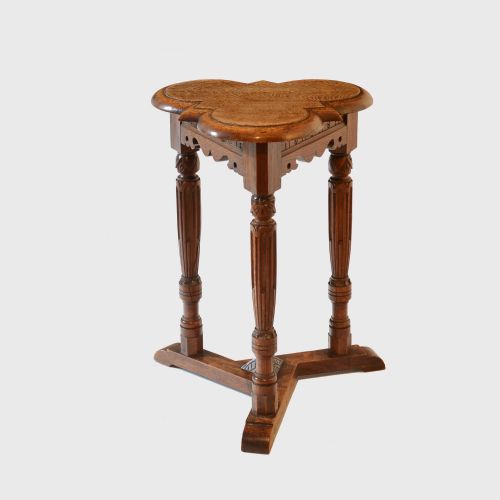


Gothic Revival Oak Stand
A gothic revival oak stand brings medieval architectural drama into domestic spaces through pointed arches, heavy timber, and deep relief carving.
Gothic Revival Oak Stand
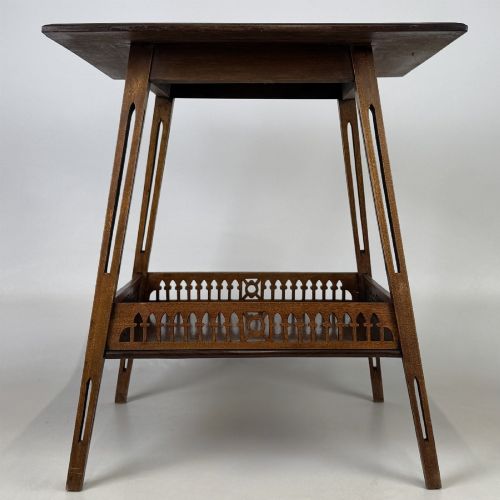
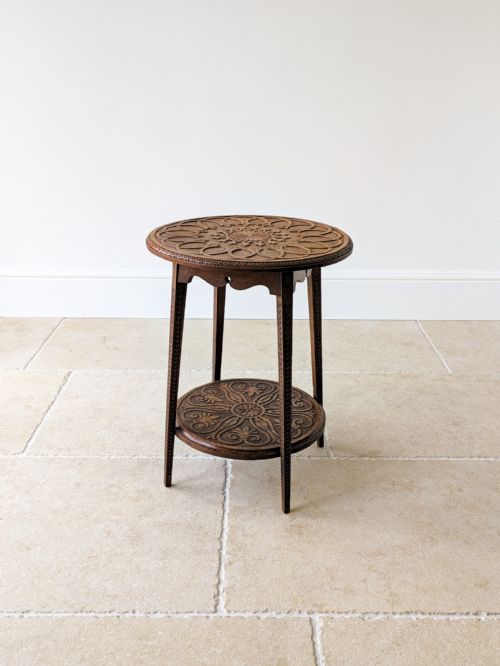
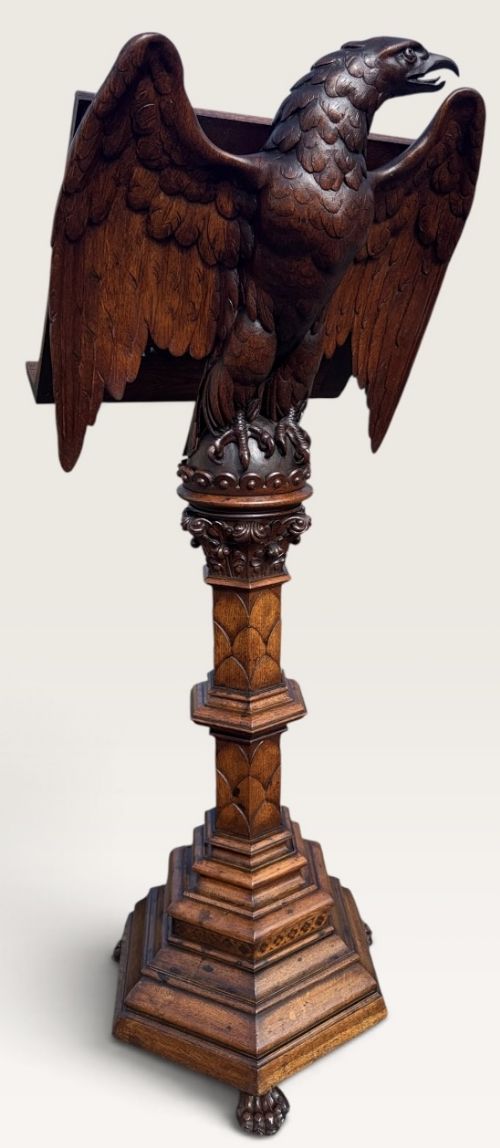
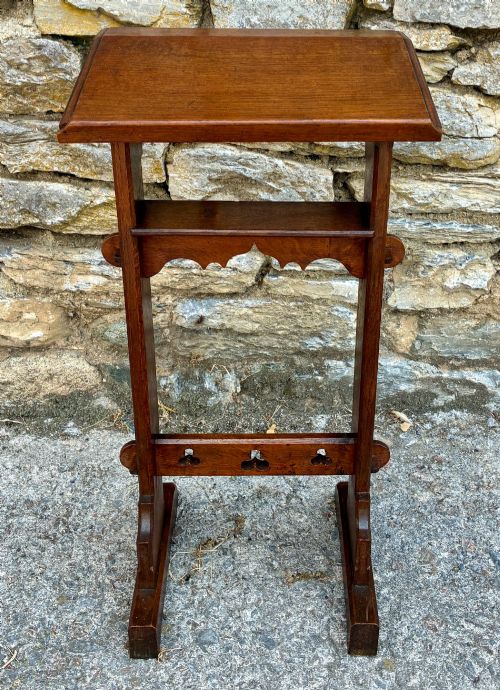
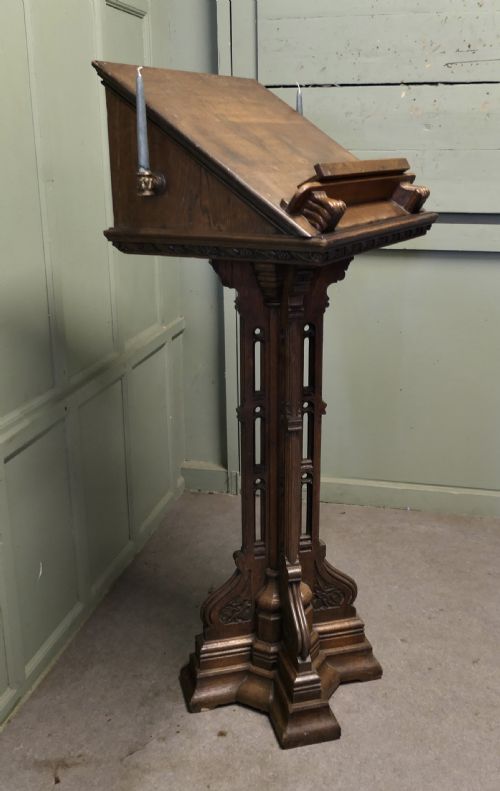
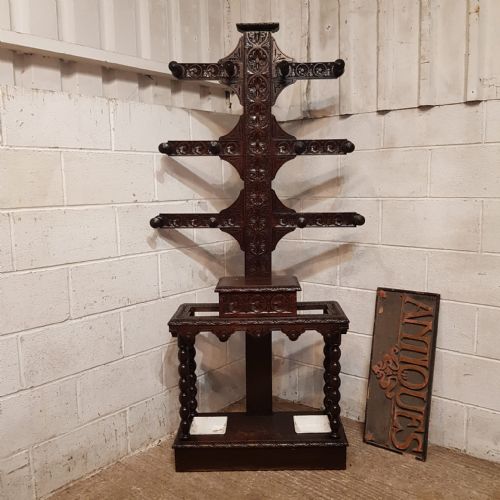
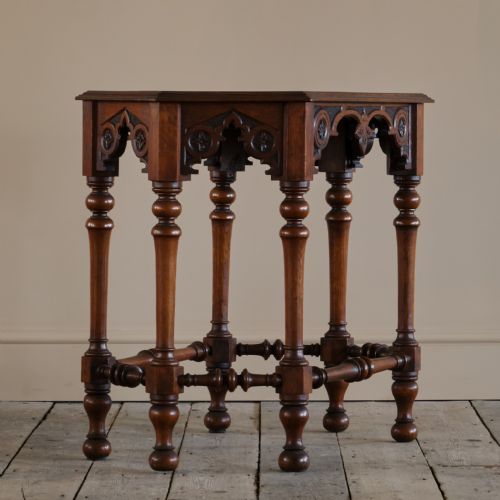
A gothic revival oak stand encompasses functional domestic furniture designed with ecclesiastical and medieval architectural motifs during the nineteenth and early twentieth centuries. These pieces appear as umbrella stands, hall stands, reading lecterns, occasional tables, and cabinets built to echo stone cathedral stonework in timber.
The versions most common on this page date from the Victorian era and the Edwardian period, often reflecting the architectural philosophies of designers like Pugin or the later Arts and Crafts movement. They serve as practical hallway or library furniture while carrying heavy stylistic references to the Middle Ages.
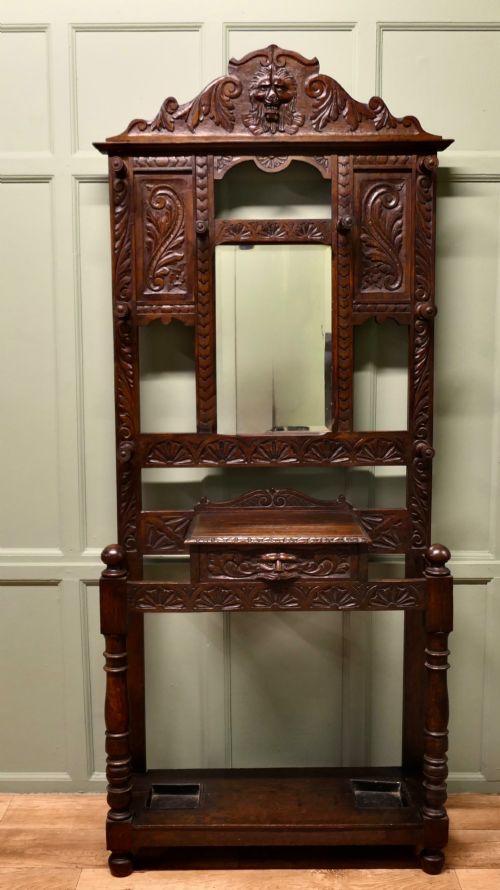
Makers of the period utilised solid timber to construct robust items meant to anchor grand domestic interiors. Whether shaped as a trefoil table or a carved hall stand, each object merges daily utility with the solemnity of Gothic design.
How they were made
Carpenters relied primarily on solid oak, chosen for its durability and its historical association with medieval building and church interiors. This timber often received deep hand-carving to produce intricate details such as tracery, quatrefoils, and Green Man masks.
Secondary materials like brass, iron, and wrought iron appear in hardware, hooks, hinges, and umbrella drip pans, offering functional contrast to the dark wood. Joinery techniques prioritized strength, utilising pegged mortise and tenon joints to support heavy loads of books, coats, or umbrellas.
Gothic Revival Oak Stand Retail Price Guide 2026
Typical asking prices for gothic revival oak stand among the pieces listed under this phrase on Sellingantiques today, from the lower quarter to the upper quarter. They describe what is for sale here now, not the wider market.
Listings feature items spanning the nineteenth century, Victorian era, Edwardian period, and early twentieth century.
What varies in quality
The distinction between ordinary and exceptional pieces lies in the depth and crispness of the hand-carving. Master carvers produced figures and architectural elements with sharp undercut details and expressive faces, whereas lesser workshops relied on shallow machine routing or simpler applied mouldings.
Proportion and structural integrity also separate fine examples from mass-produced items. The finest stands balance heavy architectural ornamentation with stable, balanced frames that withstand daily domestic use without sagging or splitting.
Baillie Scott
The Gothic Revival Oak Stand Glossary
- Gothic Revival
- An architectural and decorative style drawing inspiration from medieval design, featuring pointed arches, trefoils, and heavy massing. It dominated British building and furniture design throughout the nineteenth century.
- Green Man
- A sculptural motif depicting a human face disgorged from foliage, often appearing in carved oak on Victorian hall stands and furniture. This pagan symbol of rebirth found a permanent home in medieval church and secular woodcarving.
- Trefoil
- A graphic ornament composed of three overlapping rings or leaf-shaped lobes. Cabinetmakers frequently pierced this shape into gallery rails or table tops.
- Tracery
- Architectural stonework elements translated into woodwork, forming openwork patterns in windows, panels, and galleries. It provides the primary geometric rhythm across gothic revival furniture.
Gothic Revival Oak Stand: Frequently Asked Questions
Where did people place these stands in Victorian homes?
Owners positioned hall stands and umbrella stands immediately inside the main entrance to manage wet coats, hats, and walking sticks. Smaller reading stands and occasional tables found places in studies, libraries, and drawing rooms.
These pieces acted as both practical furniture and deliberate statements of architectural taste for visitors entering the home.
How do I distinguish a Victorian piece from later revivals?
Victorian pieces typically display heavier timber construction, deeper hand-carving, and darker wax finishes associated with nineteenth-century taste. Later Edwardian or early twentieth-century examples often show lighter wood tones and simpler Arts and Crafts influences.
Examining the tool marks on the underside or behind panels often reveals the methods characteristic of different decades.
Are these stands suitable for modern hallways?
The narrow profile of many hall stands and umbrella stands makes them well-suited for contemporary entryways that require practical storage. Their dark oak surfaces and architectural details add strong character to minimalist or neutral modern interiors.
Careful measurement of ceiling height and floor space ensures these substantial wooden pieces fit comfortably without overwhelming a smaller room.
What maintenance does solid oak require?
Routine care involves dusting with a dry cloth and occasionally feeding the timber with a traditional beeswax to maintain the sheen. Keeping the wood away from direct heat sources prevents the solid oak from drying out and splitting.
Metal components like brass drip pans benefit from gentle cleaning to preserve their natural patina without stripping the age.