

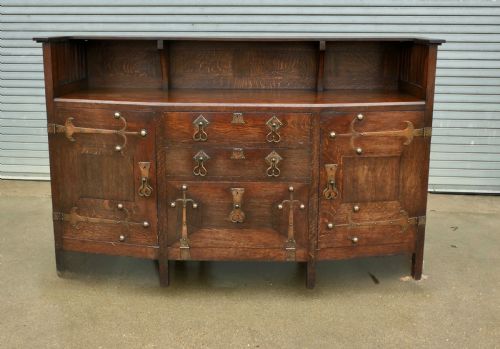

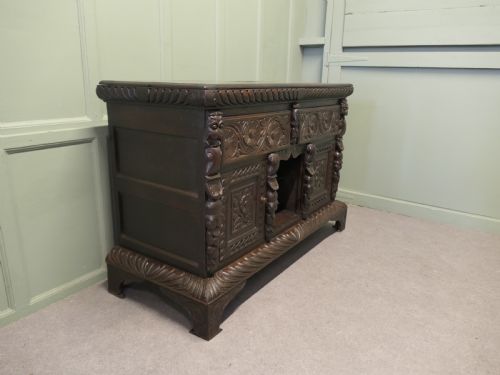
Gothic Revival Oak Dresser
A gothic revival oak dresser brings architectural weight and ecclesiastical detail into a room, offering robust storage built from heavily carved timber.
Gothic Revival Oak Dresser
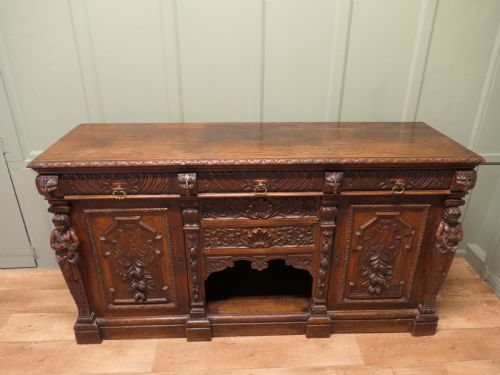
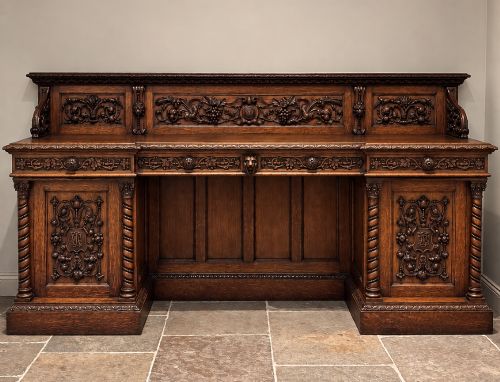
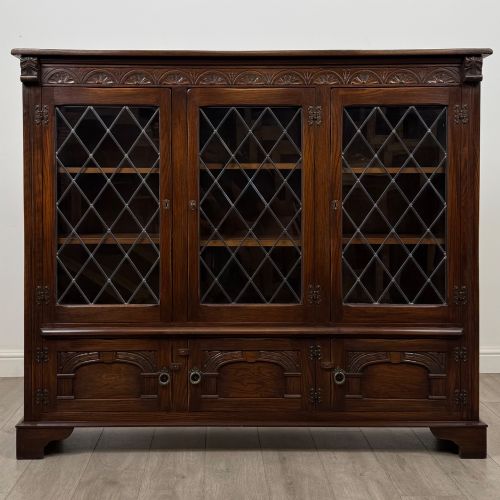
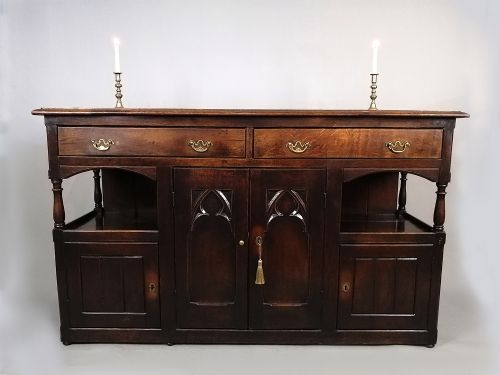
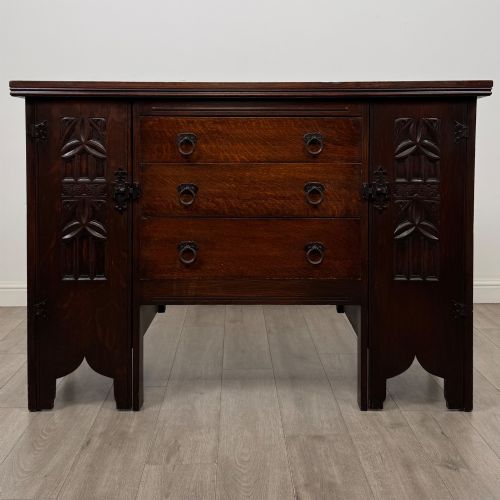
A gothic revival oak dresser typically manifests as a substantial sideboard, dresser base, or bookcase originating from the nineteenth century, particularly the Victorian era. These pieces draw heavily on medieval architectural motifs, translating stone cathedrals and monastic furniture into domestic storage.
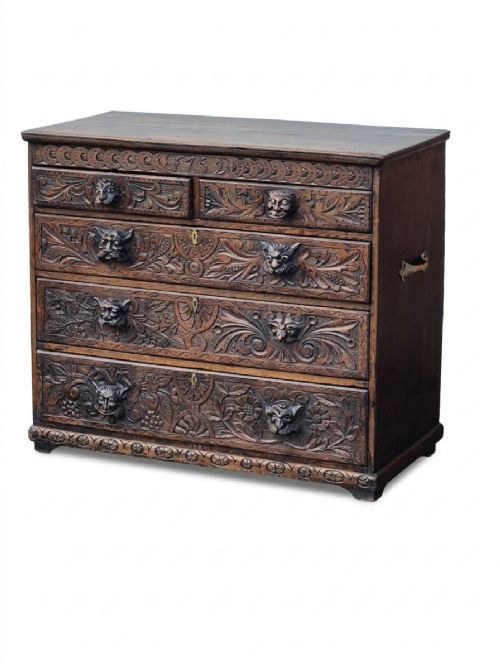
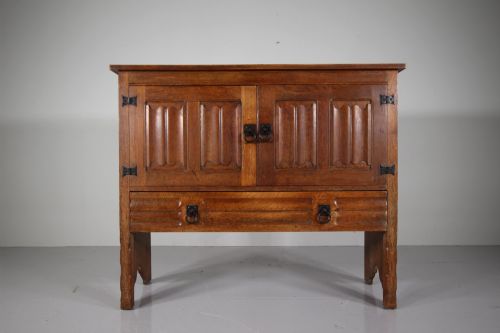
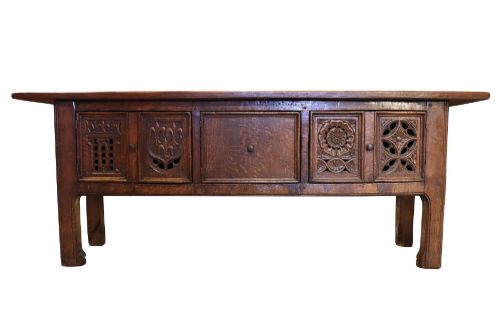
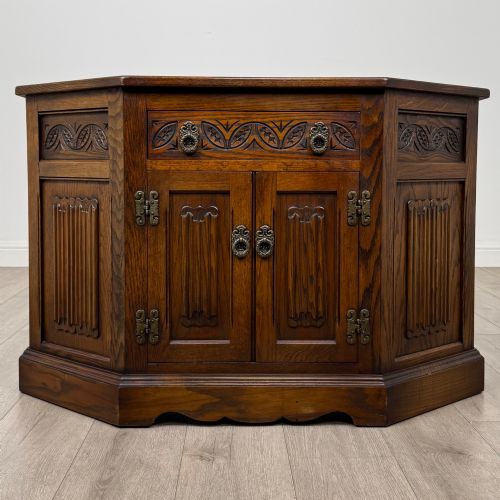
Buyers will encounter variations ranging from narrow dresser bases and mirror-backed sideboards to display cabinets and cupboards incorporating linenfold panelling or grotesque Green Man carvings. Certain examples reflect related movements such as the Arts and Crafts aesthetic or Jacobean Revival, while retaining the core gothic character.
Materials and Construction
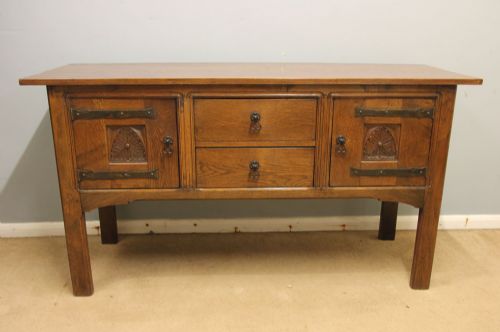
The primary material is oak, often golden or fumed, complemented by secondary timbers and sometimes enhanced by pollard oak or specimen wood inlay. Structural integrity relies on heavy joinery designed to support deep carvings and substantial proportions.
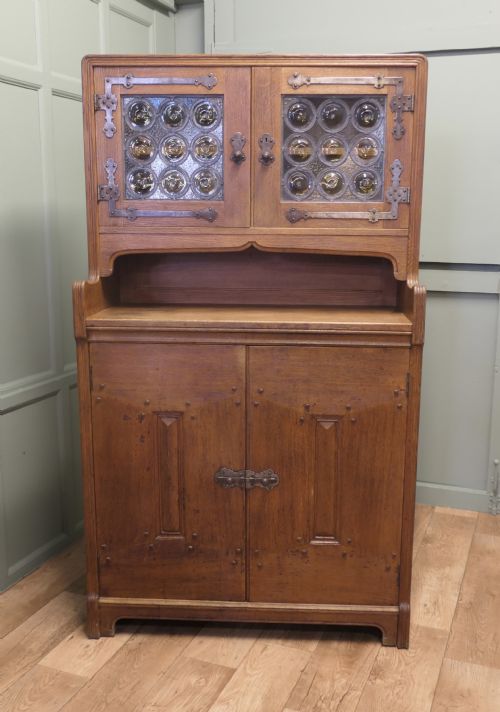
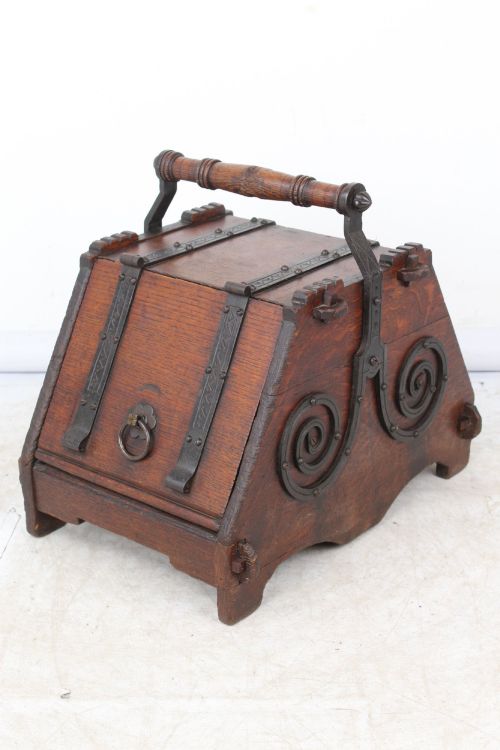
Detailing is achieved through hand-carved ornamentation, linenfold panels, and architectural tracery, occasionally paired with stained glass doors, brass hardware, iron hinges, and lead details.
Listings feature nineteenth-century and early twentieth-century pieces, incorporating oak, brass, iron, and stained glass across sideboard and cabinet forms.
Judging Quality
Quality rests upon the depth, crispness, and artistic ambition of the carved ornament, separating mass-produced nineteenth-century items from individually designed pieces associated with known makers or retailers. Proportion and timber selection also dictate worth, where richly figured oak and well-balanced narrow proportions command greater attention.
The integration of secondary elements, such as original stained glass, leaded window sections, and period brass or wrought iron mounts, elevates an example above standard utility pieces.
Christopher Dresser·Liberty·Leonard Wyburd·John Moyr Smith
The Gothic Revival Oak Dresser Glossary
- Gothic Revival
- An architectural and decorative style drawing on medieval ecclesiastical design, featuring pointed arches, tracery, and heavy carved details.
- Green Man
- A sculptural motif depicting a human face entwined with foliage, vines, or branches, frequently found carved into nineteenth-century furniture.
- Linenfold
- A style of wood panelling carved in relief to imitate vertical folds of tightly woven fabric.
- Dresser Base
- A low sideboard or cabinet with drawers and cupboards, historically used for serving food or storing household goods.
- Strawberry Hill Gothic
- An early, playful phase of gothic revival architecture and design associated with Horace Walpole's villa.
- Tracery
- Openwork ornamental stonework or woodwork with branching lines, commonly seen in cabinet doors and glazed panels.
Gothic Revival Oak Dresser: Frequently Asked Questions
What is a gothic revival oak dresser?
A gothic revival oak dresser is a heavy nineteenth-century storage piece decorated with medieval architectural motifs such as pointed arches and intricate woodcarvings.
These items range from functional sideboard bases to tall bookcases and display cabinets made primarily of solid oak.
How do I identify a Victorian gothic piece?
Victorian gothic pieces display characteristic architectural elements like trefoils, lancet arches, chamfered framing, and deep relief carvings including foliage or grotesque masks.
They are typically constructed from dark or golden oak with substantial iron or brass hardware reflecting medieval influences.
Where were these dressers used?
These robust sideboards and cupboards served as dining room and hallway furniture in nineteenth-century homes, designed to store tableware, linens, and books.
Today, they function as statement storage units in living spaces, kitchens, and studies.
How do I care for antique oak furniture?
Antique oak benefits from stable indoor humidity and protection from direct sunlight to prevent the timber from drying out or splitting.
Regular dusting with a dry cloth and occasional application of appropriate wax will preserve the finish and patina of the carved surfaces.