

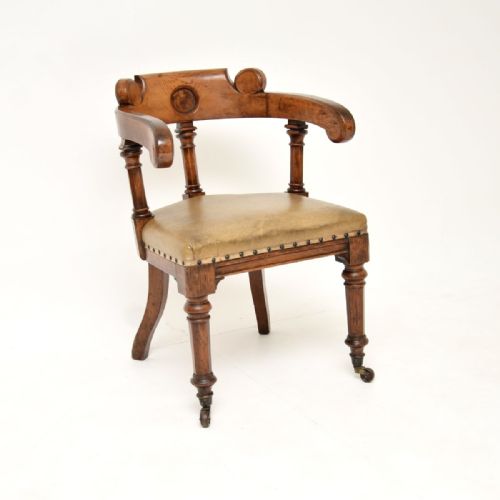
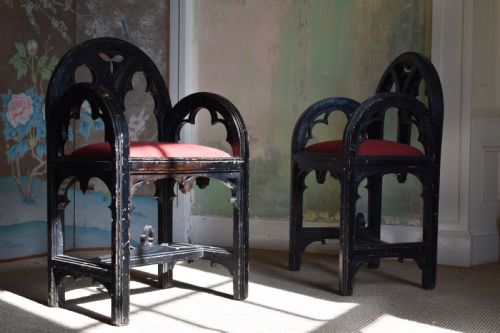

Gothic Revival Oak Armchair
These heavy timber seats bring medieval architecture into domestic rooms, offering structured comfort through pointed arches, tracery and robust joints.

Gothic Revival Oak Armchair
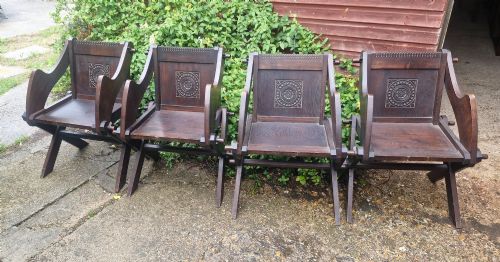
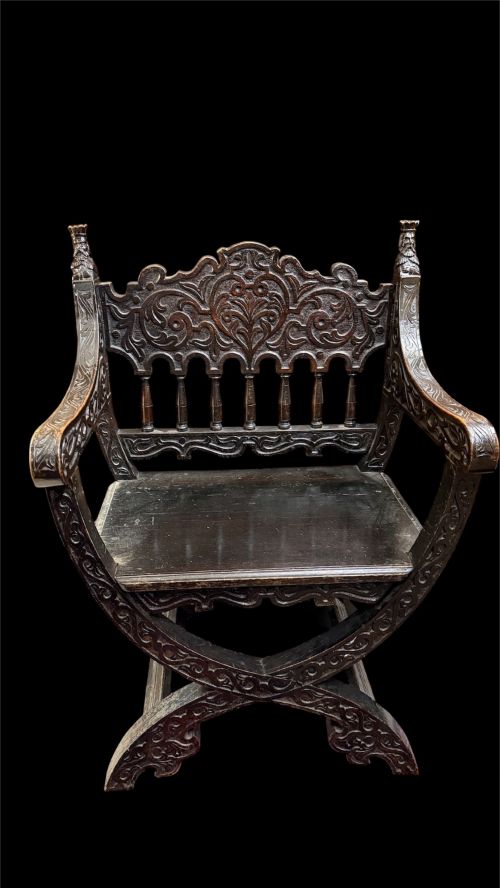
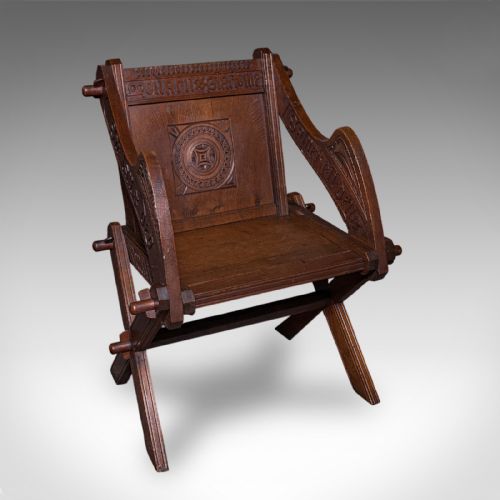
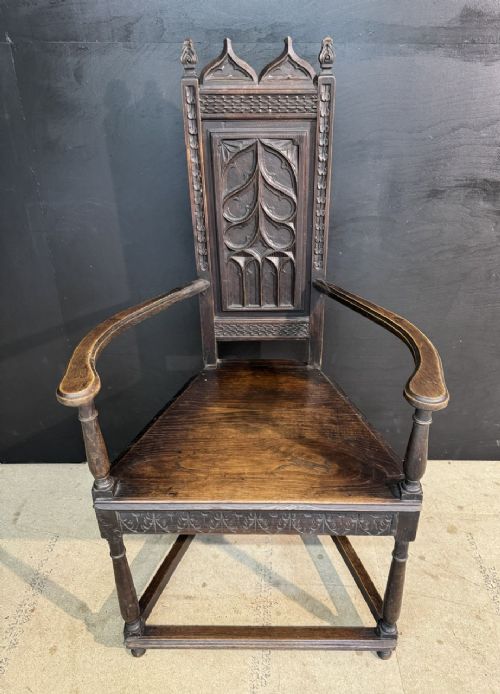
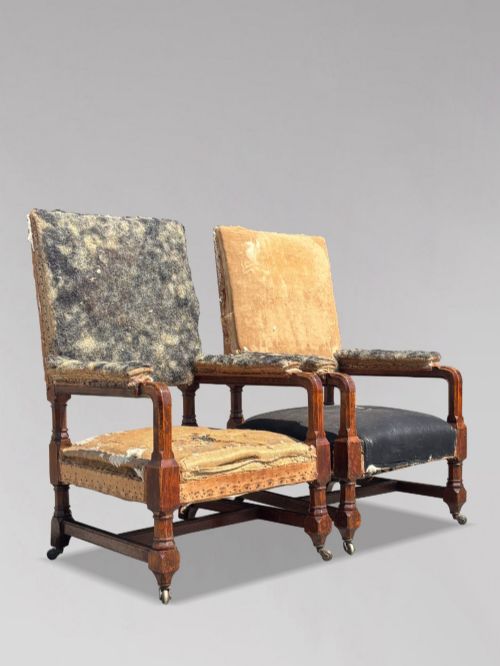
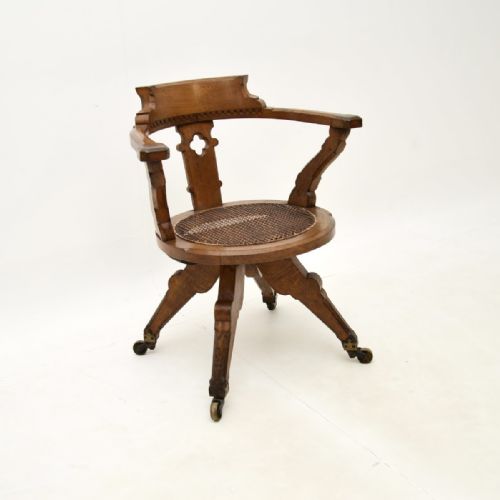
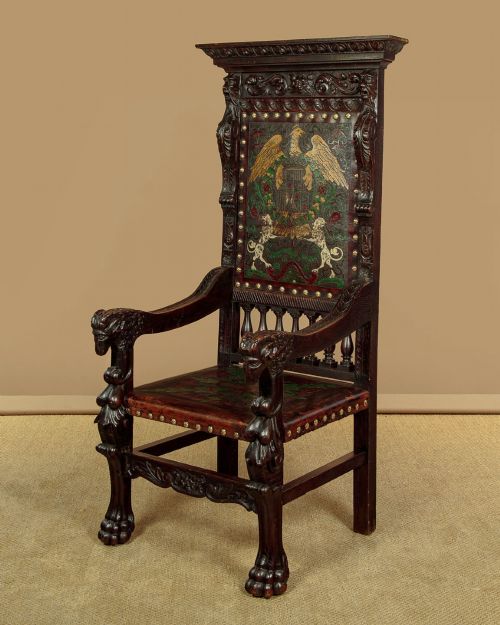
A gothic revival oak armchair draws directly from medieval ecclesiastical and domestic seating, reinterpreted through nineteenth- and early twentieth-century workshops. When searching this phrase, a buyer encounters forms ranging from sturdy wainscot and Glastonbury chairs to elaborate throne chairs and swivel desk variants.
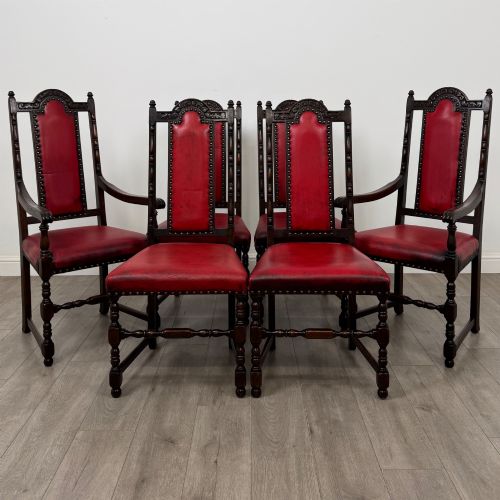
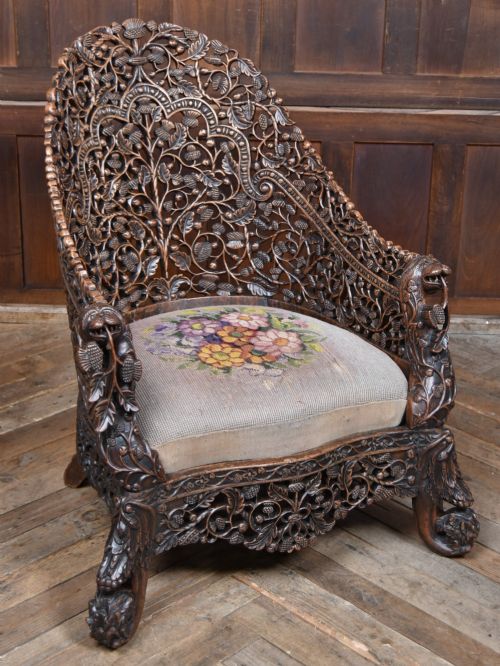
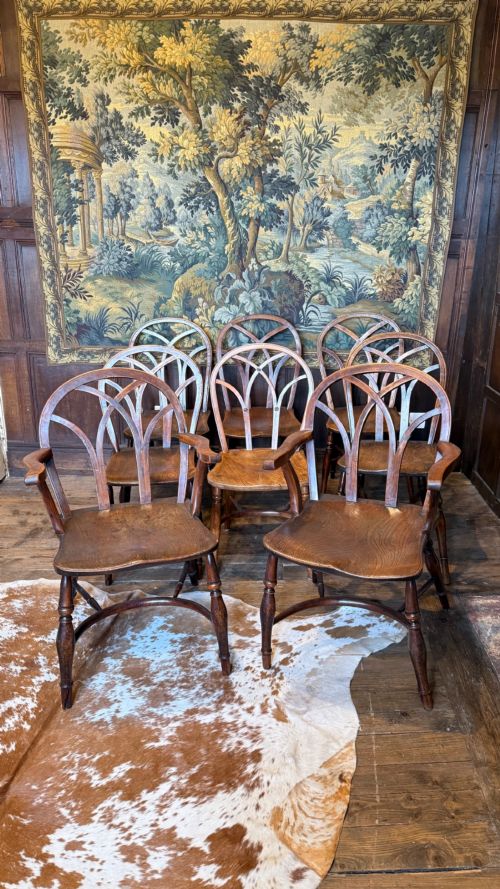
The nineteenth century dominates the available stock, spanning the Victorian era up to Edwardian iterations and early twentieth-century revivals. Pieces appear singly, in pairs, or in sets, executed in solid timber with carved detailing such as linenfold panels, Green Man motifs, and thistle carvings.
Regional variations span English country workshops, Scottish chapel furniture, French Renaissance revival pieces, and Austro-Hungarian X-frame designs. The forms serve equally as library armchairs, desk seating, and focal architectural statements in domestic interiors.
Materials and Construction
Makers relied principally upon solid oak, selected for its strength, grain texture, and capacity to hold deep hand-carved relief work. Frames utilise traditional joinery, including pegged mortise and tenon joints that provide structural integrity to heavy armchairs and throne seats.
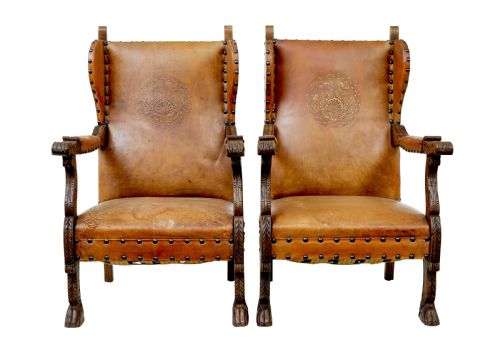
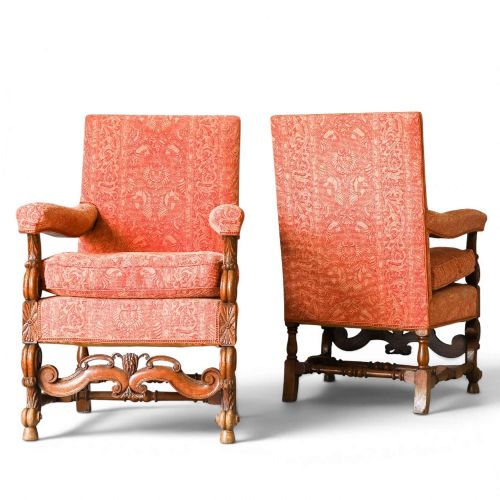
Upholstery materials complement the timber frames through embossed leather, painted leather, tapestry, and fabric panels secured with brass tacks. Secondary materials such as cane, metal hardware, and painted wood surfaces appear across specific continental and vernacular chair types.
Listings feature oak predominantly, supplemented by brass, leather, tapestry, and cane across 19th-century Victorian, Edwardian, and 1930s periods.
Standards of Execution
Quality rests upon the crispness and depth of the hand carving, where skilled workshops achieved sharp architectural tracery and well-defined figural details. Timber selection also dictates distinction, with quartersawn oak displaying prominent medullary rays that enhance the visual weight of the frame.
Structural stability and the integrity of original joinery separate standard production items from exceptional library and throne chairs. The integration of period upholstery materials, such as embossed or painted leather panels, contributes further to a piece's material cohesion.
Gillows·Bruce James Talbert·S&H Jewell·Alfred Waterhouse
The Gothic Revival Oak Armchair Glossary
- Glastonbury chair
- A pegged, folding-style armchair with a sloped back and X-frame base, frequently associated with medieval ecclesiastical furniture revivals.
- Wainscot chair
- A heavy wooden armchair constructed with panelled backrests and solid arms, typical of early domestic seating traditions.
- Caquetoire
- A light, high-backed conversation chair featuring a narrow body designed to accommodate wide sixteenth- and seventeenth-century garments.
- Turned chair
- A seating form constructed entirely from cylindrical turned members fitted together in geometric patterns, often linked to Saxon or vernacular traditions.
- Curule chair
- An ancient X-frame stool or chair design revived during the nineteenth century, sometimes referred to as a Dante or Savonarola chair.
Gothic Revival Oak Armchair: Frequently Asked Questions
How do I style a gothic revival oak armchair at home?
These imposing seats anchor a room well when paired against plain plastered walls or dark heritage paint colours, allowing the carved woodwork to stand out. They function effectively as solitary reading chairs in studies or libraries, or as head chairs at a dining table.
Avoid crowding them with too many competing patterns in soft furnishings. Let the timber grain and architectural details provide the primary visual texture.
Were these chairs used for dining or offices?
Makers produced these armchairs for multiple functions, including library reading, dining settings, and administrative tasks. Swivel desk variants adapted medieval aesthetics for Victorian offices, while wainscot and Glastonbury forms served general domestic seating needs.
Heavier throne chairs and hall chairs were typically positioned in reception rooms or ecclesiastical spaces rather than around standard dining tables.
How do I tell a Victorian piece from an Edwardian one?
Victorian examples often feature heavier proportions, deep relief carving, and dark ebonised or golden-oak finishes influenced by the height of the Gothic revival. Edwardian and later twentieth-century pieces sometimes display lighter construction or simpler interpretations of vernacular forms. Nail construction, timber oxidation, and the specific style of the revival - such as Jacobean or Renaissance influences - help clarify the period of production.
Are these chairs comfortable for daily seating?
Many examples offer an upright, supportive posture dictated by their historical forms, particularly wainscot and hall chair variants. Library armchairs and upholstered leather versions provide a more relaxed sit with padded backrests and generous proportions. Adding a simple period-appropriate squab cushion can improve comfort without altering the historic character of the timber seat.