
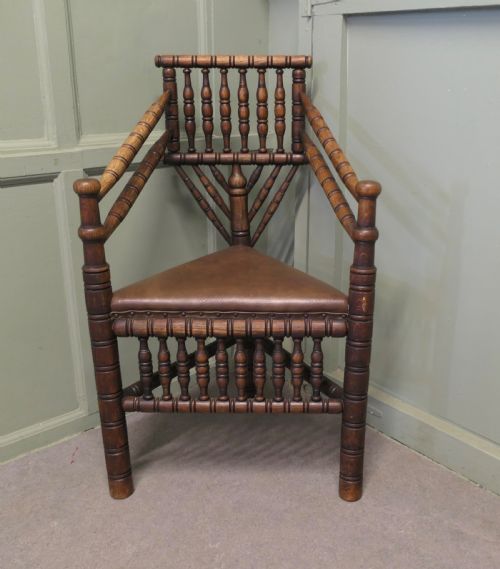


Antique Triangular Seat Chair
An antique triangular seat chair offers sturdy spindle-turned construction and a distinctive three-cornered frame.

Antique Triangular Seat Chair
An antique triangular seat chair is a sturdy vernacular form characterised by its three-cornered base and heavily turned spindles. When searching for an antique triangular seat chair, buyers encounter robust nineteenth-century interpretations of earlier vernacular seating.
Most examples appearing on this page belong to the Victorian period, frequently associated with Saxon or Gothic revival styles. These pieces function primarily as elbow chairs or library armchairs, alongside occasional corner stools.
Materials and construction
Cabinetmakers and turners built these frames predominantly from English oak and beech, occasionally utilising mahogany. The construction relies heavily on lathe-turned spindles and sturdy post-and-rung framing to support the unique three-sided geometry.
Upholstery on the seats varies between solid wood, rush, leather, and fabric inserts. Each joint relies on traditional pegged mortise and tenon construction, ensuring the triangular load is distributed evenly across the three supporting legs.
Listings feature Victorian pieces spanning from eighteen-fifty to nineteen-hundred, predominantly constructed from English oak, beech, and mahogany.
Assessing quality and craftsmanship
Quality rests in the crispness of the spindle turnings and the selection of dense English timber. Superior examples display balanced proportions in the heavy armrests and crest rails without feeling clumsy.
The integrity of the original turned joints determines the long-term stability of the triangular frame. Pieces retaining their original timber surface patination command greater appreciation than heavily stripped or altered surfaces.
The Antique Triangular Seat Chair Glossary
- Turner's chair
- A sturdy wooden seat constructed almost entirely from lathe-turned spindles and posts. These forms date back centuries and see heavy revival production during the Victorian era.
- Saxon revival
- A nineteenth-century design movement that reinterprets early medieval and Anglo-Saxon visual motifs. Furniture in this style mimics ancient vernacular building traditions.
- Elbow seat
- An early term for an armchair featuring low arms designed to support the user's elbows. These form a standard layout for triangular seating designs.
- Vernacular
- Everyday domestic objects built by regional craftspeople following local traditions rather than high-style court fashions. These pieces prioritise practical function over delicate ornamentation.
Antique Triangular Seat Chair: Frequently Asked Questions
What is a triangular seat chair?
A triangular seat chair is a distinctive form of seating built around a three-sided frame rather than the standard four-cornered design. These pieces utilise heavy turned spindles and posts to create a stable architectural base.
Most surviving examples date from the Victorian era, when makers revived much older sixteenth- and seventeenth-century vernacular patterns. They serve well as accent pieces or library seating due to their compact footprint.
How were these chairs used historically?
These seats served as sturdy everyday furniture in domestic interiors, studies, and libraries. The three-cornered design allowed the occupant to sit comfortably while keeping weapons or tools clear of the wooden arms.
Victorian makers revived the pattern for decorative display and comfortable fireside seating. Their robust construction made them enduring items for heavy daily use.
What woods were used for these chairs?
English oak and beech form the primary timber choices for these framed seats. Makers selected these native hardwoods for their strength in supporting complex spindle turning.
Mahogany appears on later nineteenth-century variations, particularly for refined library pieces and corner stools. The timber choice heavily dictates the overall weight and visual tone of the frame.
How do you date a Victorian turner's chair?
Dating relies on examining the turning style, timber species, and joinery details. Victorian revival pieces often display the distinct mechanical crispness of nineteenth-century lathe work.
Comparing the turned components against documented examples from eighteen-fifty to nineteen-hundred helps narrow the specific period of manufacture. Original surface patination and wear patterns further confirm age.