



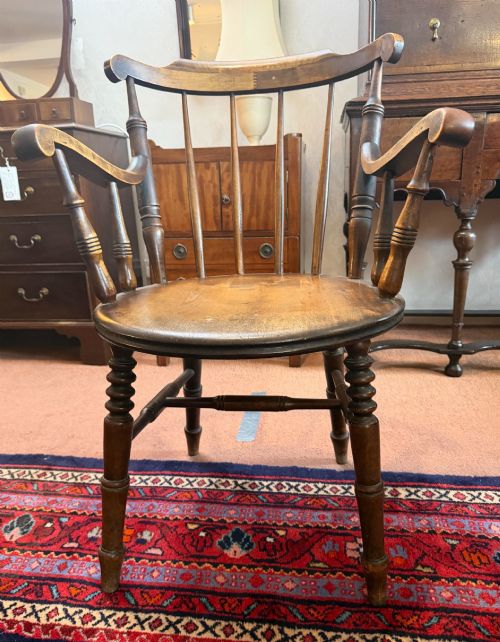
Victorian Turned Armchair
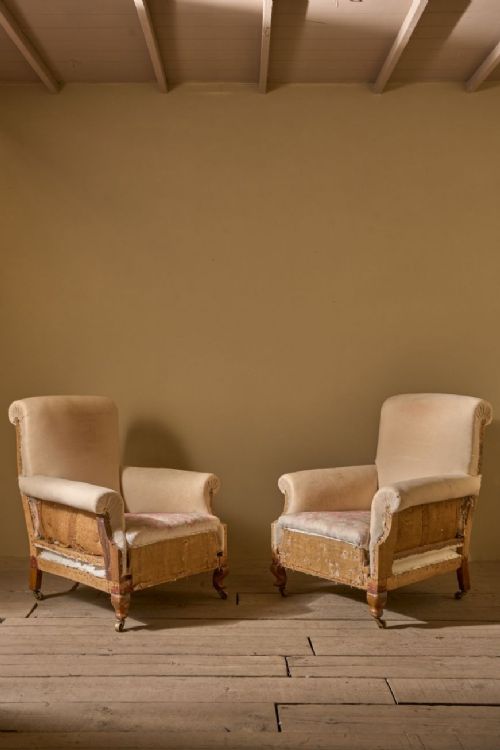
A victorian turned armchair brings sturdy wooden joinery and shaped spindle work directly into a modern room.

Victorian Turned Armchair
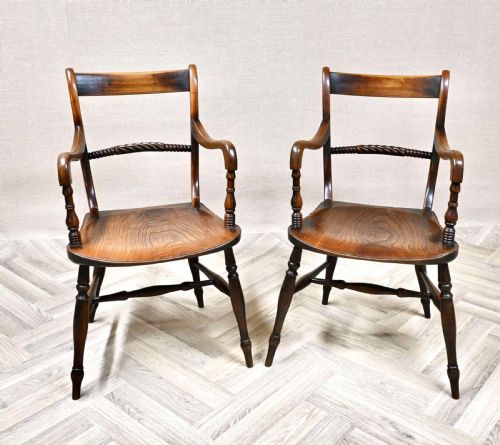
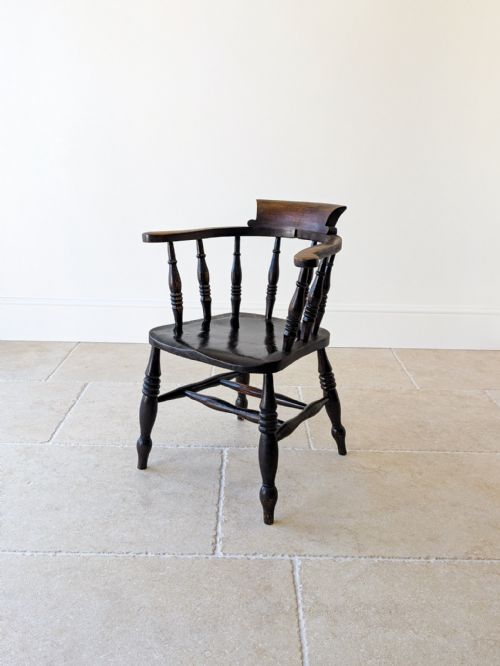
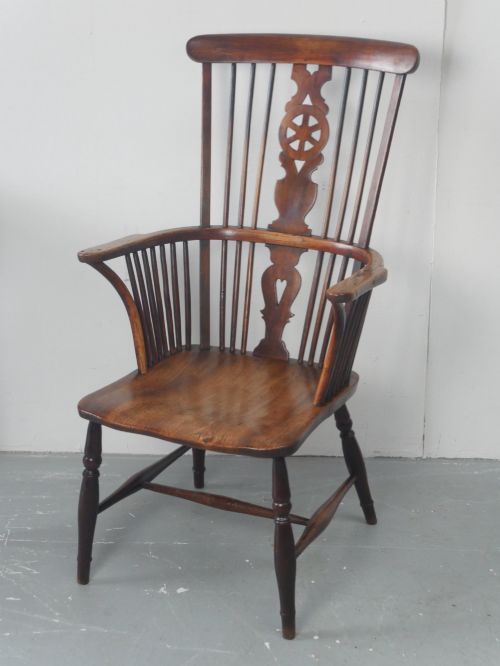
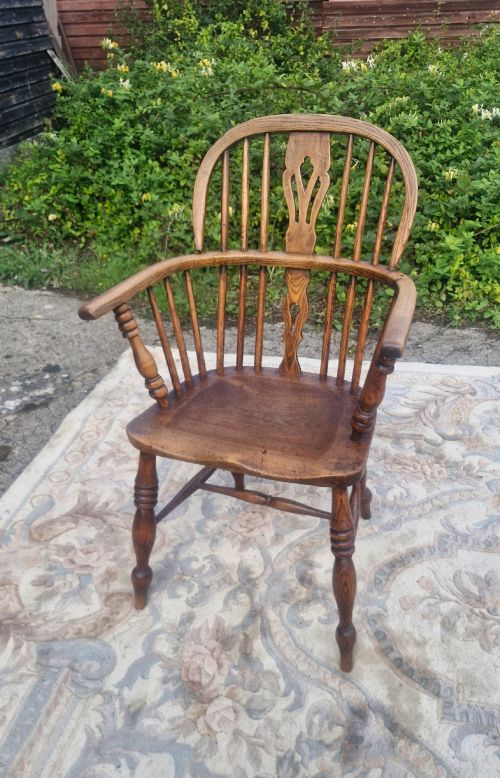
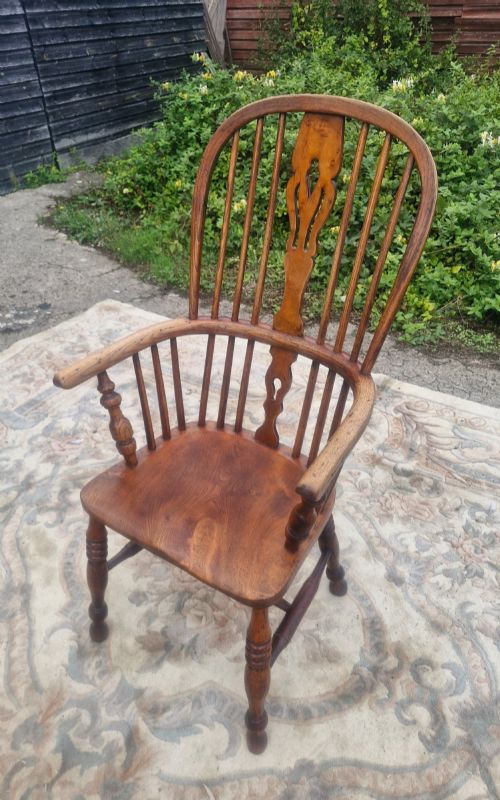
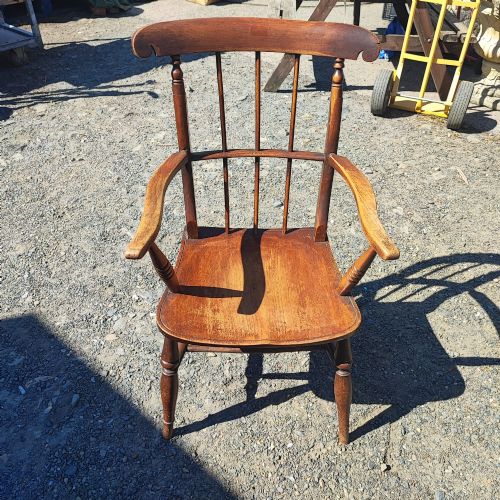
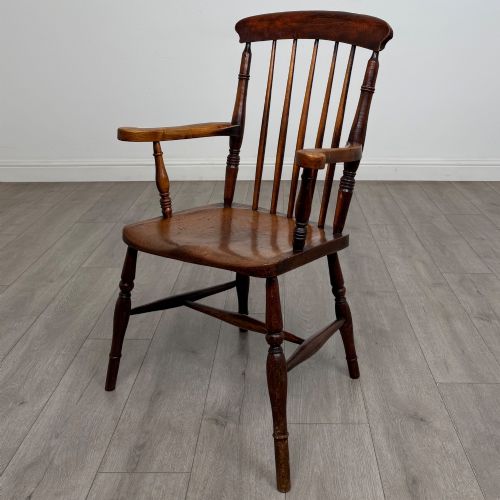
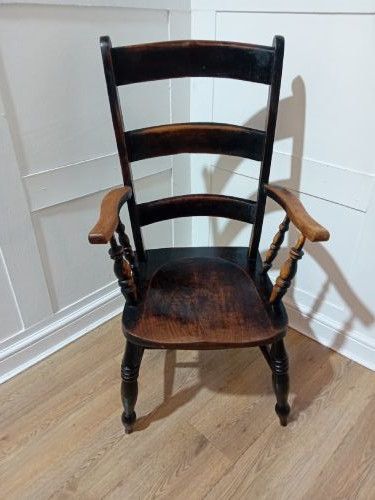
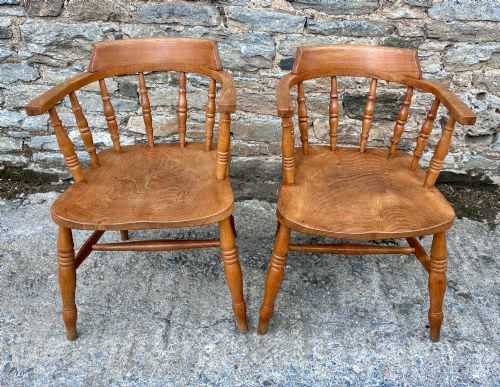
A victorian turned armchair encompasses a wide range of nineteenth-century seating, from country elm and ash windsors to formal mahogany library chairs. Buyers searching this phrase most frequently encounter sturdy spindle-back designs, smoker's bows, and captain's chairs featuring rounded wooden members.
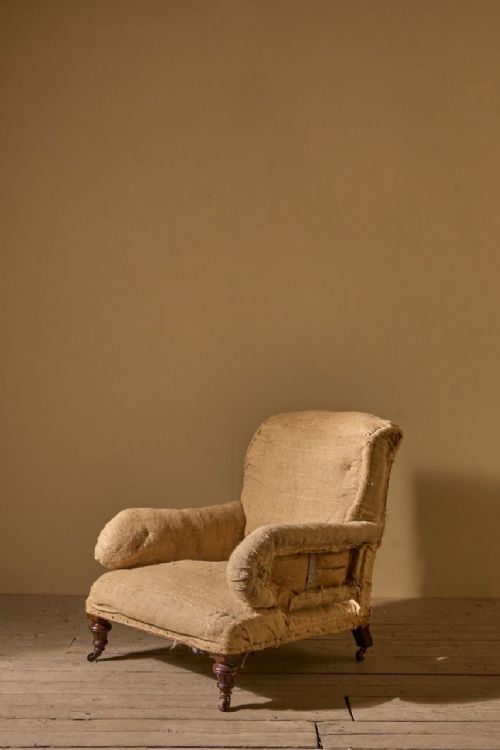
The selections span various regional English styles, including Thames Valley vernacular pieces and heavy oak turners' chairs. Upholstered variants appear alongside exposed wood frames, offering padded seats in leather or fabric supported by distinct turned legs.
How they were made
Maker's workshops utilised native hardwoods such as elm, beech, ash, and oak for structural frames, frequently combining timber types within a single chair. Mahogany and satinwood appear on more formal desk and library seating from the period.
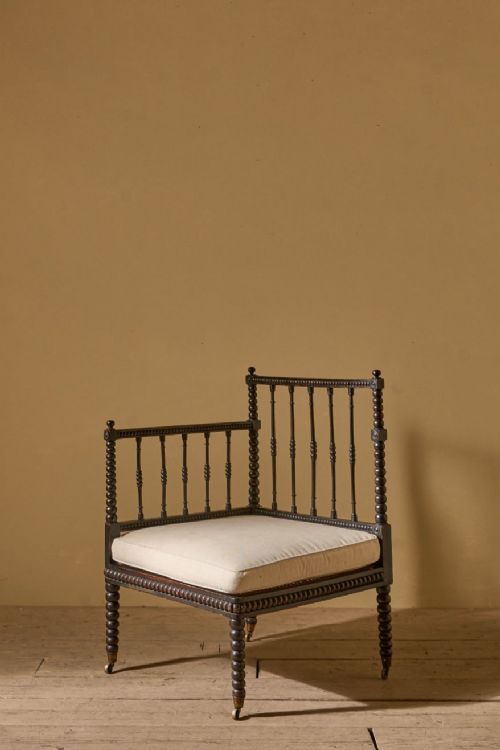
Lathe-turning created the characteristic bobbin, barley-twist, and spindle components that define these frames. Joinery relied on traditional pegging and wedging, occasionally supplemented by brass castors and leather upholstery secured with tacks.
Early turners utilised simple pole lathes driven by foot treadles attached to flexible overhead saplings.
What varies in quality
The distinction between standard vernacular pieces and finer examples rests on the selection of timber and the crispness of the lathe work. Dense grains in elm seats and carefully figured mahogany distinguish superior workshops from basic regional production.
Proportion and structural integrity dictate the standing of each chair. Retaining original factory finishes, stamped maker's marks, and untouched leather or fabric upholstery elevates an example above altered or heavily restored pieces.
Philip Webb·George Jack·Howard and Sons·William Birch
The Victorian Turned Armchair Glossary
- Spindle back
- A chair back constructed from multiple thin turned vertical wooden rods. These slender elements provide flexible support while keeping the frame lightweight.
- Captain's chair
- A low-backed wooden armchair designed with a rounded top rail supported by spindles. They frequently feature deep-dished wooden seats for extended sitting.
- Barley-twist
- A decorative spiral carving resembling twisted barley sugar applied to furniture legs and stretchers. This cylindrical turning gained popularity during the nineteenth century.
- Smoker's bow
- A low Windsor-style armchair with a continuous curved arm and back rail. This robust country form commonly appears in elm and beech.
- Bergere
- An enclosed upholstered armchair with exposed wooden framing and cane panel sides. The technique involves woven cane work that creates breathable back and arm inserts.
Victorian Turned Armchair: Frequently Asked Questions
How do I identify a genuine nineteenth-century frame?
Examine the under-seat construction, tool marks, and timber wear for indicators of period hand-tool use. Age is typically revealed through natural patination on the wood surfaces and traditional joinery methods.
Compare the turning details and timber species with documented regional examples from the nineteenth century. Consistency in the wood ageing process across all parts of the chair confirms authenticity.
Where were these chairs used in a Victorian home?
Sturdier wooden framed versions served primarily in libraries, studies, and farmhouse kitchens. Upholstered variants were placed in morning rooms, parlours, and bedrooms for comfortable lounging.
Desk chairs with revolving mechanisms furnished studies and offices, while low nursing chairs supported tasks near bedroom hearths.
Are these chairs suitable for daily use?
Solid hardwood frames built with traditional pegged joinery withstand regular seating without losing structural integrity. Elm and oak variants offer exceptional durability for everyday placement around a table or desk.
Upholstered models require checking the internal webbing and padding condition before heavy daily service. Lighter decorative parlour chairs suit moderate use better than heavy library armchairs.