
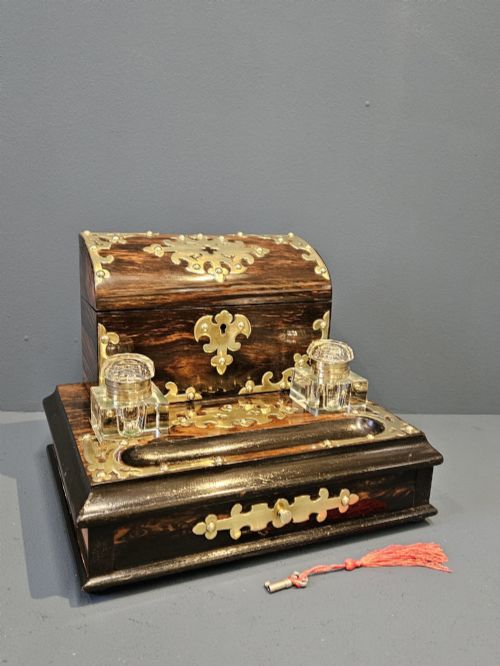


Gothic Revival Desk Accessory
These gothic revival desk accessories bring ecclesiastical weight to the writing table through rich timbers and heavy brass mountings.

Gothic Revival Desk Accessory
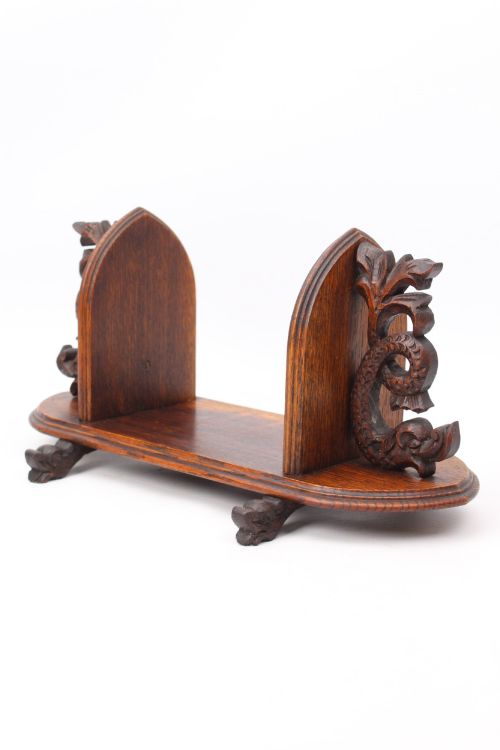
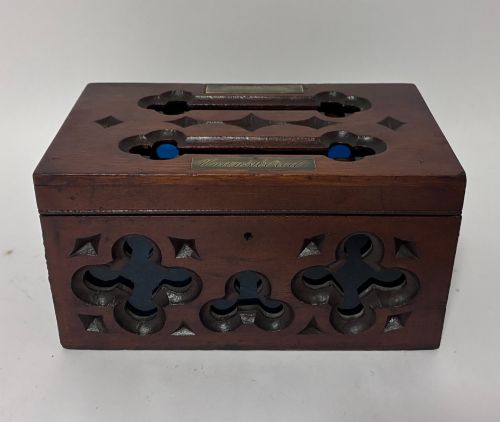
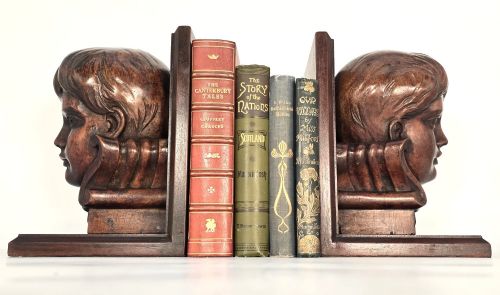
A gothic revival desk accessory brings medieval architectural motifs into the study, transforming everyday writing tools into miniature monuments. When searching for a gothic revival desk accessory, collectors encounter pieces ranging from extending book slides to stationery boxes and inkstands.
Most examples found here date from the Victorian period, spanning the mid nineteenth century into the Edwardian era. These functional objects served the Victorian library and office, combining practical utility with the serious theological and architectural interests of the age.
How they were made
Cabinetmakers utilised dense hardwoods such as walnut, oak, mahogany, coromandel, and burr walnut as the structural foundation for these objects. These timbers were frequently accented with contrasting woods, ebony, and maple.
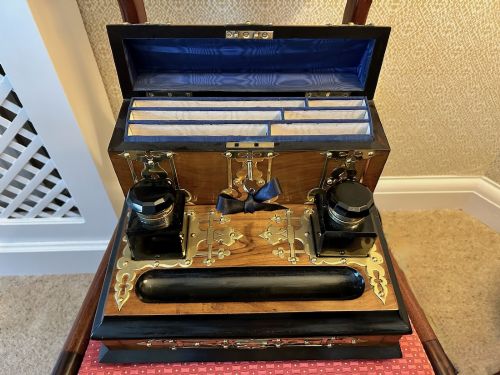
Metalworkers added heavy cast brass, ormolu mounts, and agate cabochons, securing them to the wooden bodies with small screws and pins. Patent mechanisms often allowed book slides to expand smoothly, while boxes featured fitted interiors for stationery and ink.
Listings feature oak, walnut, mahogany, coromandel, and burr walnut alongside heavy brass and agate mountings.
What varies in quality
The distinction between standard commercial pieces and finer work lies in the depth of carving and the weight of the metalmounts. Superior items display crisp architectural tracery, well-figured timbers like burr walnut or coromandel, and integrated patented folding or sliding actions.
Secondary details such as inset porcelain plaques, bevelled glass, and original matching sets elevate an object above the basic utility of a simple desk tidy. The choice of heavier brass casting and careful joinery marks out the better workshops.
Betjemanns
The Gothic Revival Desk Accessory Glossary
- Book slide
- A device designed to hold a variable number of upright books on a desk, often featuring extending wooden platforms and hinged or sliding bookends.
- Stationery box
- A desk box intended to hold writing paper and envelopes vertically behind tiered dividers, frequently fitted with lock and key.
- Coromandel
- A dense, heavily figured Southeast Asian timber with dark brown and black grain patterns, prized for luxury Victorian deskware.
- Ormolu
- Gilt bronze applied as mountings and decorative hardware on nineteenth century wooden boxes and stands.
- Inkstand
- A tray or stand holding one or more inkwells, often accompanied by pen troughs and sanders for drying ink.
Gothic Revival Desk Accessory: Frequently Asked Questions
What is a gothic revival desk accessory?
A gothic revival desk accessory is a nineteenth century writing table item decorated with pointed arches, trefoils, and heavy metal mounts.
These pieces include stationery boxes, inkstands, and extending book slides made for Victorian libraries.
How do I date a book slide?
Dating relies on timber choice, manufacturing patents, and stylistic cues from the mid to late nineteenth century.
Earlier examples often use coromandel with heavy ormolu, while later Edwardian pieces tend towards simpler oak construction.
Were these pieces used in offices?
They belonged primarily in domestic home libraries, studies, and writing rooms rather than commercial counting houses.
Their decorative brass work and fine timbers suited private spaces where gentlemen and ladies wrote correspondence.
How do extending book slides work?
Extending book slides use a sliding wooden mechanism that expands to accommodate more volumes between two upright ends.
Many incorporate patent folding hinges or sliding tracks concealed beneath the base.