



Brown Walnut Book Stand
These brown walnut book stand pieces offer sturdy timber construction and practical display space, making them a sensible addition to any traditional library.
Brown Walnut Book Stand
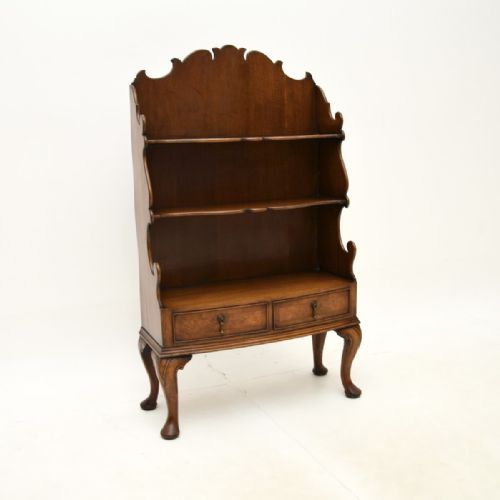
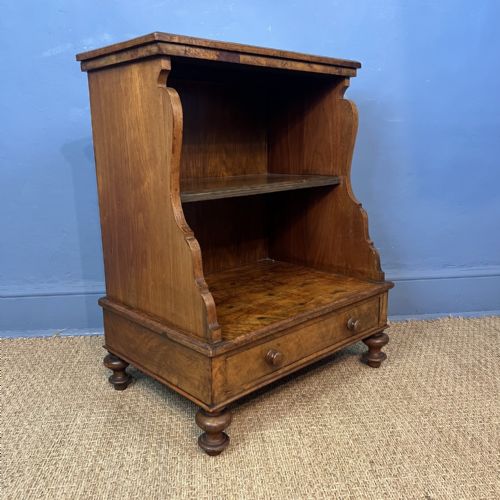
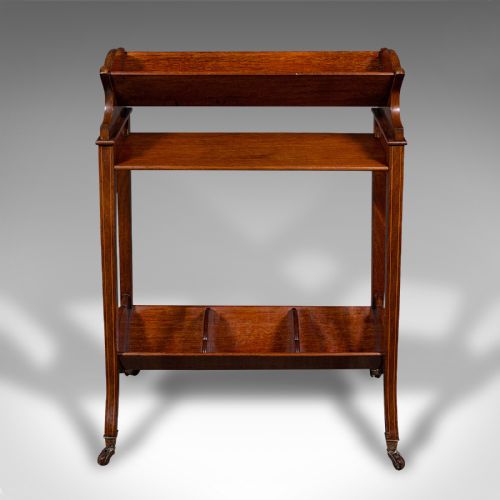
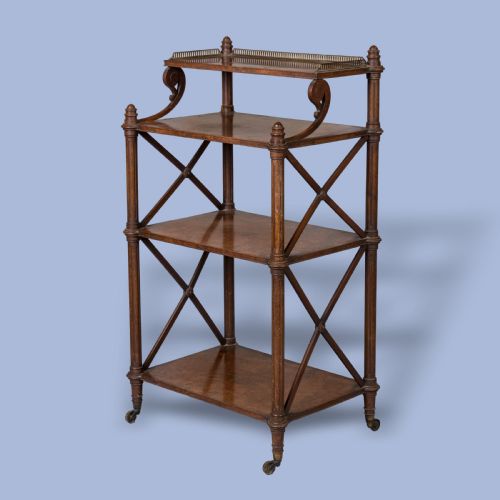
A brown walnut book stand encompasses various wooden furnishings designed to hold and organise volumes, ranging from compact desk slides to revolving cases and multi-tiered whatnots. The selection on this page draws primarily from the Victorian and Edwardian eras, alongside pieces dated to the nineteenth and early twentieth centuries.
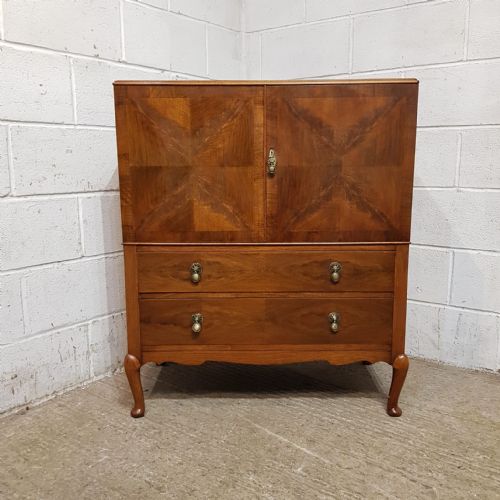
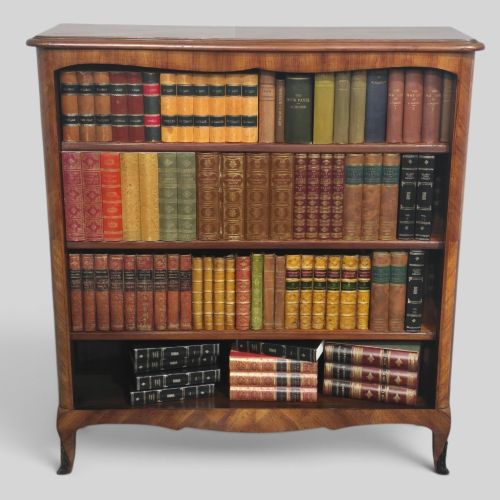
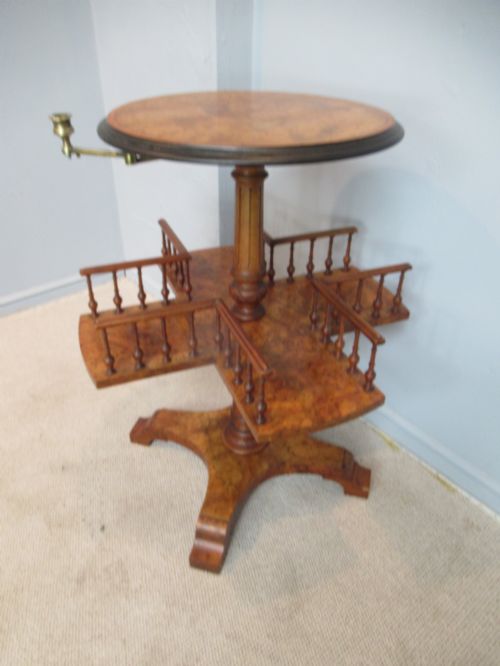
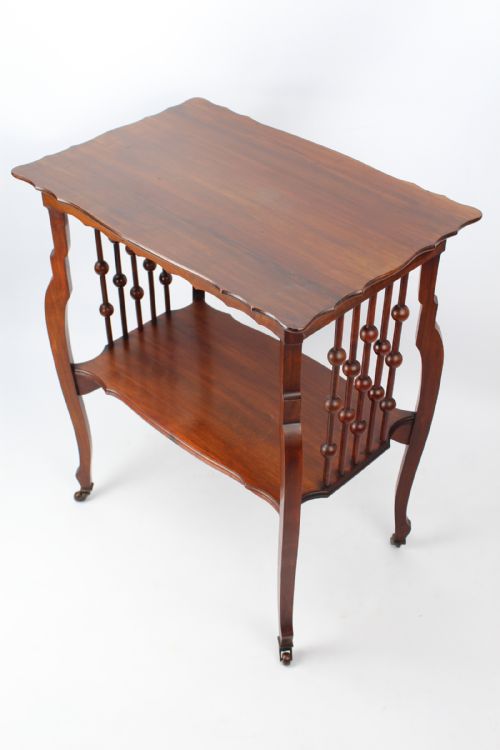
Revolving bookstands and open library bookcases dominate the available forms, often featuring figured or burr walnut timbers. Buyers will frequently encounter smaller bedside cabinets and side tables sharing similar timber characteristics within the wider group of items.
The regional variety spans domestic British cabinet-making as well as French provincial and revival styles like Queen Anne. These pieces reflect the functional demands of Victorian and Edwardian studies, where accessible book storage was a daily necessity.
Materials and construction
Makers relied heavily on solid walnut and walnut veneer, frequently selecting burr and figured variations for tabletops and visible panel surfaces to highlight rich natural grain patterns. Satinwood stringing and pine secondary timbers appear in specific pieces, showing traditional cabinet-making methods of the period.
Brass mounts and hinges provide both structural reinforcement and functional movement, particularly in adjustable library pieces and patent book slides. Iron components also support the mechanics of revolving designs, ensuring the timber tiers turn smoothly under weight.
The listings span the Victorian and Edwardian eras, incorporating walnut, burr walnut, brass, and iron across various bookcase and whatnot forms.
Assessing quality and finish
Superior examples distinguish themselves through the selection of highly figured burr walnut veneers and precise cabinet joinery that remains stable over decades of use. The depth of the polish and the crispness of any applied carving or brass mounting indicate the original maker's skill and investment of time.
Functional hardware marks another clear distinction between grades, as patent mechanisms and solid brass mountings operate with greater precision than simpler iron or substitute fittings. The integrity of the underlying timber framework dictates how well a stand bears the heavy weight of bound volumes.
Gillows
The Brown Walnut Book Stand Glossary
- Burr walnut
- A prized timber harvested from walnut tree growths, yielding intricate swirling grain patterns used on cabinet fronts and tabletops. It adds considerable decorative depth to smaller furnishings.
- Book slide
- An adjustable rack designed to sit on a desk or table, holding a small selection of volumes upright between expandable ends. They frequently incorporate brass mounts and folding actions.
- Whatnot
- A multi-tiered open shelving unit used for displaying books and decorative objects in nineteenth-century interiors. These pieces typically feature three to five ascending shelves supported by slender columns.
- Revolving bookcase
- A freestanding tiered stand mounted on a concealed pivot base, allowing users to rotate the shelves for easy volume selection. Edwardian and Victorian versions often utilise cruciform internal framing for stability.
- Veneer
- A thin layer of superior timber applied over a secondary wood base to provide an expensive surface appearance economically. Figured walnut veneers are common on quality nineteenth-century library furnishings.
Brown Walnut Book Stand: Frequently Asked Questions
How do revolving bookstands work?
Revolving bookstands utilise a central pivot mechanism hidden beneath the base tier, allowing the entire wooden structure to turn smoothly in either direction.
This design lets users access multiple sides of shelving from a single seated position, making them ideal for placement beside a reading chair or desk.
What is a book slide?
A book slide is a portable wooden rack with expandable sides designed to hold a row of volumes securely on a flat surface.
Victorian examples often feature decorative brass mounts and folding mechanisms that allow the unit to contract when fewer books are present.
How do I identify burr walnut?
Burr walnut is recognised by its dense, swirling grain patterns and small knot clusters formed from tree growths.
Cabinet-makers used these figured veneers on prominent surfaces like tabletops and bookcase fronts to create a highly decorative finish.
What distinguishes an Edwardian stand?
Edwardian stands typically exhibit lighter proportions and refined classical revival influences compared to heavier earlier Victorian furniture.
They frequently make use of figured walnut and subtle banding while maintaining practical utility for household book storage.