
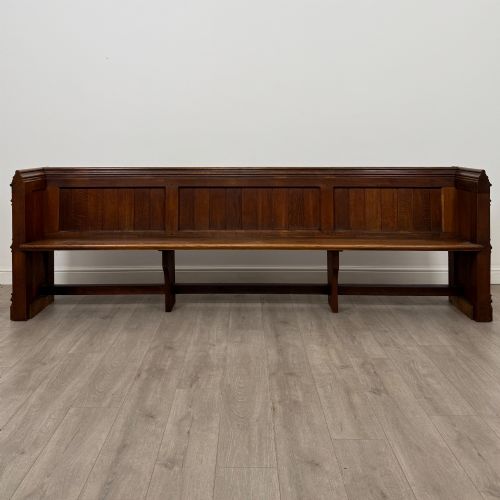


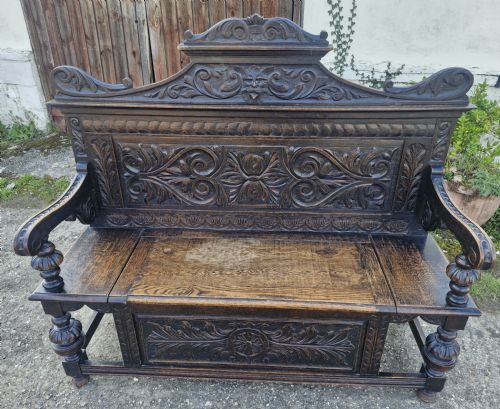


Gothic Oak Settle
These heavy wooden seats bring centuries of architectural presence into an entrance hall.
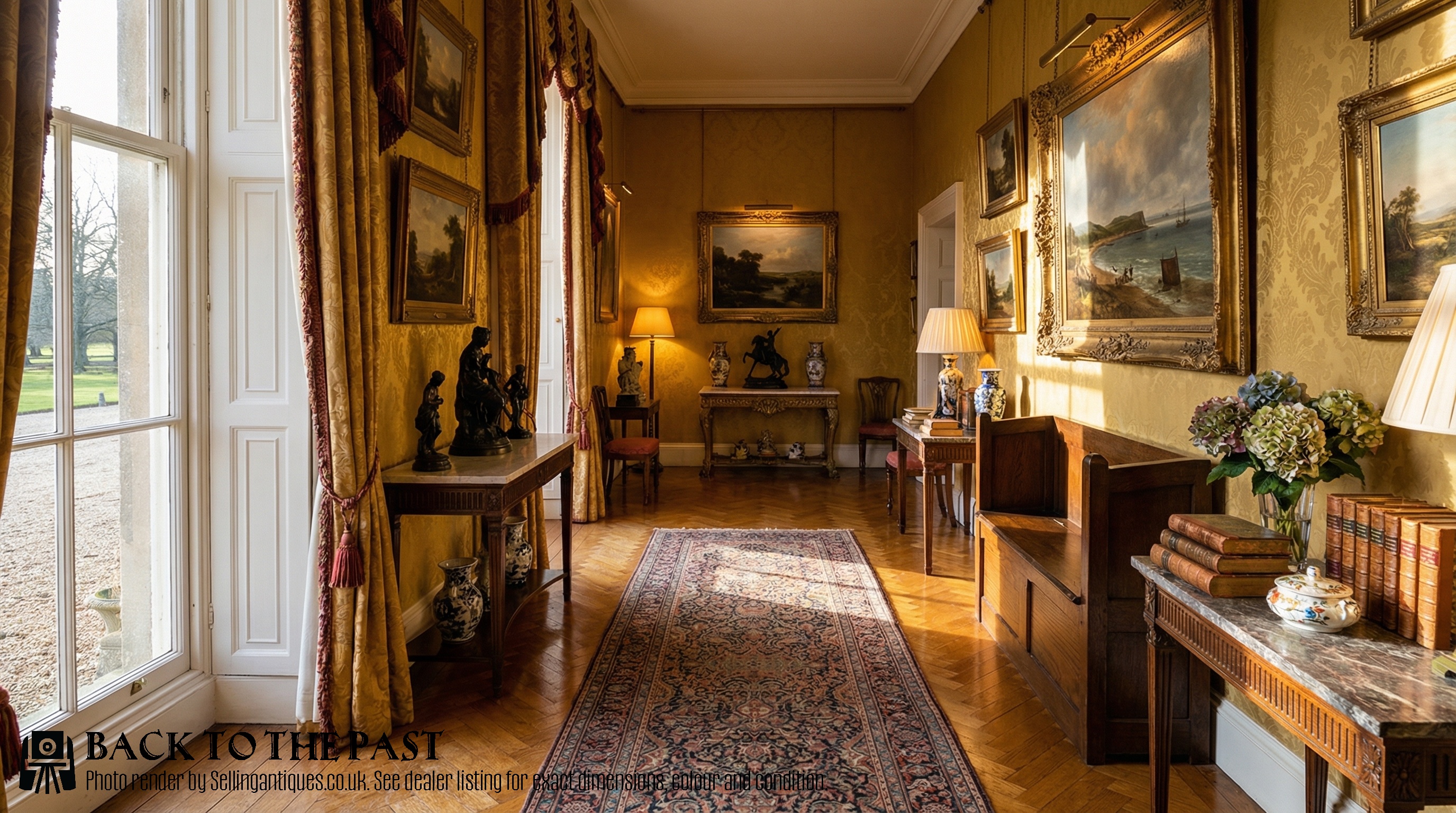
Gothic Oak Settle
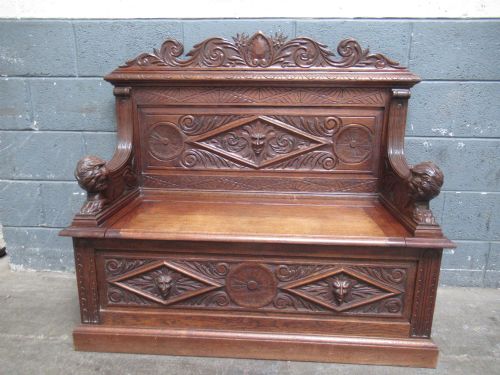
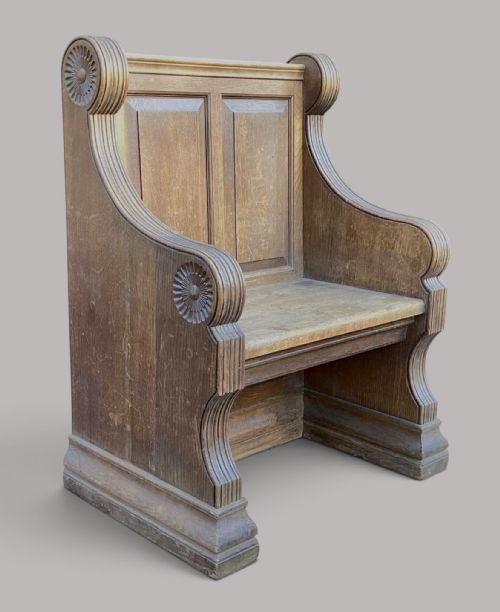
A gothic oak settle functions as a substantial hallway seat, drawing inspiration from medieval ecclesiastical and domestic furniture through tall panelled backs and imposing armrests. Buyers encounter pieces ranging from simple vernacular forms to elaborate Victorian revivals carved with tracery and figurative motifs.
The selection on this page leans heavily towards nineteenth-century interpretations, alongside earlier examples and revival pieces spanning into the twentieth century. These benches frequently incorporate storage beneath hinged seats or box bases, serving practical purposes in large reception spaces.
Variants include monks benches that convert into tables, high-backed settles designed to block draughts in corridors, and architectural hall benches bearing Scottish or English regional characteristics.
Materials and construction
Makers relied principally on solid oak, selected for durability and finished with deep carving to express architectural details such as pointed arches and linenfold panels. Secondary timbers like burr elm occasionally appear in specific seating panels or decorative elements.
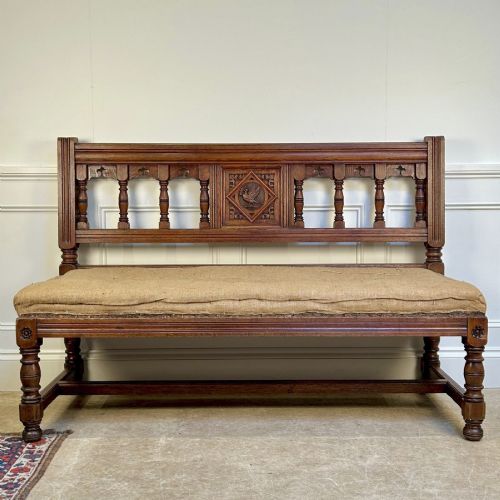
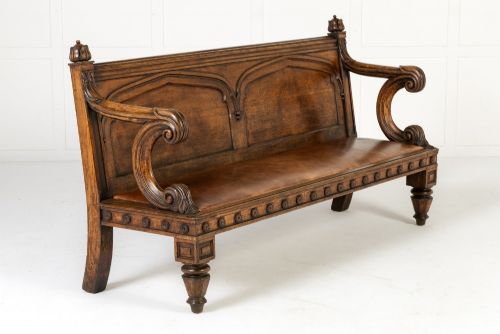
Construction methods involve traditional mortice and tenon joints, panelled backs fixed into heavy stiles, and iron or brass hardware for hinges and fixings where lift-up storage lids operate. Upholstered variants introduce leather, fabric, or hessian to padded seat sections.
The furniture spans multiple revival movements, including Reformed Gothic, Jacobean Revival, and Victorian Baronial.
Evaluating the standard
Quality rests upon the crispness of the hand-carving and the structural integrity of the heavy timber framing. Pieces exhibiting deep, well-defined relief work on the panels and backrests command greater attention than shallow, mechanical tooling.
The choice of timber grain, the proportion of the architectural pediments, and the retention of original structural elements without excessive replacement timber distinguish the finer examples in this category.
GIllows
The Gothic Oak Settle Glossary
- Settle
- A wooden bench with a high back, solid arms, and frequently a box base for storage. It was designed to keep draughts away from the occupants in cold hallways.
- Tracery
- Openwork or patterned stonework ornamentation translated into wood carving, often mimicking church window designs. It forms a central decorative feature on gothic revival panels.
- Monks bench
- A convertible piece of furniture featuring a hinged back that folds down over the arms to form a table top. This dual-purpose design is common in nineteenth-century oak seating.
- Green man
- A sculptural motif representing a human face surrounded by or disgorged from foliage, symbolising rebirth. It appears frequently on the carved panels of nineteenth-century revival seating.
Gothic Oak Settle: Frequently Asked Questions
How do I use a settle in a modern hallway?
These benches fit well against large blank walls in reception areas, providing a strong visual anchor and seating for putting on shoes. Their high backs offer structural presence without requiring additional artwork.
Many variants include hidden storage beneath the seat lid, offering a practical place to store boots, umbrellas, and winter accessories out of sight.
How can I tell a Victorian revival settle from an earlier one?
Nineteenth-century revival pieces often display machine-assisted saw marks, brighter brass hardware, and very crisp, deep-relief carving influenced by the Gothic Revival movement. Older eighteenth-century examples tend to show softer, hand-planed surfaces and simpler pegged joinery.
Examining the underside and the interior of the box base reveals the tool marks and construction methods characteristic of the period of manufacture.
What is a monks bench used for?
A monks bench serves as a dual-purpose piece of furniture that functions as a hall seat with a high back during the day. The back pivots downwards onto the armrests to create a flat table surface when needed.
This clever mechanism made them useful in smaller spaces where a separate table and chair could not both be accommodated.
Do these benches require special care?
Solid oak benefits from occasional application of quality beeswax to nourish the timber and maintain a soft sheen. Keeping the wood away from direct heat sources prevents the panels from shrinking or splitting.
Checking the stability of the pegged joints periodically ensures the heavy frame remains secure during daily use.