



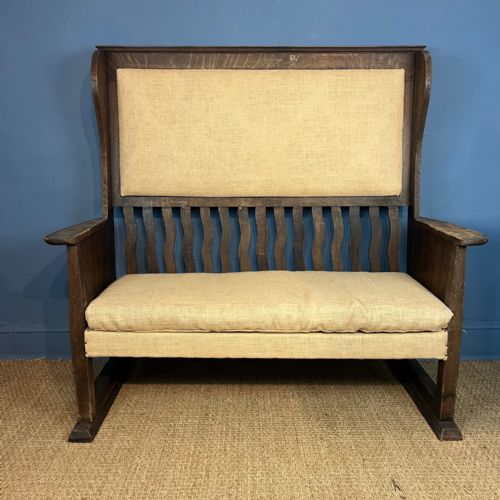


Edwardian Oak Settle Bench
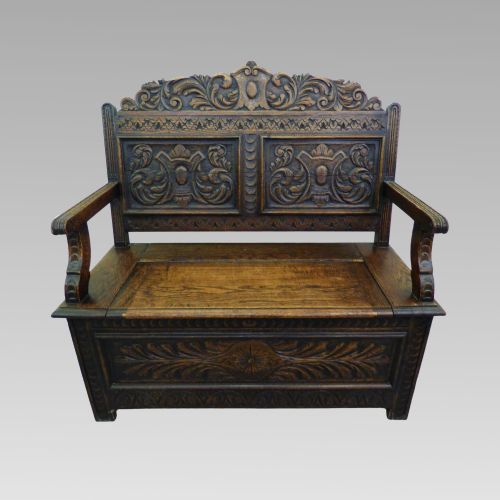
An Edwardian oak settle bench combines heavy timber construction with high-backed seating designed to block draughts in period hallways.
Edwardian Oak Settle Bench
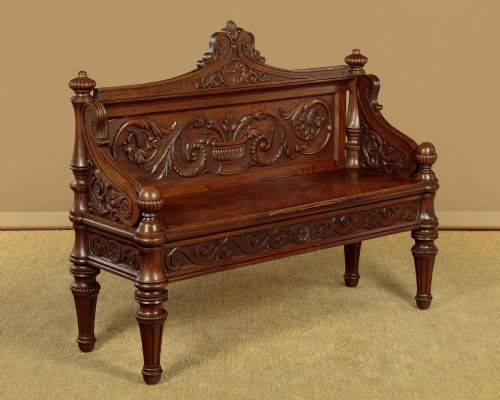
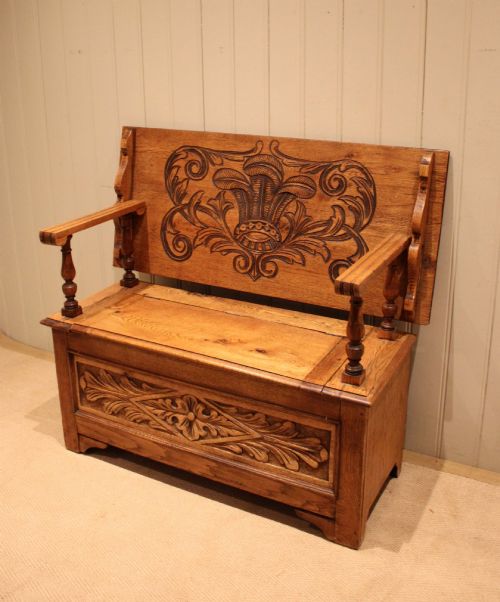
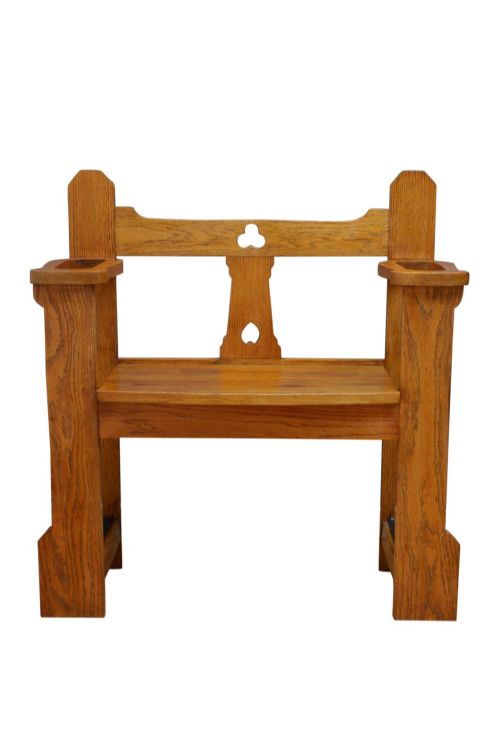
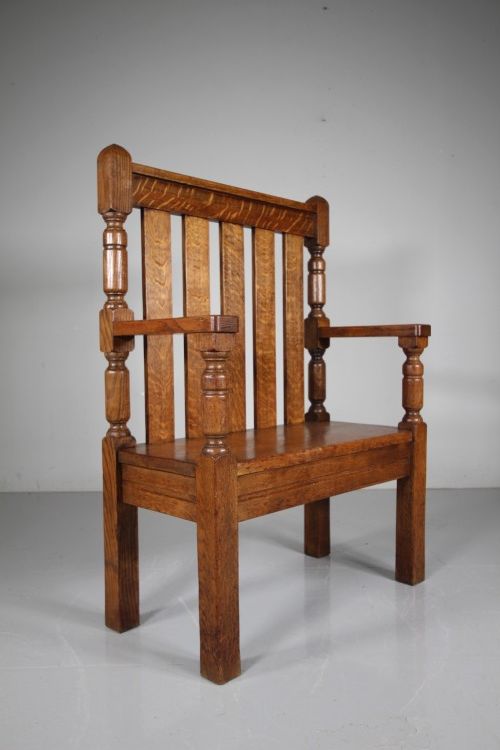
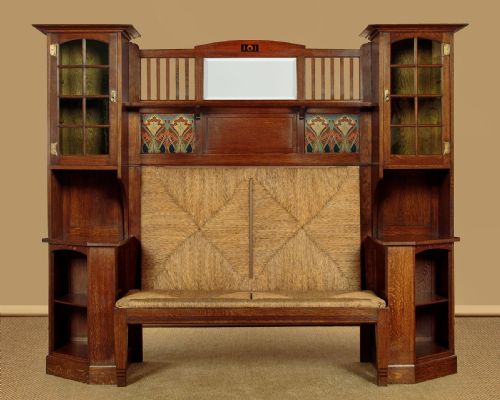
When you search for an Edwardian oak settle bench, you encounter sturdy seating forms rooted in domestic history, most frequently meeting examples from the early twentieth century alongside related Arts and Crafts, Jacobean Revival, and Gothic Revival variants. These pieces serve primarily as hall benches, monks benches, and box settles, often incorporating lift-up lids for storage or fold-down mechanisms that convert seats into tables.
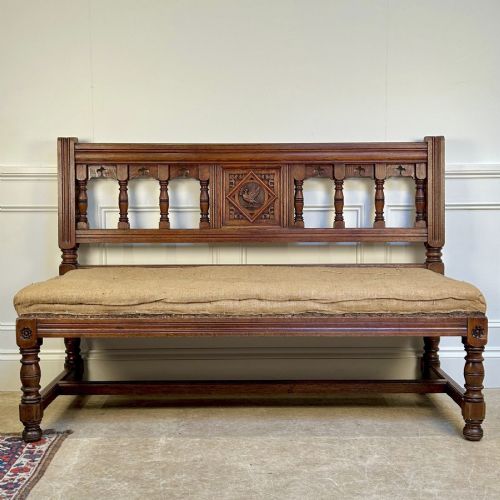
The materials and construction reflect a prevalence of solid oak, sometimes paired with brass mounts, iron details, and upholstery in fabric, hessian, or rush. Originating from periods spanning the nineteenth century through the 1930s, the selection here leans heavily on Edwardian craftsmanship and regional English workshop traditions.
How they were made
Makers utilised solid oak planks, assembling them through traditional joinery such as mortise and tenon joints to ensure structural rigidity in high-traffic hallway settings. Surfaces frequently show carved decoration, panelled backs, and applied mouldings executed by hand.
Hardware elements like brass hinges, iron brackets, and metal fittings provide functional support for folding table tops and storage compartments. Secondary materials such as rush and hessian appear in seat pads and squabs where textile comfort supplements the rigid timber frames.
Edwardian Oak Settle Bench Retail Price Guide 2026
Typical asking prices for edwardian oak settle bench among the pieces listed under this phrase on Sellingantiques today, from the lower quarter to the upper quarter. They describe what is for sale here now, not the wider market.
Listings feature solid oak construction spanning the 19th century, the Edwardian period, and the 1920s.
What varies in quality
The calibre of an oak settle bench rests upon the integrity of its timber selection, distinguishing dense, well-figured solid oak from simpler utility grades. Superior examples exhibit precise joinery, crisp hand-carving, and original hardware rather than later replacements.
Design ambition also divides the range, setting standard production items apart from pieces bearing specific workshop attributions or distinctive regional movements. Proportion and utility dictate success, where narrow hallway proportions or multifunctional adaptability demonstrate thoughtful design.
GIllows·Liberty·Shapland & Petter·Wylie Lockhead Manufacturers·James Shoolbred & Co.
The Edwardian Oak Settle Bench Glossary
- Settle bench
- A high-backed wooden seat with solid arms and a closed base, traditionally placed in draughty hallways to block cold air. This form often includes enclosed storage beneath the seat.
- Monks bench
- A convertible piece of furniture featuring a pivoting back that folds down flat over the arms to form a table top. These items combine seating and surface utility in compact spaces.
- Arts and Crafts
- A design movement prioritising traditional craftsmanship, visible construction, and simple forms over mass-produced ornamentation. Pieces from this tradition often display honest joinery and restrained carved details.
- Jacobean Revival
- A nineteenth and early twentieth century style emulating seventeenth century English oak furniture. Characteristics include heavy turned legs, geometric moulding, and deep relief carving.
- Hall seat
- A narrow bench intended for entranceways, frequently fitted with coat hooks, umbrella stands, or box storage. These items accommodate visitors while managing outerwear in domestic entryways.
Edwardian Oak Settle Bench: Frequently Asked Questions
Where were settle benches placed?
These seats stood primarily in entrance halls, corridors, and large country house reception areas where guests removed coats and footwear. Their high wooden backs offered shelter from cold draughts near front doors.
In modern interiors, they function effectively in similar entryways or against large living room walls, providing both seating and concealed storage for household items.
How do I date an oak bench?
Dating relies upon examining construction methods, tool marks on the timber, and stylistic cues from specific design movements like Arts and Crafts or Gothic Revival. Edwardian examples often display machine-planed internal boards combined with hand-finished exterior carving.
Comparing hardware styles, such as brass hinges and iron brackets, alongside recorded workshop markers provides further chronological context.
What is an arts and crafts settle?
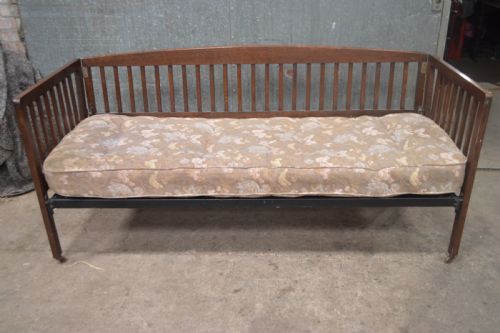
An Arts and Crafts settle emphasises natural timber grain, exposed joinery, and structural simplicity rather than heavy historic revival ornament. These pieces frequently feature vertical slat backs, pegged joints, and functional box storage.
Master makers and regional schools produced variations that highlighted honest materials and utility over elaborate surface decoration.