



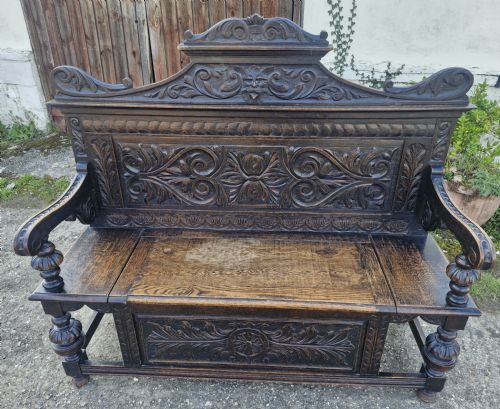


Gothic Oak Coffer
These heavy timber storage pieces deliver traditional joinery and period presence into modern hallways.
Gothic Oak Coffer
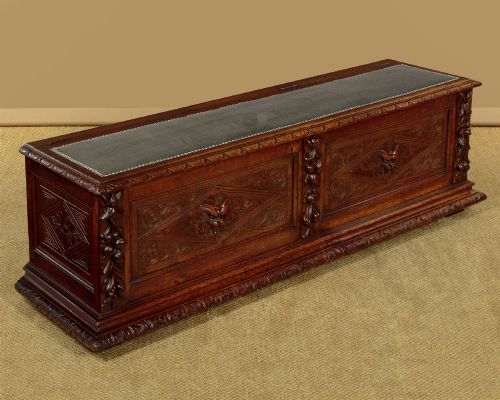
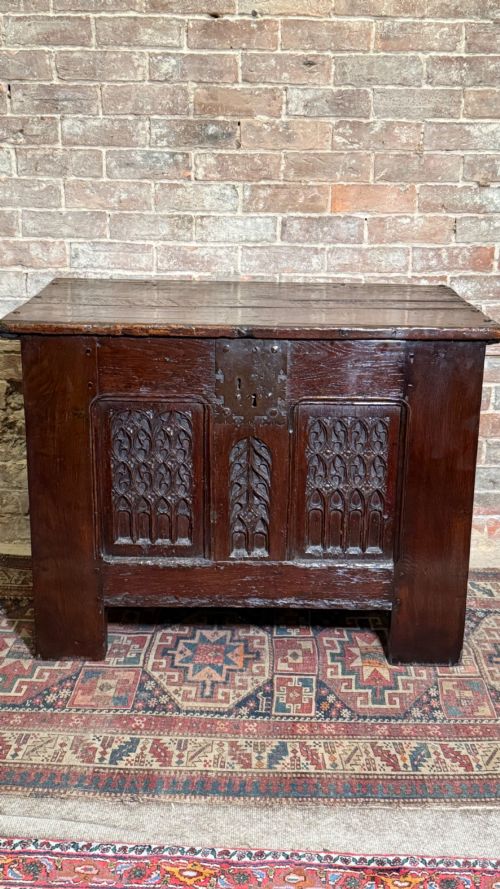
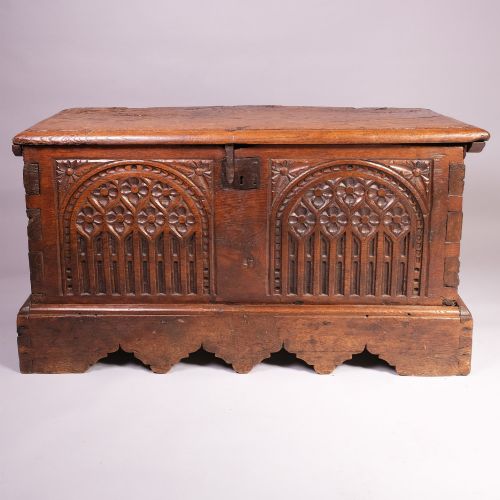
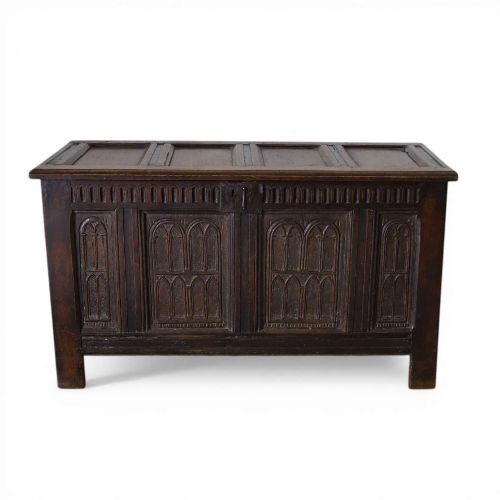
A gothic oak coffer provides deep interior storage whilst displaying architectural tracery and panel work associated with medieval and revival periods. Buyers inspecting this selection encounter heavy timber boxes originating from the sixteenth century alongside later Victorian interpretations.
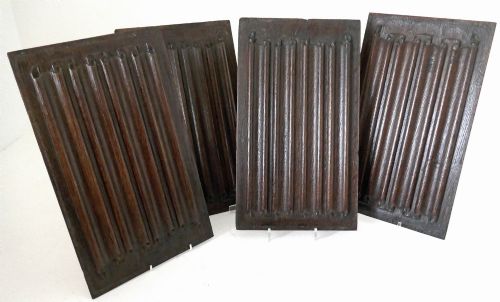
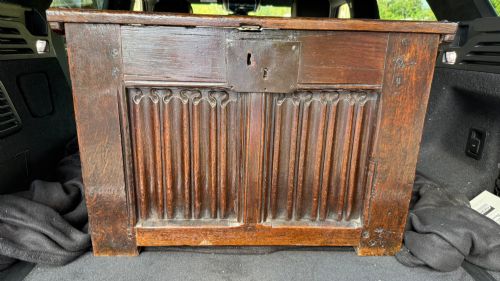
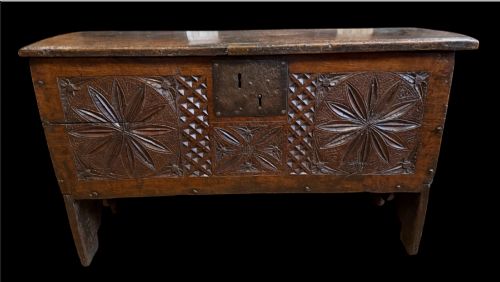
The inventory ranges from plank-built receptacles secured with iron bands to panelled chests decorated with linenfold carving and ecclesiastical motifs. Many examples date from the nineteenth-century Gothic Revival, capturing earlier styles using seasoned timber and traditional hand tools.
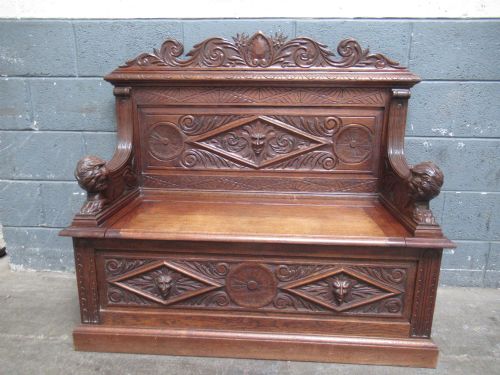
Beyond standard blanket chests, related seating forms appear frequently, including settles, monks benches, and hall benches incorporating lift-up lids. These multifunctional pieces combine storage compartments with high panelled backs or hinged armrests.
Materials and construction methods
Makers utilised native British oak as the primary timber, supplemented occasionally by elm, chestnut, and pollard oak for panels and secondary framing. Iron and wrought iron hardware, including strap hinges and locking plates, reinforced the heavy board construction.
Joiners employed mortise and tenon joints secured with wooden pegs to assemble the structural frames without metal nails. Surfaces received decoration through chip carving, linenfold panels, and tracery cut directly into the solid wood.
The inventory records pieces incorporating oak, iron, brass, chestnut, leather, elm, and pollard oak across various centuries.
Assessing quality and authenticity
Quality rests upon the integrity of the original timber and the crispness of the hand-carved architectural details. Superior examples retain their original iron hardware, hinges, and baseboards without extensive timber replacement.
The depth of the carving and the complexity of the stile and rail assembly distinguish master joinery from simpler utilitarian boxes. Patina develops naturally over centuries through handling, wax application, and environmental exposure.
Jack Grimble
The Gothic Oak Coffer Glossary
- Coffer
- A large wooden chest used historically for storing valuables, documents, or textiles. These sturdy boxes typically feature hinged lids and heavy timber sides.
- Linenfold
- A style of wood carving that imitates folded linen cloth, popular on sixteenth-century panels. This technique creates a textured surface using shallow vertical reliefs.
- Tracery
- Architectural stonework patterns translated into wood joinery, particularly associated with Gothic windows and panelling. This ornamental design defines the visual style of revival pieces.
- Settle
- A wooden bench with a high solid back, solid arms, and a box seat for storage. These items sheltered inhabitants from draughts in large halls.
- Stile
- The vertical upright member of a panelled wooden frame. Stiles receive the horizontal rails to hold the central panel securely.
Gothic Oak Coffer: Frequently Asked Questions
What were coffers originally used for?
These storage receptacles held valuable household goods, church vestments, and important documents securely in medieval and early modern interiors. Because houses lacked fitted wardrobes, heavy chests served as the primary method for protecting textiles and valuables.
Travellers also used robust plank-built trunks for transporting belongings across rough terrain. Over time, smaller boxes functioned as deed containers or specialised caskets for domestic storage.
How do I tell an original sixteenth-century coffer from a Victorian revival piece?
Early pieces exhibit hand-split oak boards, irregular tool marks, and traditional peg construction that reflects sixteenth-century workshop practices. Ironwork on early examples usually comprises hand-forged straps fixed with handmade nails.
Nineteenth-century revival items display uniform machine-sawn timber dimensions and cleaner mechanical saw marks on concealed interior surfaces. Stylistic proportions and the type of wear on the feet often provide further clues regarding age.
Where should I place a heavy oak chest in my home?
Halls and entranceways suit these items well, offering a practical surface for seating and an interior compartment for shoes or winter wear. Their substantial presence anchors large rooms and provides an immediate focal point.
Living areas also accommodate shorter blanket boxes as coffee tables or window seats with hidden storage. Direct heat sources and damp environments should be avoided to protect the dry historic timber.
Why do some chests feature iron banding?
Wrought iron straps reinforced the structural corners of early boxes to prevent the heavy oak boards from splitting under stress. This metalwork also added security when fitted with robust locking mechanisms for valuable contents.
Many ecclesiastical and secular trunks utilised heavy iron reinforcement for transit and heavy-duty daily use. The presence of original strap hinges contributes significantly to the historical interest of the piece.