

Gothic Oak Carving
These pieces of gothic oak carving span centuries from early linenfold panels to Victorian revival furniture, bringing medieval architectural motifs into domestic interiors.
Gothic Oak Carving
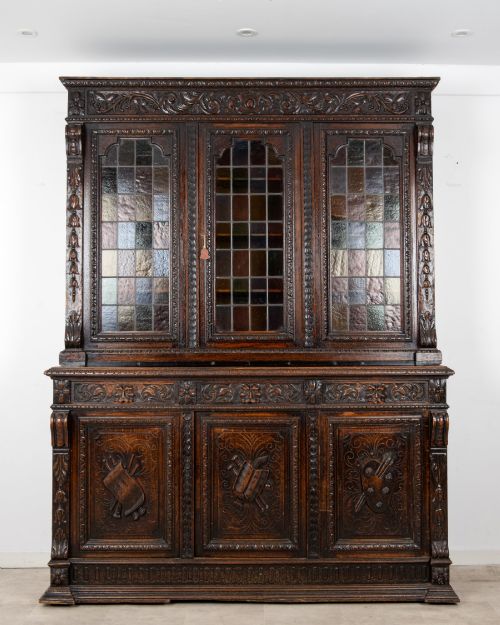
A gothic oak carving represents a rich tradition of woodworking that draws heavily upon medieval architectural vocabulary. When searching for gothic oak carving, buyers encounter everything from 16th-century panels to extensive 19th-century revival sideboards and bookcases.
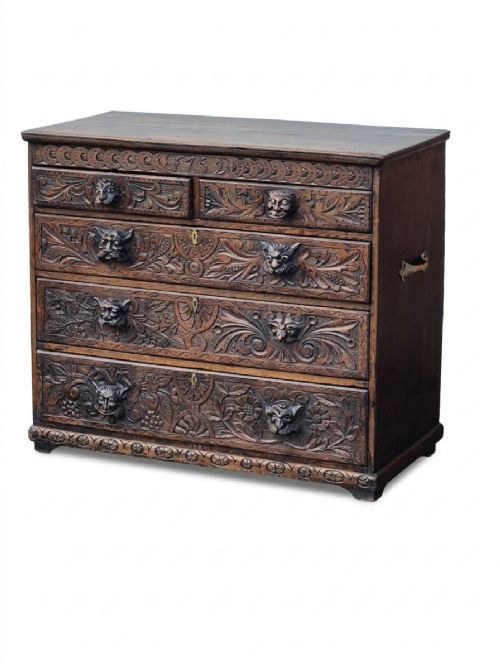
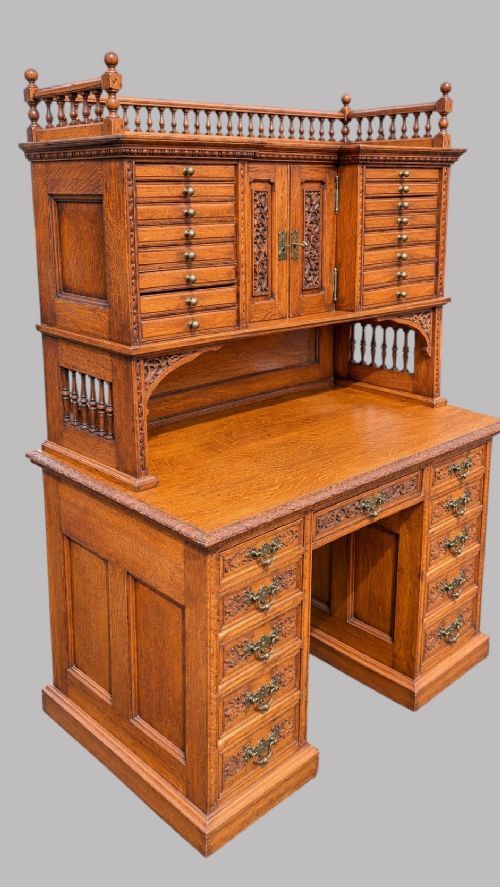
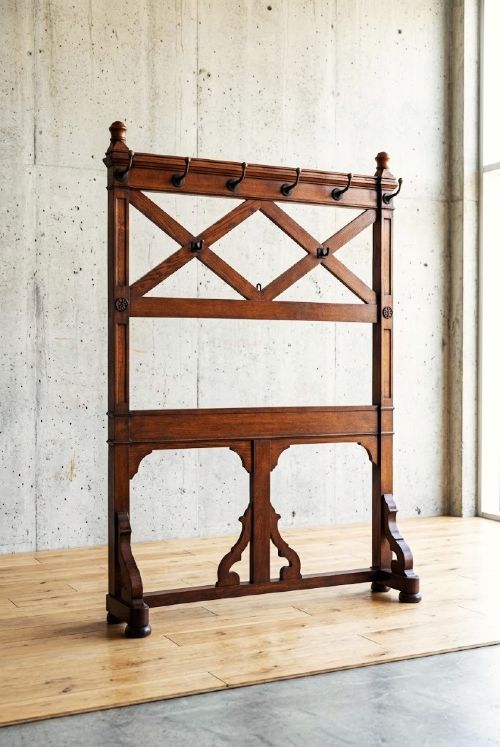
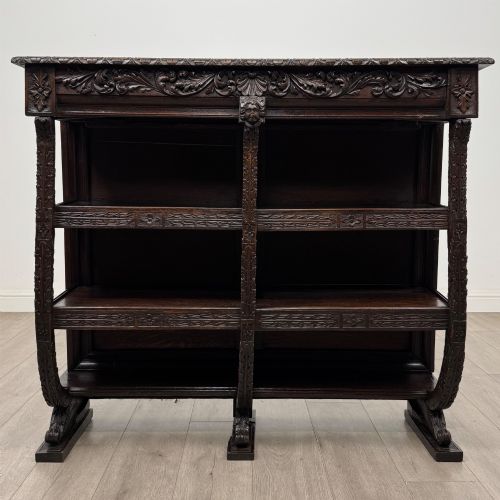
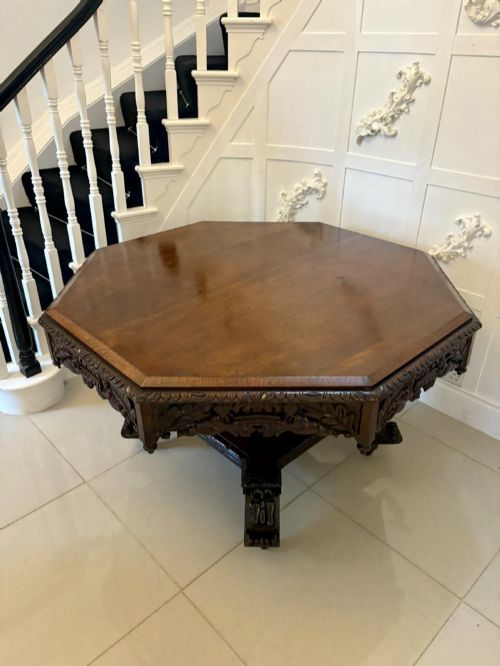
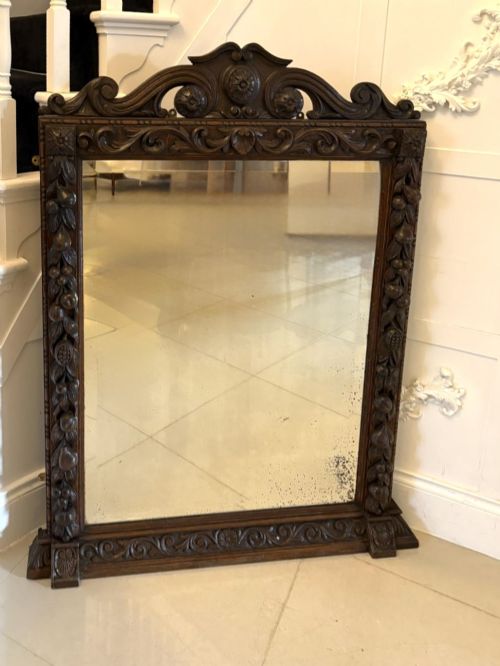
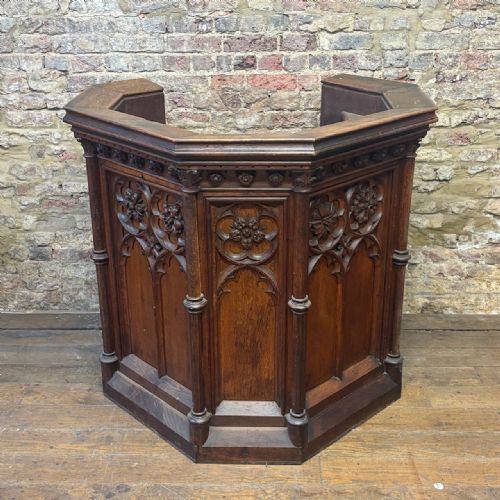
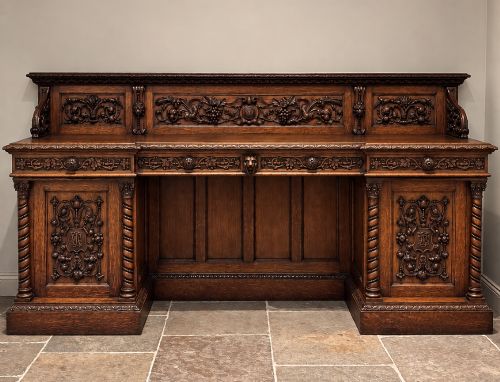
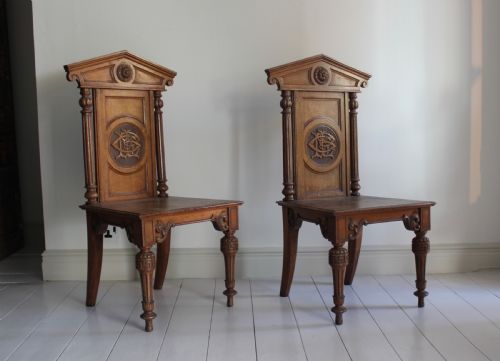
The most common iterations on this page belong to the Victorian Gothic Revival and Edwardian periods, where makers utilised solid oak for heavy domestic furniture and architectural fragments. These items range from small table-top cabinets and wall mirrors to large church pulpits, desks, and dining chairs.
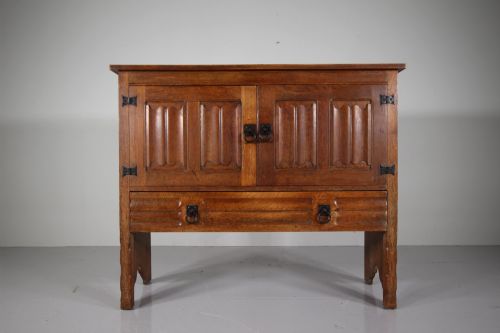
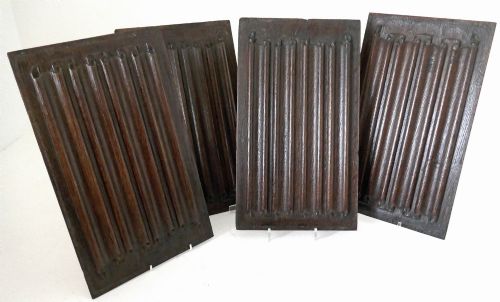
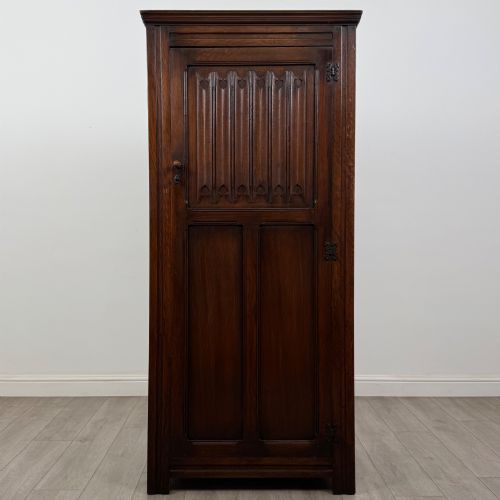
Earlier examples include 15th-century French traceried panels and English 16th-century linenfold carvings. These foundational pieces show the transition from ecclesiastical stonework motifs into domestic wooden paneling.
How they were made
Makers relied principally on solid oak, selected for its durability and suitability for deep, crisp relief work. Secondary materials such as wrought iron, brass, glass, and embossed leather appear on hardware, hinges, and fitted desk components.
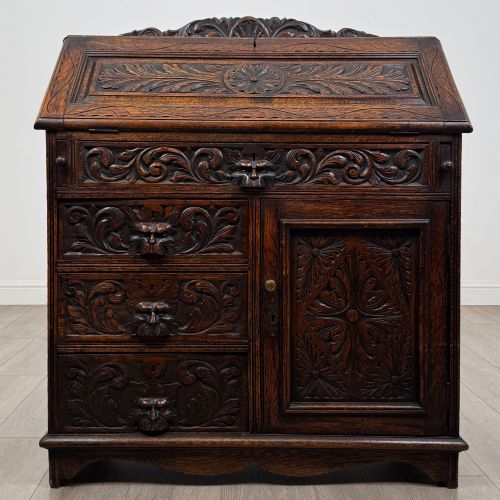
Woodworking techniques combined traditional mortise and tenon joinery with hand-chiseled surface ornamentation. Carvers employed gouges and chisels to render intricate details like trefoils, Green Man grotesques, and geometric tracery directly into the timber.
Gothic Oak Carving Retail Price Guide 2026
Typical asking prices for gothic oak carving among the pieces listed under this phrase on Sellingantiques today, from the lower quarter to the upper quarter. They describe what is for sale here now, not the wider market.
Current listings feature oak alongside wrought iron, brass, glass, and embossed leather across furniture from the sixteenth century onward.
What varies in quality
The selection of the timber grain and the integrity of the period joinery also dictate value. Pieces retaining their original hardware, stained glass panels, and unblemished structural oak sit firmly at the upper end of the range.
George Wadham·Christopher Dresser·Norwich Maker
The Gothic Oak Carving Glossary
- Linenfold
- A style of wood paneling carved to resemble folded vertical sheets of linen. This decorative motif gained popularity in the Tudor period and returned during later revival eras.
- Tracery
- Openwork architectural ornamentation, typically consisting of intersecting ribwork in windows or panels. It forms a cornerstone of Gothic design adapted by furniture makers.
- Green Man
- A sculptural motif representing a human face carved with leaves, vines, or branches sprouting from the mouth. It symbolizes rebirth and appears frequently on Victorian grotesque furniture.
- Trefoil
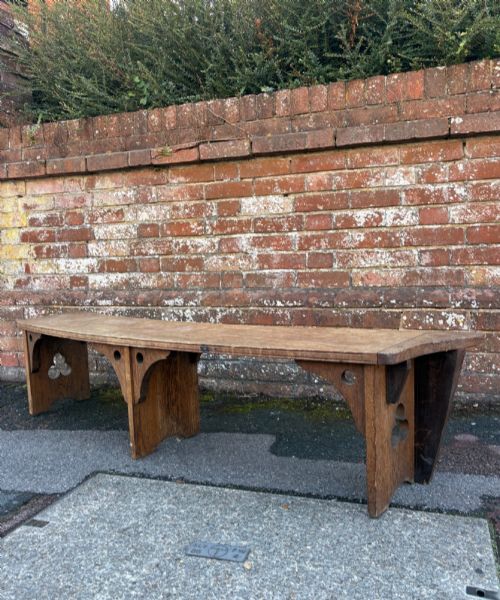
- A graphic ornament composed of three overlapping rings or foils. Cabinetmakers utilised this shape extensively within Gothic Revival chair supports and panel cutouts.
- Fusee
- A conical pulley used in clockwork movements to maintain equal power as the mainspring unwinds. This mechanism is found in complex bracket and table clocks.
Gothic Oak Carving: Frequently Asked Questions
How do I identify a true period piece?
Examine the construction methods, tool marks, and wood shrinkage behind the carvings. Hand-cut joinery and authentic patination distinguish genuine early items from later revival copies.
Compare the timber density and finishing techniques against known examples from the same century. Period pieces typically display consistent wear patterns appropriate to their claimed age.
Where were these carvings originally placed?
Many panels and architectural fragments originated inside churches, cathedrals, and great country houses. Later revival furniture brought these ecclesiastical forms into Victorian libraries and dining rooms.
Smaller items like wall mirrors, book stands, and correspondence boxes were designed specifically for domestic use. They allowed Victorian and Edwardian homeowners to adopt the Gothic taste on a smaller scale.
How should I care for antique oak furniture?
Keep wooden furniture away from direct heat sources and dramatic humidity fluctuations to prevent the oak from splitting. Maintain a stable indoor environment to protect the historic timber.
Apply traditional wax sparingly and buff gently with a soft cloth to nourish the surface. Avoid modern silicone polishes that can degrade the original finish over time.
What distinguishes Gothic Revival from original Gothic?
Original Gothic work dates from the medieval period, typically before the sixteenth century. These pieces were constructed for active religious or secular structures of the era.
Gothic Revival furniture dates from the nineteenth and early twentieth centuries. Makers during this period reinterpreted medieval motifs using contemporary workshop methods and machinery.