

Gothic Ceiling Light
A gothic ceiling light brings medieval verticality into a room, hanging heavy with leaded glass and forged metal.
Gothic Ceiling Light
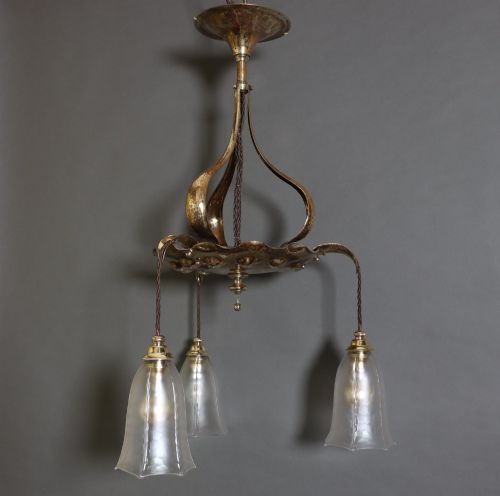
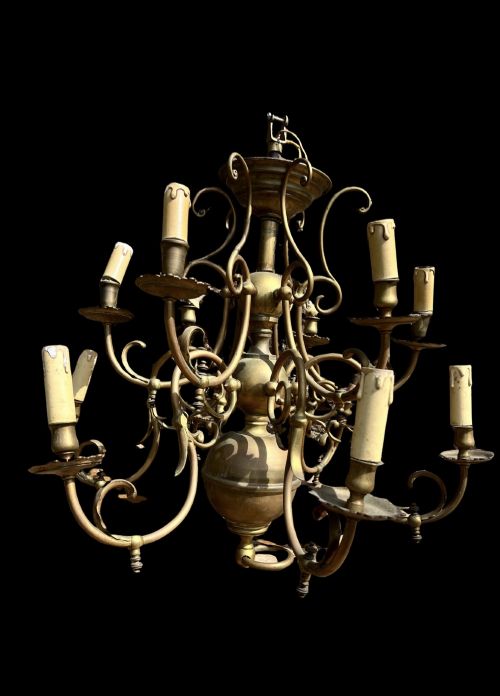
A gothic ceiling light is a hanging fixture designed to recall medieval architecture, taking the form of lanterns, coronas, and multi-branched chandeliers. When you search for this phrase, you meet pieces spanning the nineteenth century, Victorian era, and early twentieth century.
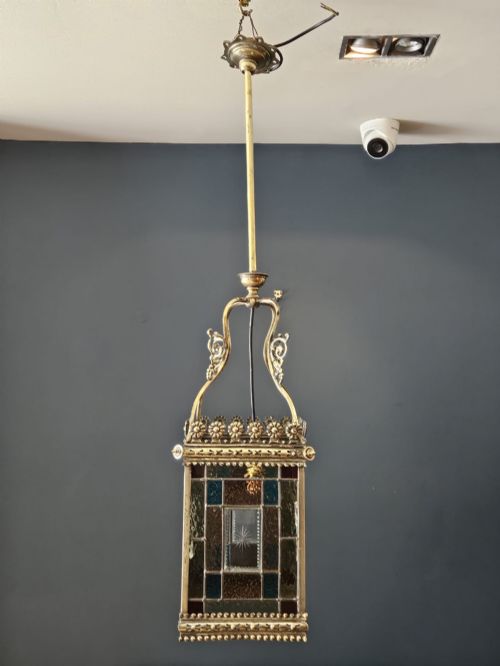
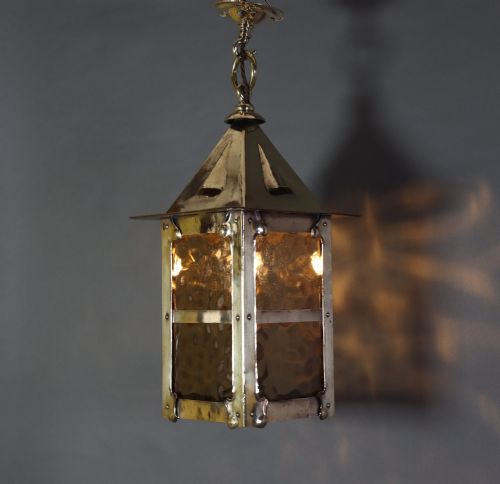
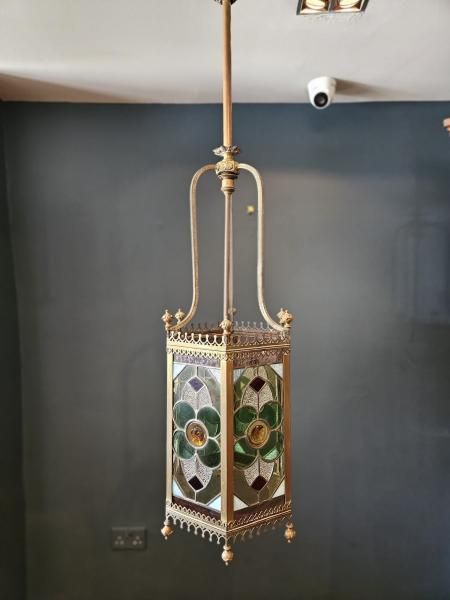
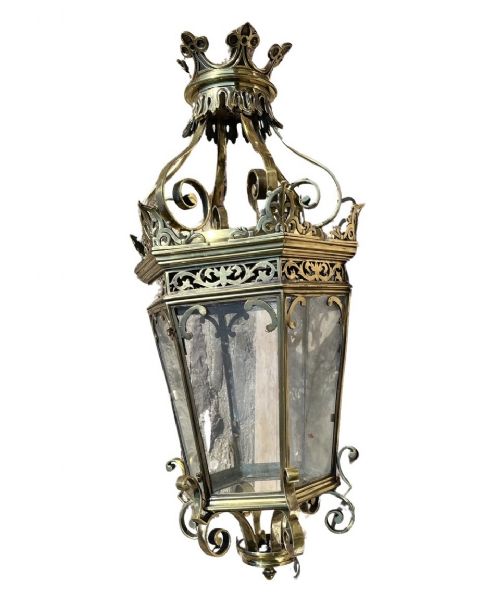
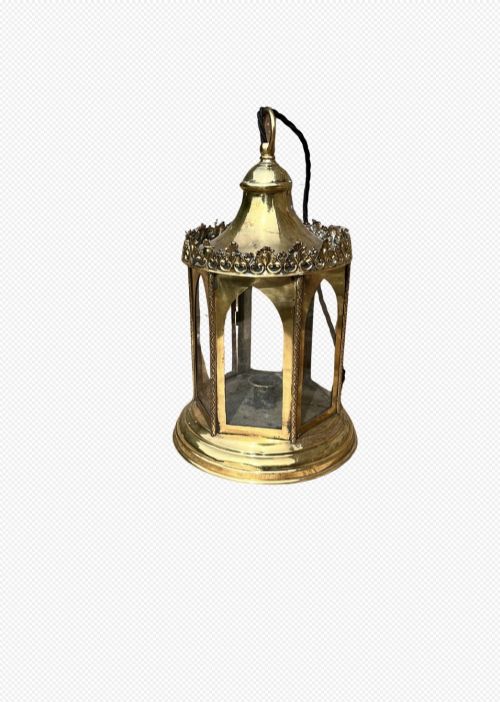
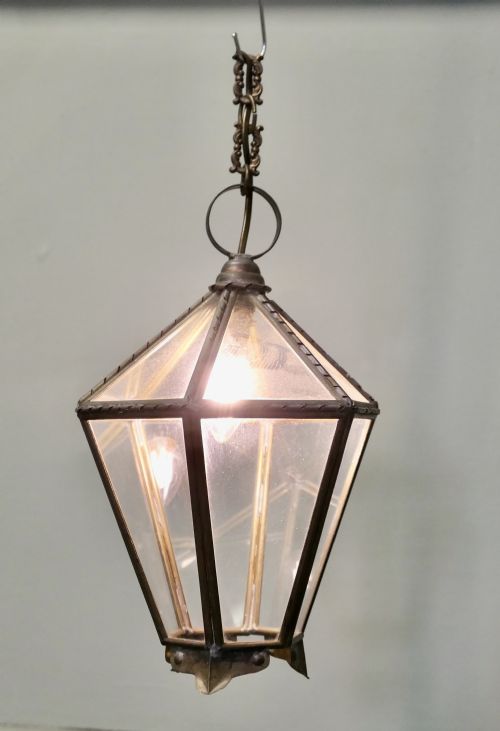
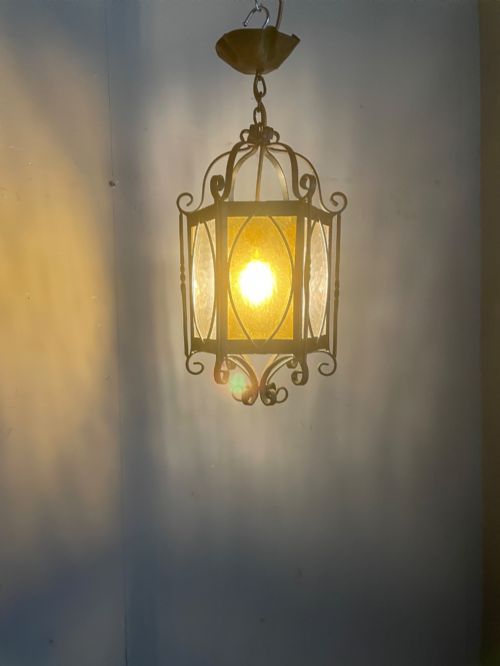
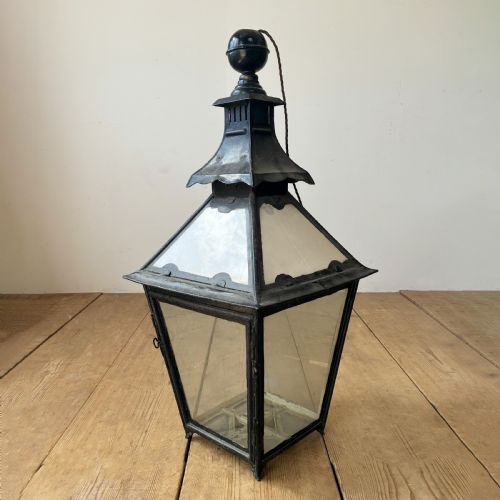
The common form on this page is the hexagonal or square hall lantern, constructed from brass or wrought iron with glazed panels. These fixtures served to illuminate entrance halls and high-ceilinged landings in period properties.
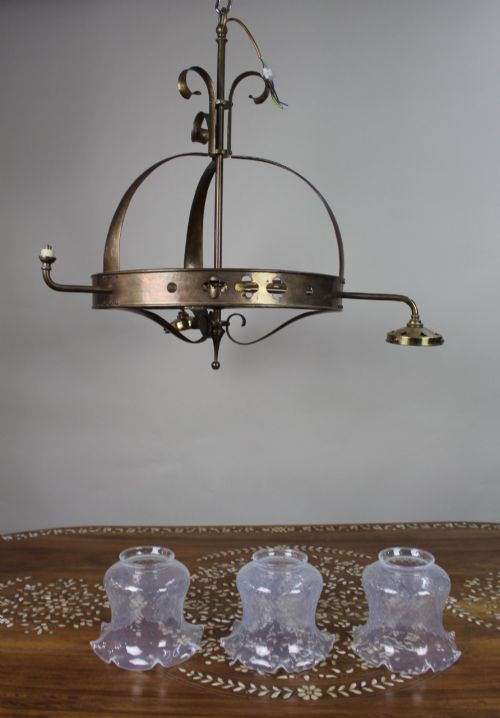
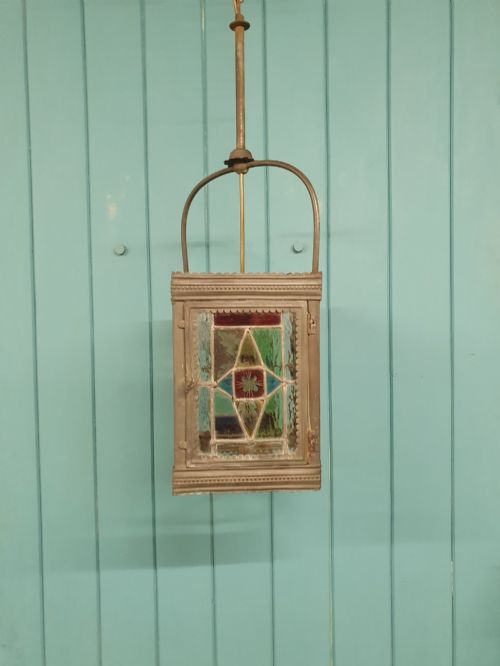
Makers drew on Gothic Revival and Arts and Crafts design principles, producing heavy metal frames fitted with opalescent, stained, or leaded glass. Examples range from simple ecclesiastical brass coronas to elaborate French porch lanterns.
Materials and construction
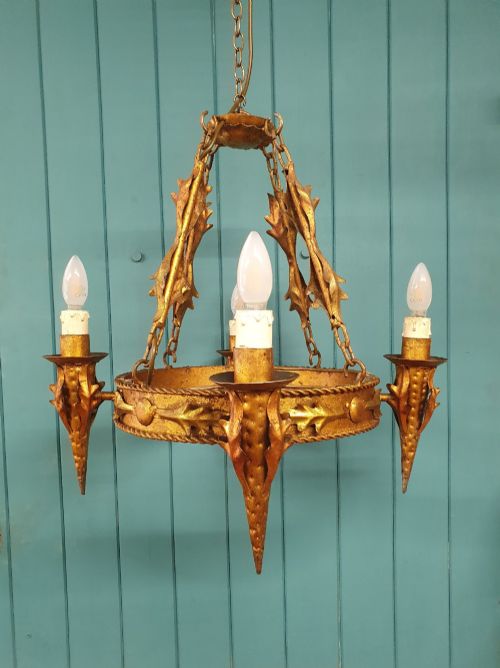
Workshops shaped these fixtures from cast and beaten brass, wrought iron, and copper, often combining metals within a single frame. Iron elements were forged by blacksmiths, while brass components were cast and joined to hold glazing securely.
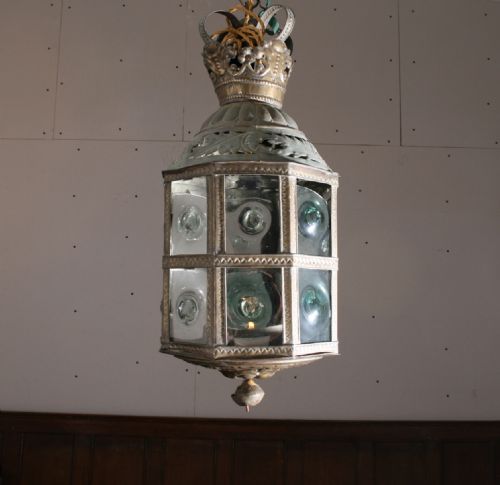
Glazing defined the character of these lights, utilising leaded glass, hand-blown bullseye panes, and coloured or opalescent panels. Some specialised pieces incorporated unusual materials like hand-stitched leather and vellum alongside traditional metalwork.
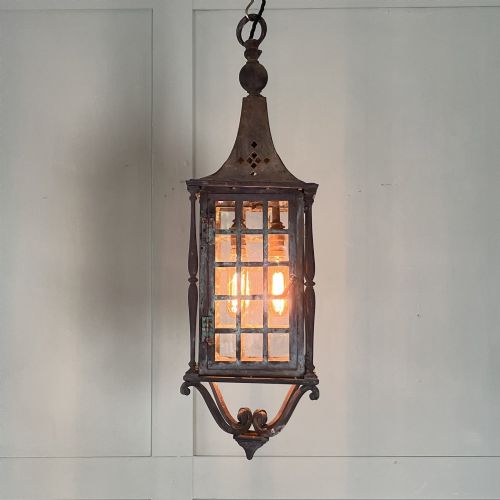
An old green man copper lantern glowers quietly from the ceiling.
What separates the tiers
Quality rests in the weight of the metal casting and the precision of the smithing, where thick gauge brass and hand-forged iron separate standard production from superior work. Finer examples display meticulous attention to structural joints and decorative tracery.
The integrity of the glass panels and the complexity of the frame dictate the standing of a piece. Original leaded construction, stained glass inserts, and signed or attributed designs elevate a light far above simple utilitarian versions.
Joseph Wilmotte
The Gothic Ceiling Light Glossary
- Gasolier
- A branched lighting fixture designed originally for gas illumination before being converted to electricity. These often feature heavy brass or bronze framing.
- Corona
- A circular crown-like hanging light fixture suspended by chains, reminiscent of ecclesiastical fittings found in medieval churches.
- Leaded Glass
- Small panes of glass held together by strips of lead came to form geometric or pictorial patterns within lantern walls.
- Bulls Eye Glass
- Thick, round glass panes containing a central circular distortion left over from the hand-blowing process.
- Gothic Revival
- An architectural and decorative style popular in the nineteenth century that revived medieval forms, pointed arches, and heavy structural metalwork.
Gothic Ceiling Light: Frequently Asked Questions
Where should I hang a gothic ceiling light?
These fixtures suit high-ceilinged entrance halls, stairwells, and principal rooms where their vertical presence and dark metals command the space.
Because they hang on chains and project downward, ensure your ceiling height allows adequate clearance beneath the lowest point of the lantern.
Were these lights originally electrified?
Many nineteenth-century examples started life as gasoliers or candle-hung lanterns before later conversion to electricity during the twentieth century.
Original gas fittings and early wiring configurations require inspection by a qualified electrician to ensure safety before domestic installation.
How do I distinguish Victorian gothic from Arts and Crafts?
Victorian gothic pieces tend to lean heavily into ornate ecclesiastical decoration, featuring pointed arches, tracery, and polished or gilded brass.
Arts and Crafts examples emphasise honest construction, featuring beaten copper, visible fixings, and simpler geometric frames associated with the movement.
How do I care for antique brass and iron frames?
Dust metalwork regularly with a soft, dry cloth to prevent grime accumulation without disturbing the aged patina built up over decades.
Avoid abrasive metal polishes that strip away historical surface character, particularly on wrought iron and aged copper surfaces.