
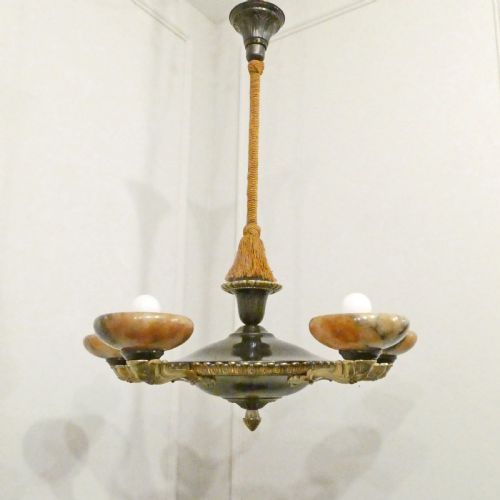
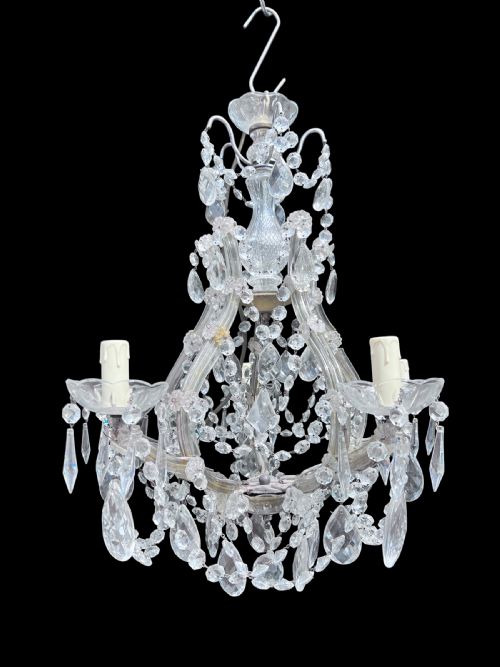
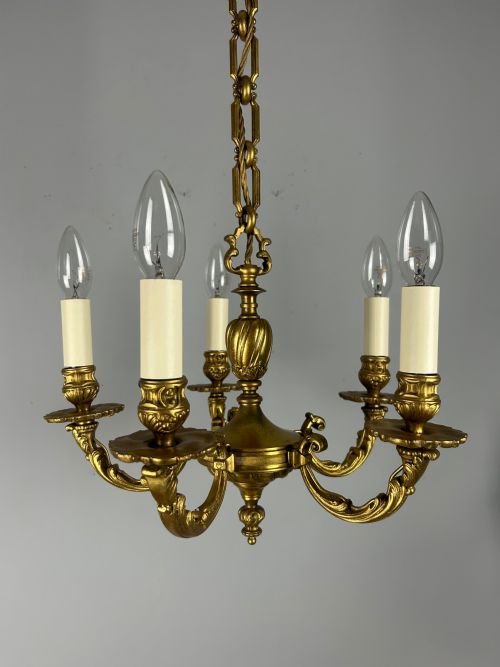
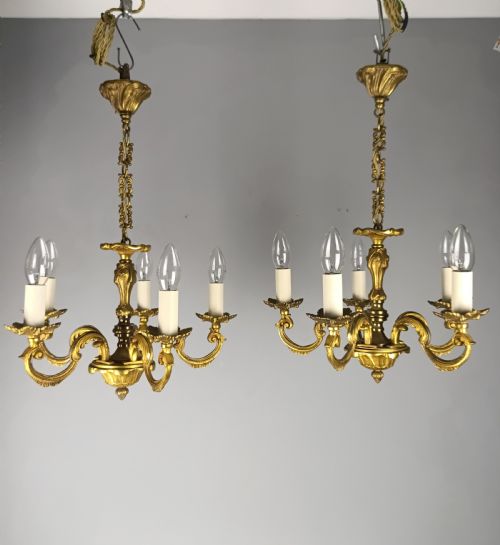
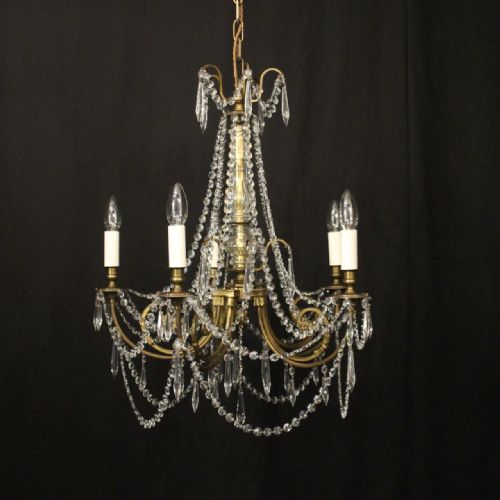
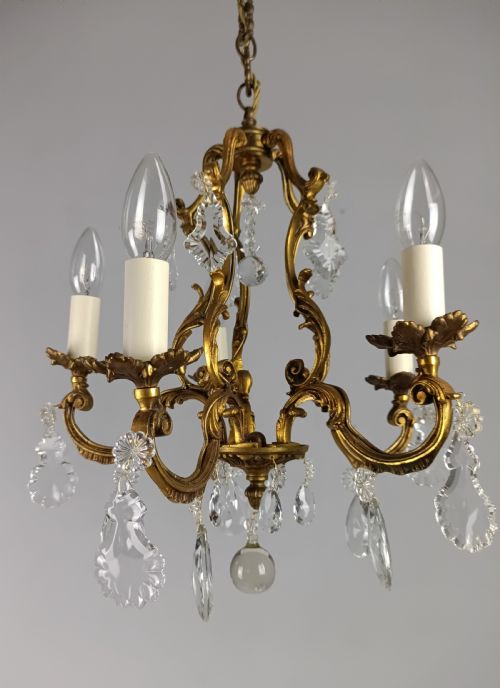


Five Light Pendant
A five light pendant brings focused illumination and period character to a room, offering classic multi-bulb lighting for ceilings.
Five Light Pendant
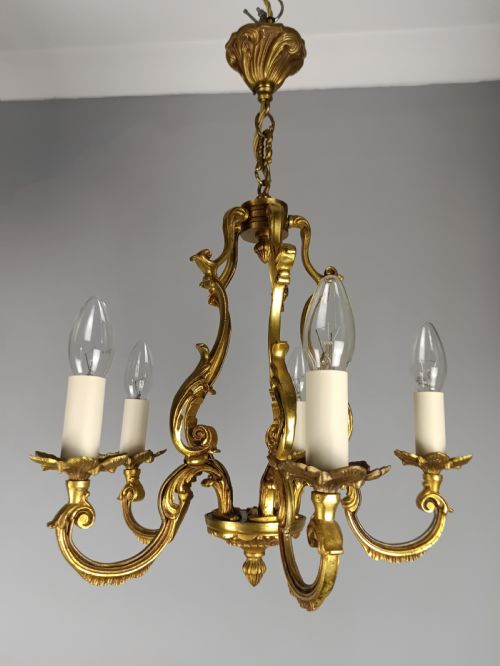
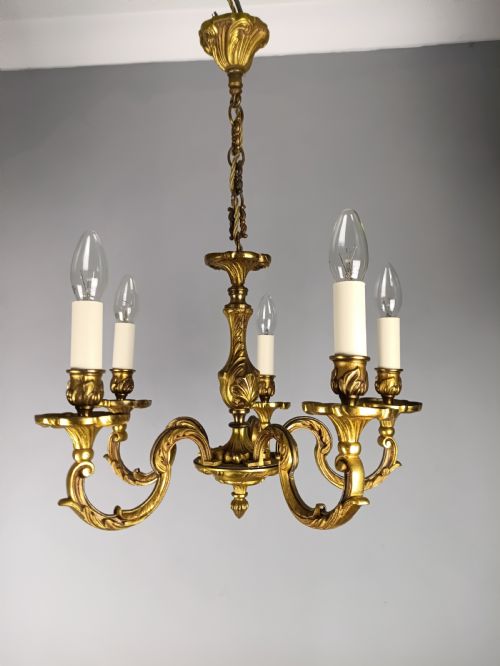
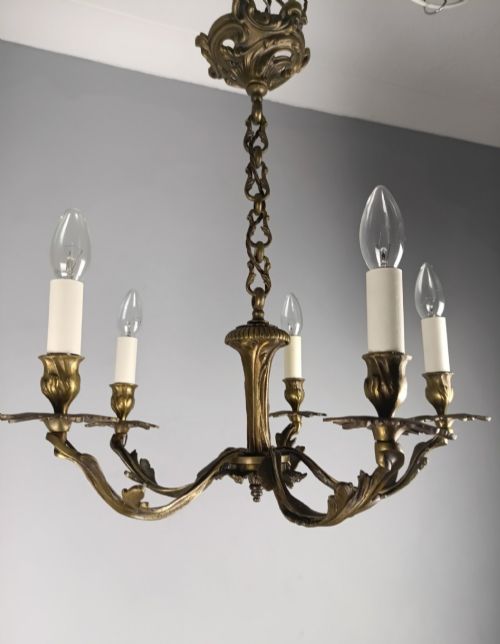
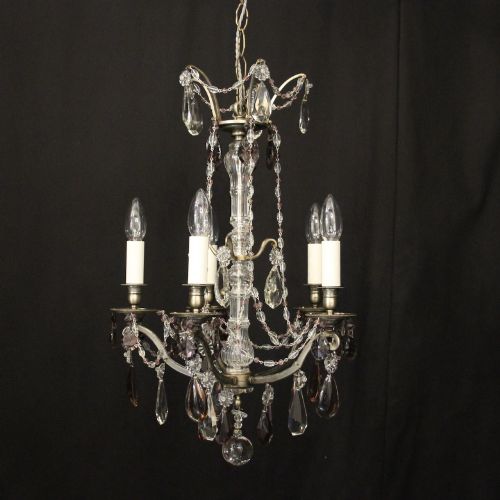
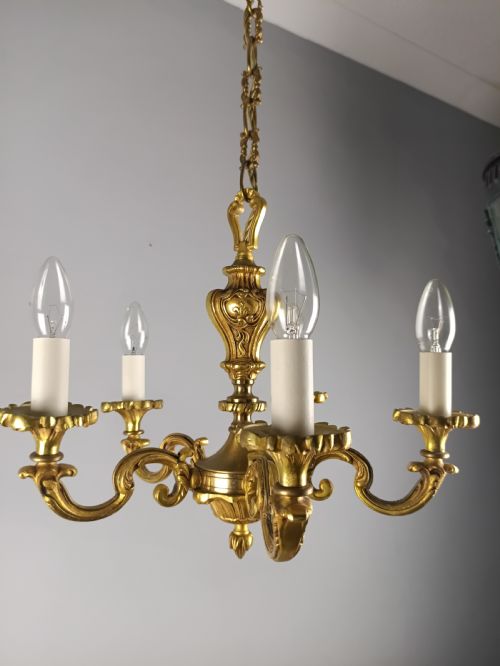
A five light pendant delivers balanced overhead illumination through five distinct arms, branches or bulb points arranged around a central drop. When searching for a five light pendant, buyers encounter ceiling fixtures that span several centuries and stylistic traditions, from French chateau models to Edwardian brass designs.
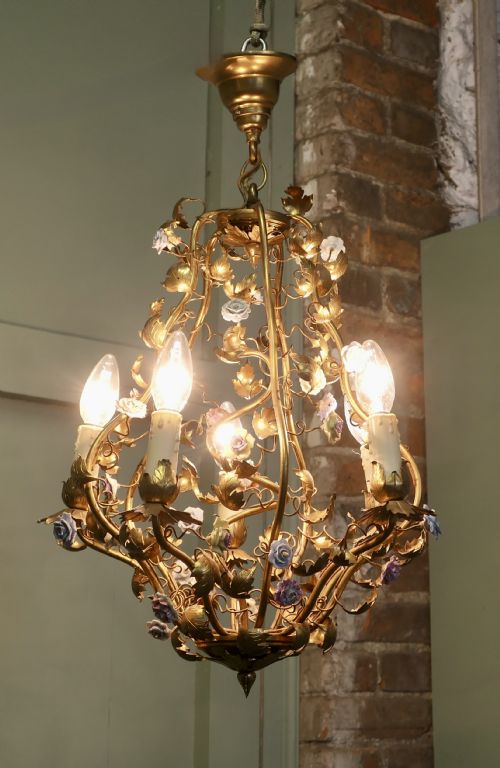
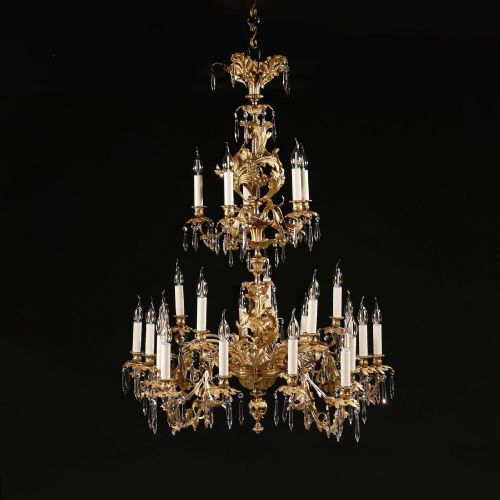
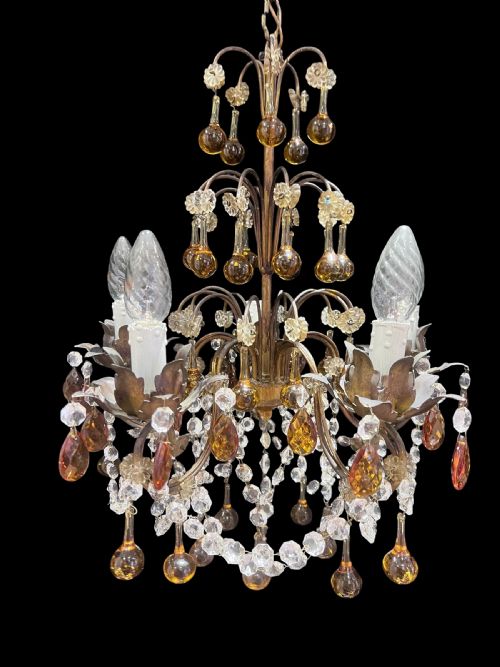
The selections on this page draw heavily from continental and British workshops, encompassing French rococo revival, Art Deco, Italian Florentine and Baroque aesthetics. Forms range from multi-tiered crystal configurations to birdcage frames and solid brass branches.
Materials vary widely across these pieces, including gilt bronze, cut glass, wrought iron, beaten copper and toleware. Many examples integrate coloured crystals, ceramic flowers or alabaster to enhance the visual impact of the five lamps.
Materials and construction
Metalworking forms the structural backbone of these fixtures, utilising cast bronze, spun brass, beaten copper and wrought iron to shape the arms and central frame. Artisans frequently applied gilt finishes, silver plating or dark patina to these metal bases to achieve specific decorative effects.
Glass and crystal elements require specialised cutting, moulding and polishing techniques to create the pendants, drops and tiered shades seen on many chandeliers. Ceramic floral components and painted toleware add hand-finished colour and texture to specific continental variants.
Listings feature periods spanning from the eighteenth century through the 1930s, incorporating brass, bronze, crystal and glass.
Assessing quality and finish
The refinement of the casting and hand-chasing on bronze and brass components distinguishes superior examples from standard production. Crisp detailing on cast ornamentation and substantial metal weight indicate high-grade workmanship.
The integration of the crystal and glass elements affects the overall harmony of the piece, with precision-cut drops reflecting light more cleanly than simpler pressed glass. Original surface treatments, such as genuine fire-gilding or well-preserved silver plating, elevate the execution.
The Five Light Pendant Glossary
- Gilt bronze
- An alloy of copper and zinc treated with a gold amalgam or leaf finish. This material is frequently found on French chandelier frames from the nineteenth and early twentieth centuries.
- Toleware
- Painted or enamelled sheet metal used to create decorative floral and foliage elements on lighting fixtures. It introduces vibrant polychrome colour into the design.
- Cut glass
- Glass shaped and faceted by grinding and polishing wheels to increase light refraction. It appears extensively in pendant drops and tiered chandelier components.
- Baroque
- An ornate historical style characterised by dramatic curves, heavy proportions and rich ornamentation. Pieces from this tradition display strong sculptural presence.
- Birdcage frame
- An open wirework or metal framework resembling a cage structure that supports the central shaft and candle arms. This silhouette is common in antique French lighting.
Five Light Pendant: Frequently Asked Questions
How do I hang a five light pendant?
These ceiling fixtures typically suspend from a matching chain and ceiling canopy attached to the central wiring core. Professional installation ensures the structural weight of bronze or brass frames is safely supported.
Adjusting the hanging height depends on the ceiling clearance and the room function, allowing the fixture to sit at a proportioned level above furniture or open floor space.
What styles are common for these fixtures?
The selection encompasses French chateau, rococo revival, Art Deco, Edwardian and Italian Florentine designs. Each tradition brings distinct decorative motifs, from crystal swags to beaten copper work.
Matching the style to an interior involves considering the primary metal finishes and decorative elements present in the surrounding room.
How do I clean an antique chandelier?
Maintenance involves gentle dusting with a soft cloth or specialised wand to prevent particle buildup on the metal arms and glass drops. Chemical cleaning agents should be avoided to protect antique gilt and patinated surfaces.
Crystal and glass components can be wiped individually with a mild solution while supported, ensuring the wiring remains dry throughout the process.
What materials make up these chandeliers?
Construction relies heavily on metals such as brass, bronze, gilt metal, wrought iron and copper. These durable frames support glass crystals, alabaster bowls or ceramic floral decorations.
Different periods favoured specific combinations, shifting from heavy cast bronze in earlier eras to streamlined brass and crystal in later twentieth-century pieces.