






Gothic Carved Wooden Bench
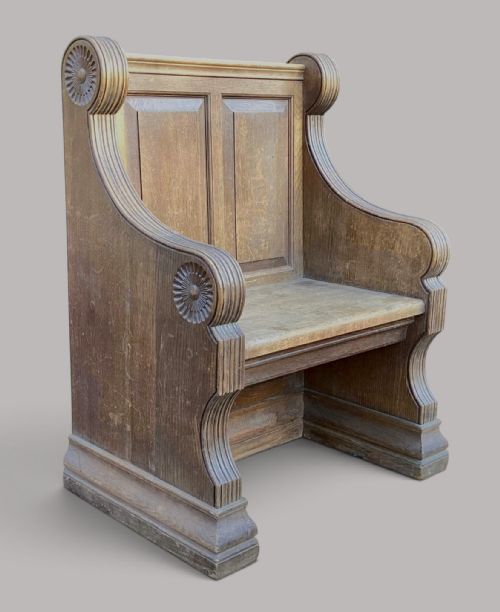
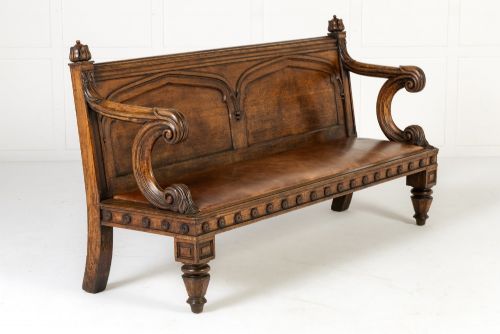
A gothic carved wooden bench brings heavy architectural timber and pointed arches straight into a hallway, offering solid seating rooted in revival design.
Gothic Carved Wooden Bench
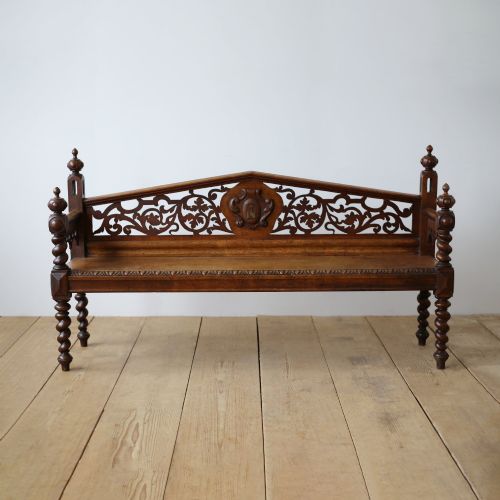
A gothic carved wooden bench encompasses architectural hall seats, settles, church pews, and window seats built primarily during the nineteenth century. Buyers searching this phrase meet substantial items influenced by Gothic Revival, Victorian, and Arts and Crafts styles.
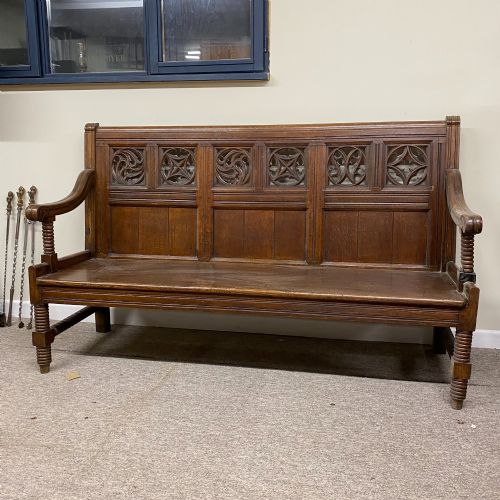
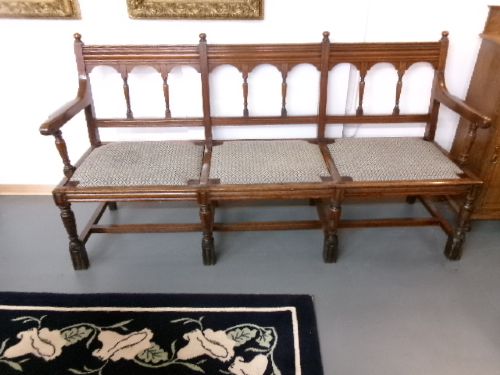
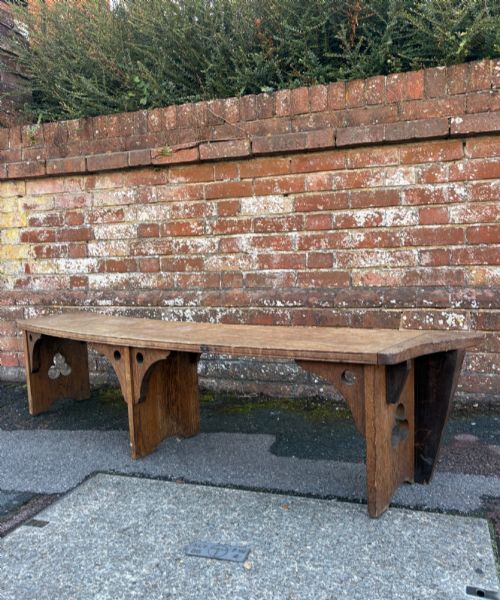
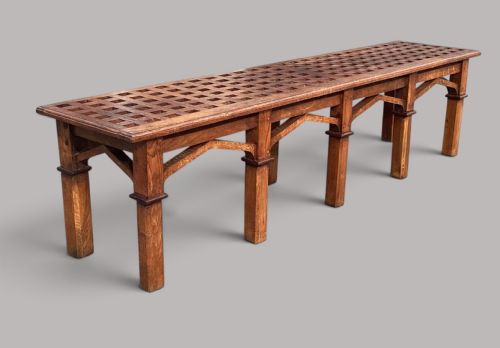
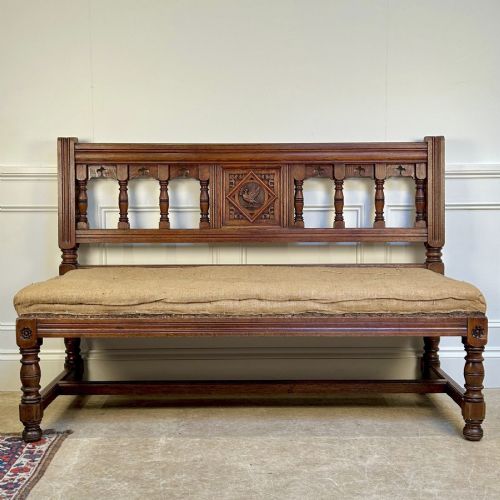
The most common forms on this page are nineteenth-century oak hall benches and settles featuring carved panels, trefoil supports, and structural framing. Pieces span from plain boarded trestle forms to impressive baronial seating with intricate relief work.
Origins vary from English and Scottish workshops to continental examples in walnut and oak, with dates stretching from mid-Victorian decades down to turn-of-the-century revival pieces.
Materials and Construction
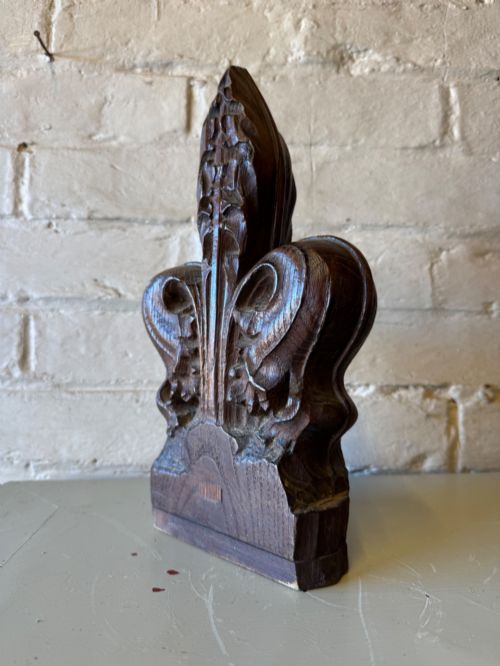
Makers relied heavily on solid oak, supplemented by elm, walnut, and occasional ebonised wood or pine. Timbers were selected for strength, allowing deep chisel work for trefoils, tracery, and figurative carvings such as Green Man motifs.
Construction methods include traditional joinery with panelled backs, trestle supports, and pegged joints designed to withstand heavy daily use in grand halls and churches. Secondary materials like brass fittings, leather, and fabric upholstery appear on select window seats and adjustable stools.
Gothic Carved Wooden Bench Retail Price Guide 2026
Typical asking prices for gothic carved wooden bench among the pieces listed under this phrase on Sellingantiques today, from the lower quarter to the upper quarter. They describe what is for sale here now, not the wider market.
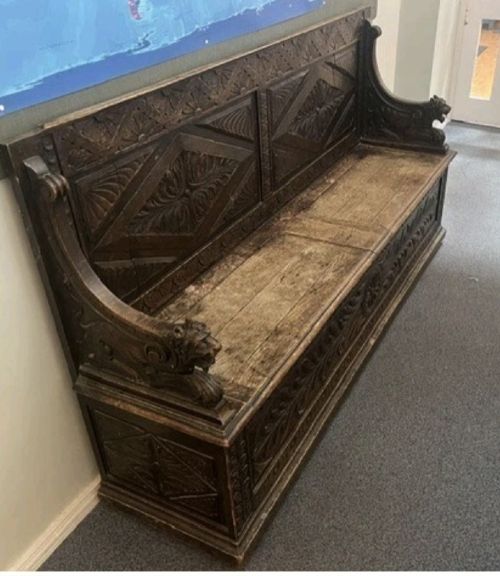
Hunting dog heads peer out from carved walnut framing on select nineteenth-century window seats.
Standards of Execution
Quality rests upon the crispness of the hand-carved detail and the architectural integrity of the frame. Superior examples display deep, deliberate relief carving on solid timber panels rather than superficial surface ornamentation.
The selection of materials dictates the tier of the piece, with dense English or Scottish oak and figured burr elm sitting above standard pine or softer woods. Proportion, joinery stability, and the retention of original structural timber define the better specimens.
GIllows·Pugin
The Gothic Carved Wooden Bench Glossary
- Settle
- A wooden bench with a high back, solid arms, and often a storage box beneath the seat. This form kept draughts away in large medieval and revival halls.
- Trefoil
- A three-lobed ornamental design resembling a clover leaf. It frequently pierces the wooden supports or backs of gothic revival furniture.
- Monks bench
- A convertible piece of furniture featuring a hinged top that folds down to form a table. Victorian makers revived this form in dark carved oak.
- Ebonised wood
- Timber stained or treated to imitate ebony. This dark finish gained popularity during the nineteenth century for aesthetic and revival pieces.
- Tracery
- Openwork intersecting stone or woodwork patterns. In these benches, it translates the pointed window designs of gothic architecture into timber.
Gothic Carved Wooden Bench: Frequently Asked Questions
Where did these benches stand originally?
These seats were designed primarily for grand entrance halls, country houses, and ecclesiastical settings like churches and chapels. Their robust construction suited heavy traffic areas where guests waited.
Over time, collectors moved them into domestic hallways and living rooms to anchor an interior scheme with strong architectural woodwork.
How do I care for antique oak?
Maintain the timber by dusting with a dry cloth and occasionally feeding the surface with appropriate beeswax. Avoid placing solid wood benches near direct heat sources or in fluctuating humidity.
Proper care preserves the rich patina built up over centuries of handling and environmental exposure.
What is a monks bench used for?
A monks bench serves a dual purpose as both a seating option and a table. The hinged back folds forward onto the arms to create a flat surface.
This clever design saved space in smaller rooms while retaining heavy gothic decoration.
How can I tell a Victorian revival piece?
Nineteenth-century revival pieces often utilise machine-assisted finishing alongside hand carving, drawing inspiration from medieval architecture. Look for characteristic Victorian interpretations of linenfold panels and pointed arches.
Documentation, timber characteristics, and secondary woods frequently point to nineteenth-century workshops rather than medieval origins.