


Traditional Wooden Settee
A traditional wooden settee brings warmth and history to a room, offering sturdy timber framing and characterful period seating.
Traditional Wooden Settee
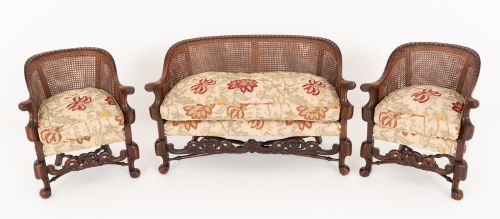
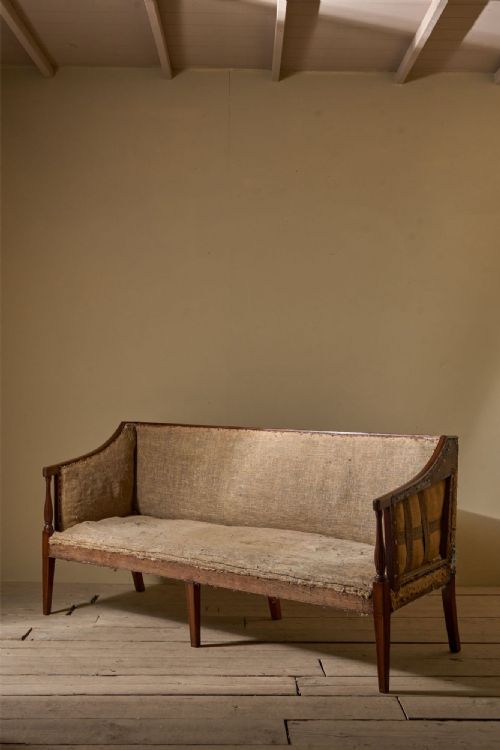
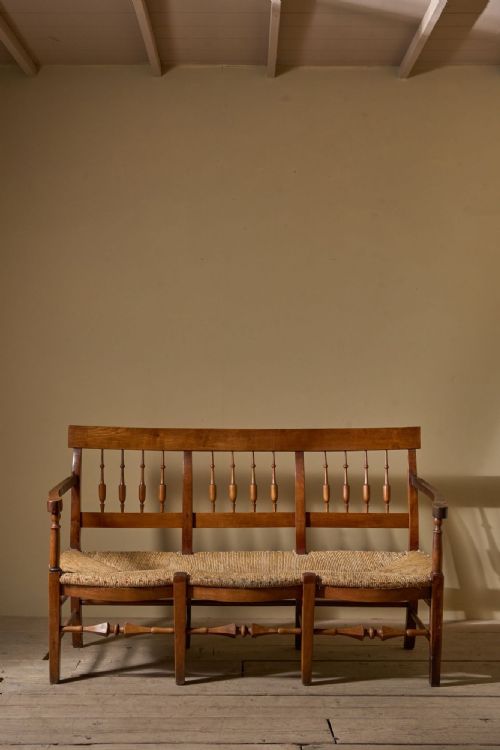
A traditional wooden settee provides long-seat furniture fashioned primarily from timber, spanning forms from chair-back settees to country house sofas. Buyers searching for a traditional wooden settee encounter examples originating across the nineteenth century alongside revival styles.
How they were made
Constructed predominantly from hardwoods like mahogany, walnut, and oak, these settees rely on robust timber framing joined by traditional cabinet-making methods. Carved details, turned supports, and shaped splats demonstrate skilled hand-tool work across the frame.
Listings feature mahogany, walnut, oak, and ebonised wood across nineteenth-century and revival styles.
What varies in quality
Quality reveals itself in the crispness of timber carving, the selection of figured wood veneers, and the structural integrity of the joinery. Finer examples display deeply carved details, well-proportioned chair backs, and dense, patinated timbers that show decades of gentle use.
Simpler country pieces rely on straightforward turned members and local woods, where charm stems from honest construction rather than elaborate ornamentation. The sophistication of the design lineage, from straightforward vernacular benches to high-style revival pieces, dictates the character of each seat.
The Traditional Wooden Settee Glossary
- Chair-back settee
- A long seat featuring a backrest constructed as a series of joined chair backs, often incorporating splats in Hepplewhite or Chippendale styles.
- Scroll-end sofa
- A sofa design characterised by outward-curving arms that resemble scrolls, frequently seen on Regency and nineteenth-century examples.
- Ebonised wood
- Timber treated with a dark finish to imitate expensive ebony, popular for creating dramatic contrast on nineteenth-century frames.
- Splat
- The vertical central strip of wood in the middle of a chair or settee back, often shaped and carved in revival designs.
- Giltwood
- Wood that has been coated with gold leaf or a gold-coloured metallic finish to provide a decorative surface.
Traditional Wooden Settee: Frequently Asked Questions
Where should I place a wooden settee?
These settees fit well in spacious hallways, living rooms, and large landings where their timber frames can be admired from multiple angles. They provide firm seating suited for occasional use rather than deep lounging.
Pairing a wooden settee with a neutral wall colour allows the grain and carved details of the wood to stand out as a focal point in the room.
How do I identify a revival style?
Revival settees, such as those made in the Chippendale or Hepplewhite style, are typically manufactured in the nineteenth or early twentieth century while adopting the aesthetic codes of earlier eras. Look at the sharpness of the carving and the construction methods to date the actual timber framework.
Cabinet-makers of the Victorian and Edwardian periods often reinterpreted eighteenth-century designs with heavier proportions and distinct nineteenth-century finishing techniques.
Are these settees comfortable for daily use?
Wooden-backed settees offer an upright, supportive sit rather than the sink-in comfort associated with modern upholstered sofas. Adding loose cushions can adjust the depth and softness of the seat according to personal preference.
Upholstered variants provide more cushioning through traditional horsehair or modern padding held beneath textile covers.
What woods were commonly used?
Mahogany and walnut appear frequently among formal nineteenth-century pieces, offering stability and a rich surface for carving. Oak and various regional timbers dominate country house furniture and simpler bench forms.
Ebonised finishes and alternative woods like teak or blonde wood also feature across specific international and domestic pieces within the selection.