

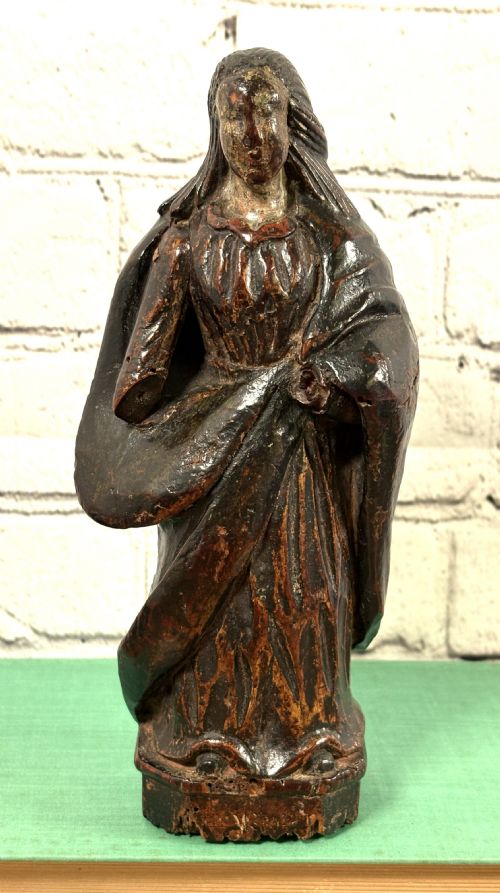


Gothic Carved Wood Saint
These gothic carved wood saint figures combine centuries of devotion and craftsmanship, offering buyers authentic ecclesiastical presence for the home.
Gothic Carved Wood Saint
A gothic carved wood saint represents a tangible piece of medieval and post-medieval religious art, typically portraying figures such as the Virgin Mary, St. John, or specific bishops and martyrs. These sculptures range from pre-16th century medieval works to later 19th-century revivals.
Buyers will encounter various forms spanning single standing figures, pairs, and group compositions like the Anna Selbdritt or the Virgin and Child. Originating from regions such as Germany, Flanders, and France, they appear in both robust oak and finer limewood.
The pieces on this page bridge the gap between sacred church architecture and domestic display, preserving the hand of historical carvers. They arrive in formats from substantial architectural fragments to complete free-standing devotional statues.
Materials and Construction
Carvers predominantly selected native hardwoods, specifically oak for structural durability and limewood for intricate, detailed facial expressions and flowing drapery. Wood selection dictated the depth of relief and the scale of the resulting sculpture.
Many surfaces received layers of gesso to prepare the wood for polychrome paint and applied gilding, bringing lifelike colour and radiance to the sacred figures. Over the centuries, these painted and gilded finishes have naturally aged, often revealing the underlying timber beneath remnants of pigment.
Materials recorded across the selection include solid oak, limewood, gesso, and surviving remnants of polychrome paint and gilded surfaces.
Evaluating Quality
The survival of original surface treatments, including traces of polychrome pigment and gold leaf, elevates a piece significantly compared to stripped or heavily overpainted wood. Intact original hands, attributes, and structural integrity without excessive later reconstruction also define the superior examples.
The Gothic Carved Wood Saint Glossary
- Polychrome
- Decoration consisting of several colours applied to the surface of wood or gesso. This technique brought medieval sculptures to life with realistic flesh tones and vibrant garments.
- Limewood
- A fine-grained timber favoured by continental carvers for its lack of prominent grain and ease of intricate cutting. It allows for exceptionally crisp detail in hair and facial expressions.
- Gesso
- A plaster mixture applied to wood as a base for paint and gilding. It provided a smooth, uniform ground for the brilliant colours used in religious statuary.
- Giltwood
- Wood that has been decorated with thin sheets of gold leaf. This finish added heavenly radiance to saints and altarpieces.
- Anna Selbdritt
- An iconic Christian iconography depicting St. Anne, the Virgin Mary, and the infant Jesus as a group. This subject is frequently found in late medieval wooden sculpture.
Gothic Carved Wood Saint: Frequently Asked Questions
How do I date a wooden saint?
Dating relies heavily on stylistic cues in the clothing, the carving technique of the drapery, and the choice of timber. Earlier pieces often show more rigid, gothic stylisation, while Renaissance and later examples introduce softer realism.
Examination of the wood grain, tool marks, and any remnants of gesso or polychrome layers also helps establish the era of origin.
Were these statues originally painted?
Most medieval and renaissance ecclesiastical figures were brightly painted and gilded to enhance their visual impact in dim churches. Over time, many lost their paint through cleaning, weathering, or deliberate stripping during later centuries.
Finding traces of original pigment is a positive indicator of untouched historical condition, though many pieces survive cleanly as bare wood.
How should I display a wooden saint at home?
These sculptures require stable indoor environments away from direct sunlight and sudden humidity shifts, which can cause timber to crack. Placing them on sturdy shelves, mantels, or dedicated pedestals allows them to be viewed securely.
Because they carry significant vertical weight, ensure any wall-mounted figures or brackets are fixed firmly into solid masonry or studs.
What is the difference between oak and limewood figures?
Oak was traditionally used for robust, structural figures, particularly in English and northern European traditions, displaying a prominent grain. Limewood, popular in German and continental workshops, offers a tighter grain that permitted much finer facial detailing and deep, undercut drapery.
Both materials weather differently, with limewood often retaining more delicate carved nuances.