




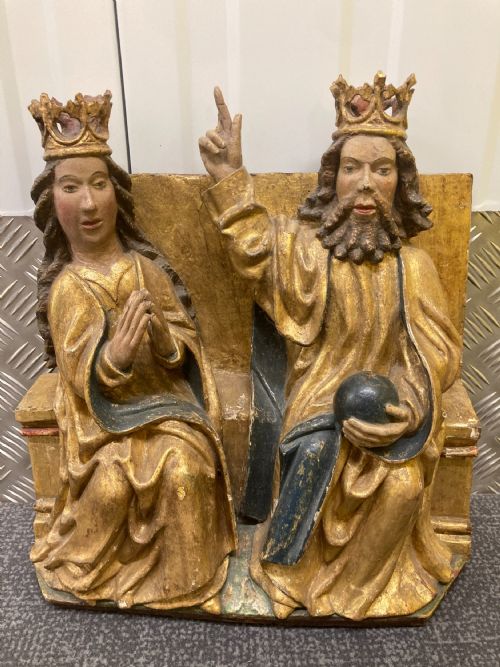


Gothic Carved Wood Figure
These early wooden carvings range from medieval saints to nineteenth-century interpretations, bringing centuries of ecclesiastical history directly into domestic interiors.
Gothic Carved Wood Figure
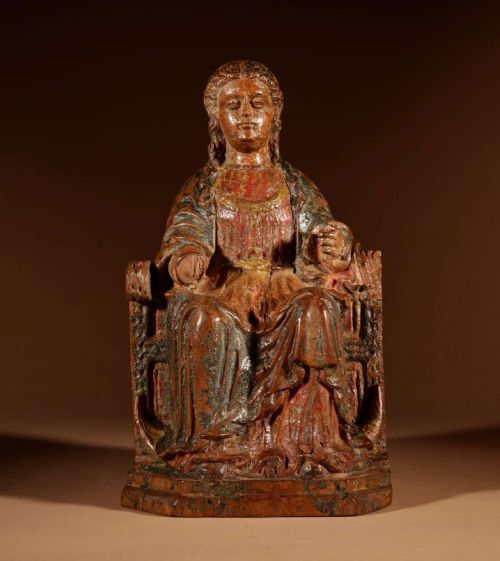
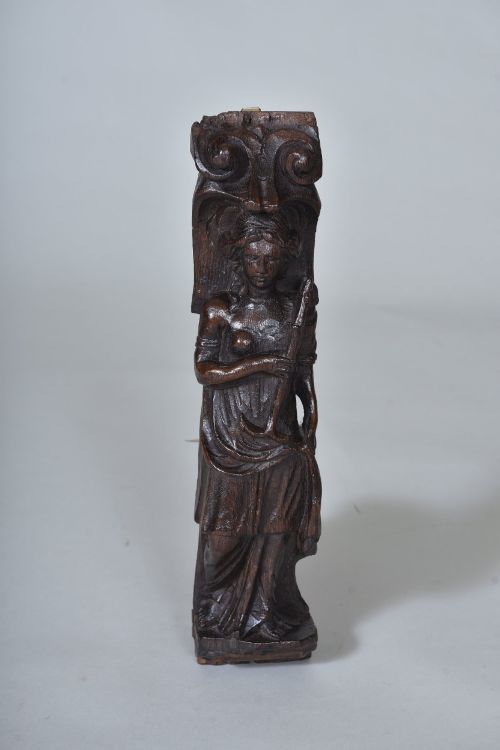
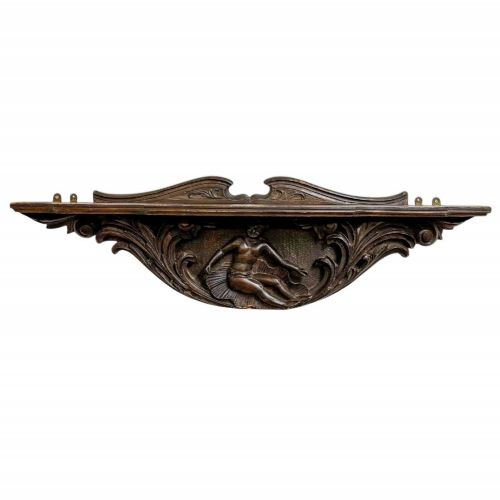
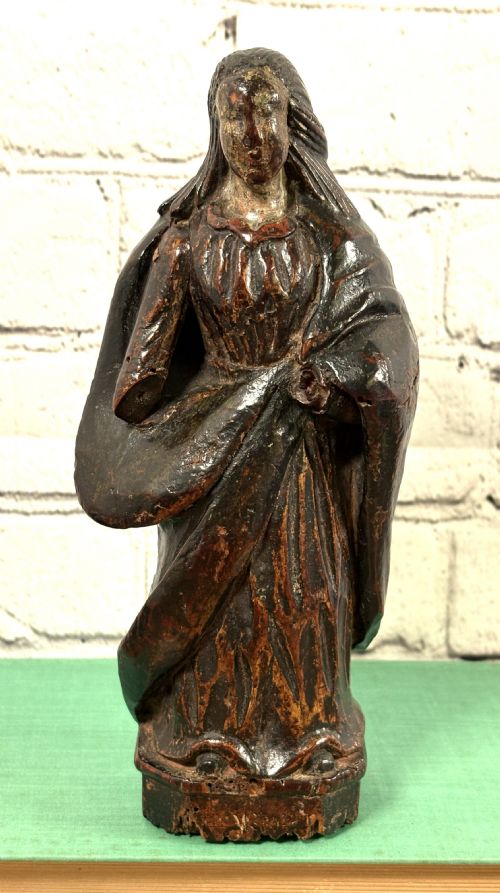
A gothic carved wood figure represents religious subjects such as madonnas, saints, and angels, alongside architectural ornaments like brackets and overdoors. Buyers seeking these works encounter devotional sculptures originating from fifteenth-century workshops up to nineteenth-century revivalist interpretations.
The assortment spans continental European pieces, including German and Flemish examples, alongside British pieces created in oak, pine, walnut, and limewood. Figures range from small fragmentary studies of individual saints to large group carvings depicting biblical scenes like the Pieta or the Annunciation.
While many works serve as standalone statues or architectural fragments, others function as decorative reliefs or architectural salvage. The survival of original polychrome paint, gesso, and gold leaf often indicates the primary ecclesiastical context these devotional objects once inhabited.
Materials and Technique
Surfaces were frequently prepared with gesso before receiving layers of polychrome paint and gold leaf to heighten realism and devotional impact. Over centuries, these layered finishes have undergone natural wear, revealing the bare timber beneath significant areas of pigment.
Judging Quality
Quality rests upon the sculptural confidence of the carving, visible in the natural fall of drapery and the anatomical expression of hands and faces. Master carvers achieved depth and movement in timber, whereas lesser workshop productions relied on stiff, repetitive detailing.
The survival of original surface treatments, including traces of medieval polychrome pigment or early gilding, elevates the historical integrity of a piece. Losses to limbs or attributes are common in church salvage, but the retention of original form determines the piece's visual strength.
The Gothic Carved Wood Figure Glossary
- Polychrome
- Decoration consisting of several colours applied to wood or stone surfaces. This technique was standard for medieval and Renaissance church figures to bring realism to statues.
- Gesso
- A plaster mixture used as a smooth base for paint and gold leaf on wooden sculptures. It provides a bright foundation that enhances the brilliance of applied pigments.
- Pieta
- A subject in Christian art depicting the Virgin Mary cradling the dead body of Jesus Christ. These sculptures often emphasise intense emotional grief and naturalistic drapery.
- Donor figure
- A portrait of the person who commissioned a religious work, shown kneeling or standing near saints. These figures frequently appear in late medieval church art.
- Term
- A pillar or pedestal tapering downward, topped by a bust or figure. Pairs of these architectural supports often frame doorways or mantelpieces in revival schemes.
Gothic Carved Wood Figure: Frequently Asked Questions
How do I date a wooden figure?
Dating relies on tool marks, timber species, and stylistic traits such as the cut of the drapery and facial carving conventions. Earlier pieces from the pre-sixteenth century display distinct adze or chisel work characteristic of medieval workshop practices.
Later nineteenth-century Gothic revival pieces often utilise softer pine or machine-sawn backing boards that contrast with the heavier, hand-hewn oak typical of sixteenth-century ecclesiastical carpentry.
Where were these figures displayed originally?
Most pieces originated inside churches, abbeys, and private chapels as altarpieces, rood screen figures, or architectural brackets supporting timber beams. Some served as devotional objects placed within domestic wall niches for private prayer.
Following later architectural salvage and secularisation, these sculptures transitioned into collector cabinets and study displays within country houses and town residences.
How should I clean polychrome wood?
Dust accumulation should be managed using a soft, dry brush without applying water, cleaning solutions, or oils to the surface. Moisture can soften aged gesso and lift fragile seventeenth-century or medieval paint layers.
Professional conservators should handle any structural stabilisation or deep cleaning to preserve remaining traces of original gilding and historic pigments.
What is the difference between original and revival pieces?
Original medieval and Renaissance carvings exhibit the wear patterns, structural shifts, and timber shrinkage expected from centuries of environmental exposure. Their tool marks reflect historical hand-working methods tied to specific continental traditions.
Revival pieces from the Victorian era imitate these earlier Gothic forms for nineteenth-century architectural projects, showing different timber preparation methods and cleaner joinery techniques.