



Medieval Religious Wood Carving
These medieval religious wood carving pieces are devotional sculptures shaped by hands long gone, offering a direct tactile link to centuries of intense faith.
Medieval Religious Wood Carving
When you examine medieval religious wood carving examples, you encounter figures of saints, Madonnas, and biblical scenes drawn from altarpieces and church furnishings. These sculptures mostly emerge from the 16th century and pre-16th century periods, carrying the heavy stylistic hallmarks of Gothic and Renaissance workshops.
The pieces on this page appear primarily as oak or pine sculptures and wall carvings, frequently depicting figures such as the Virgin Mary, Christ, and various saints. Continental European origins dominate, with German, French, and Flemish pieces reflecting regional interpretations of sacred narratives.
How They Were Made
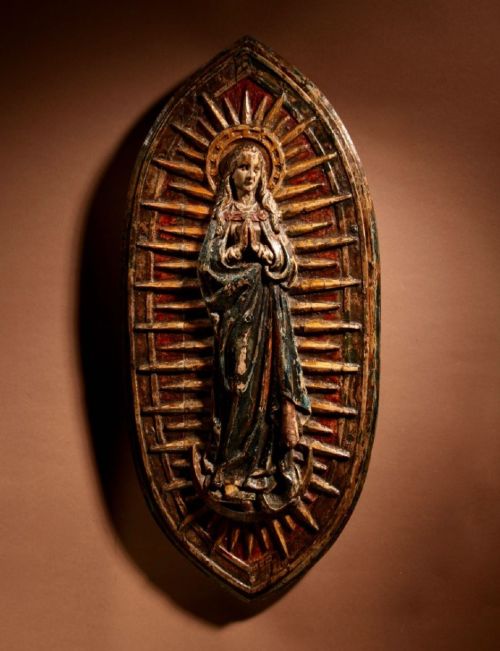
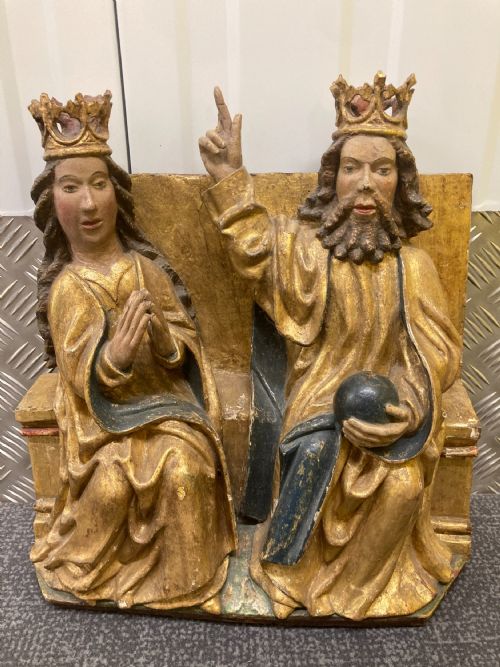
Many surfaces received layers of gesso, polychrome paint, and gold leaf to heighten the visual impact of the devotional figures. Traces of this original gilding and pigment survive on select pieces, showing how makers combined sculpture with vibrant colour.
One cheerful young saint bishop manages to keep a slight smile despite centuries of European history happening all around him.
What Varies in Quality
The distinction between ordinary and exceptional carving lies in the anatomical depth and emotional resonance captured in the timber. Superior pieces display masterly chisel control that communicates movement and expression rather than rigid symmetry.
Survival of original surface treatments also separates examples, as pieces retaining untouched polychrome or gold leaf layers offer greater historical completeness. The crispness of surviving detail amidst centuries of wear ultimately defines the upper tier of these works.
The Medieval Religious Wood Carving Glossary
- Polychrome Paint
- Pigments applied directly to wood or gesso surfaces to add realistic or symbolic colour to sculptures. This technique brought devotional figures to life in dim church interiors.
- Gesso
- A plaster mixture applied to wood surfaces to create a smooth base for subsequent gilding and painting. It helps secure the bond between timber and decorative finishes.
- Gold Leaf
- Extremely thin sheets of beaten gold used to gild wooden sculptures and altarpiece panels. It symbolised heavenly light and divine presence.
- Altarpiece
- A large structured artwork placed behind or upon an altar, often featuring carved wooden panels and sculptural groups. Central panels typically held the primary devotional figures.
- Gothic
- An artistic style prevalent throughout medieval Europe characterised by pointed arches and elongated, expressive sculptural forms. It emphasises spiritual verticality and emotional narrative.
Medieval Religious Wood Carving: Frequently Asked Questions
How were these carvings used originally?
These sculptures functioned primarily as focal points for prayer and contemplation within churches, chapels, and domestic shrines. They decorated altarpieces or stood as independent devotional figures to inspire religious devotion.
Craftsmen designed them to communicate complex theological narratives visually to congregations that largely could not read. Over time, many were removed from their original ecclesiastical settings during periods of religious change.
How do I live with a wooden carving?
Place your sculpture away from direct sunlight and sudden temperature shifts to protect the historic timber and any remaining surface paint. Stable indoor humidity prevents the wood from drying out or splitting.
Mount wall sculptures securely using appropriate hardware suited to the weight of solid oak or pine. Allow adequate clearance around freestanding figures so the three-dimensional form can be appreciated from multiple angles.
How can I tell periods apart?
Pre-16th century and 14th to 15th-century pieces often display heavier Gothic stylisation with rigid drapery folds and solemn expressions. Figures from this earlier bracket rely heavily on structural mass and linear carving.
By the 16th century, Renaissance influences introduced softer contours, more naturalistic human proportions, and dynamic poses. Flemish and French examples from this later period frequently exhibit greater anatomical movement and facial expression.
Why do some figures show paint traces?
Most medieval wood sculptures were originally painted and gilded to create a lifelike appearance rather than displaying bare wood. Centuries of cleaning, wear, and changing tastes resulted in the loss of much of this original polychrome surface.
Surviving flecks of paint or gold leaf indicate how the piece originally looked inside a medieval church. These microscopic remnants are prized by collectors for their historical authenticity.