
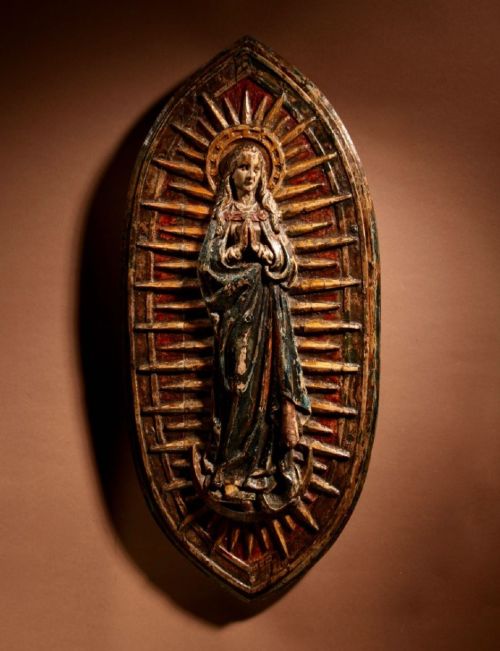
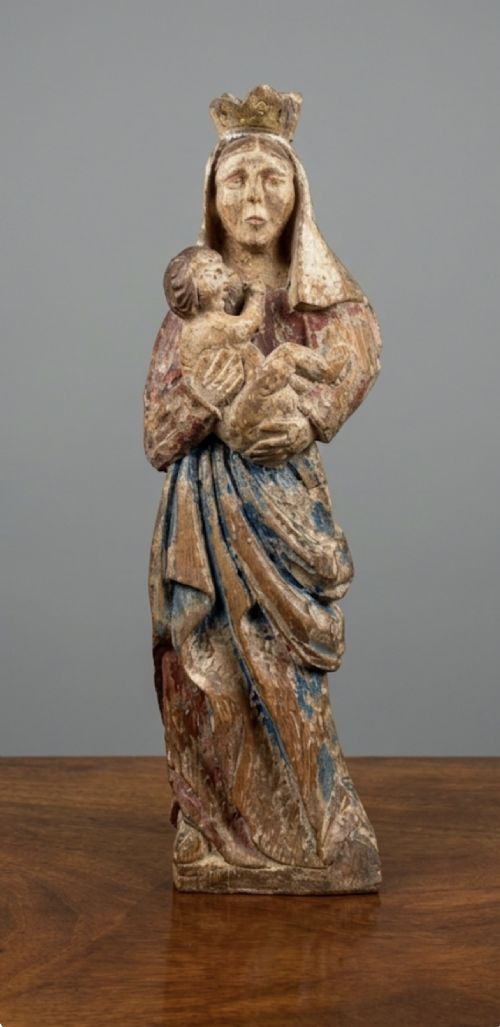


Carved Oak Madonna Statue
A carved oak madonna statue brings devotional art into a room, fashioned from solid timber to depict the Virgin Mary.
Carved Oak Madonna Statue
A carved oak madonna statue represents the Virgin Mary, often shown with the Christ child or in scenes such as the Annunciation and the Grief of Mary. These religious sculptures take the form of freestanding figures, wall sculptures, and central panels from altarpieces depicting subjects like the praying virgin on the half moon with the snake.
The pieces encountered on this page span several centuries, reaching from pre-sixteenth century and sixteenth-century Gothic examples through the eighteenth and nineteenth centuries up to nineteen hundred. Buyers frequently find subjects categorized broadly as religious figures or statues of saints alongside specific depictions of the Madonna and child.
Originating across European traditions, these works showcase styles including Gothic, Renaissance, Baroque, and Gothic revival. Each piece reflects the religious devotion and sculptural conventions of its specific period, whether created as a standalone devotional object or as part of a larger architectural altarpiece.
Assessing quality and execution
The depth and confidence of the carving separate the finer pieces from simpler workshop production, particularly in the rendering of facial expressions and the natural fall of textile folds. Sculptures that retain early surface treatments such as original polychrome paint or traces of gold leaf demonstrate greater historical integrity than those stripped to bare wood.
Proportion and anatomical balance also distinguish the work, as skilled carvers maintained harmonious relations between hands, drapery, and the figures of the Madonna and child. The survival of structural elements, such as altarpiece panels or integrated bases, contributes to the completeness and authority of the piece.
Several figures quietly share their sacred space with half-moons and serpents beneath their feet.
The Carved Oak Madonna Statue Glossary
- Polychrome
- Decorated in several colours. This term describes wooden sculptures finished with painted surfaces rather than left as plain timber.
- Gesso
- A plaster mixture used as a paint binder. Artisans applied this substance to wooden carvings to create a smooth ground for gilding and paint.
- Altarpiece
- A piece of artwork set above an altar. Central panels removed from these larger structures often form independent wall sculptures.
- Gothic
- A medieval art style characterised by pointed arches and vertical emphasis. Figures from this tradition display elongated forms and heavy linear drapery.
- Annunciation
- The Christian celebration of the announcement of the incarnation. Statues depicting this subject show the Virgin Mary receiving the message from the angel.
Carved Oak Madonna Statue: Frequently Asked Questions
Where were these statues originally displayed?
These figures stood in churches, private chapels, and domestic spaces for personal devotion. Many originated as central figures in altarpieces or as wall sculptures positioned within religious architectural settings.
Freestanding statues also served in processions or stood upon altars before being removed and entering collections over subsequent centuries.
How should I care for antique oak carvings?
Keep wooden sculptures in stable environmental conditions away from direct sunlight and sudden humidity shifts. These precautions prevent the oak timber from drying out, splitting, or warping over time.
Avoid applying modern polishes or cleaning agents to the surface, particularly if the piece retains historic paint or gesso layers that require gentle handling.
What does polychrome mean on a sculpture?
Polychrome refers to the multi-coloured paint decoration applied to the carved wooden surface. Artisans used pigments to render lifelike skin tones, patterned garments, and decorative borders on religious figures.
The survival of this paintwork significantly influences the character and historical interest of early devotional art.