
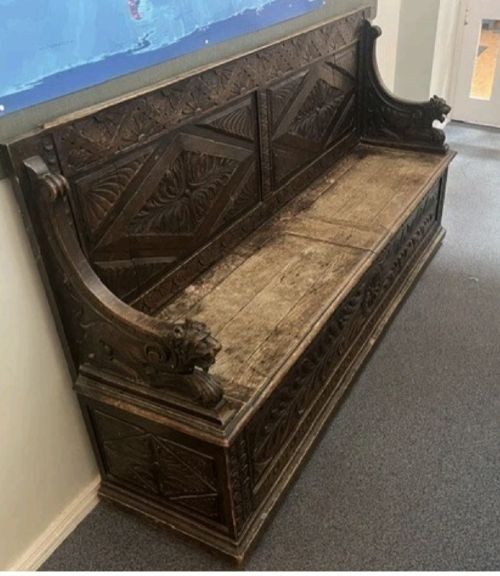
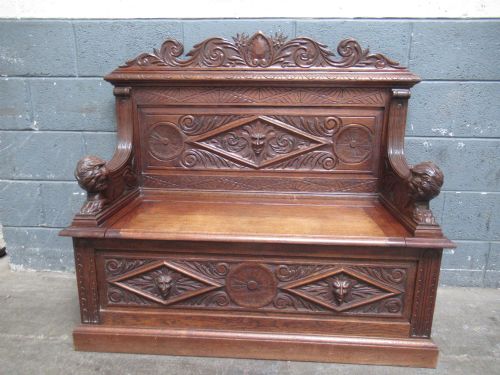
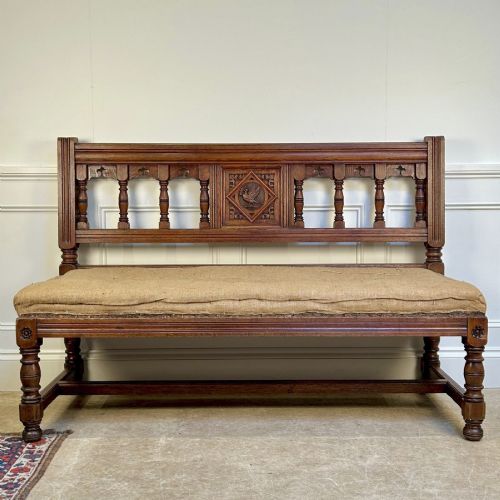
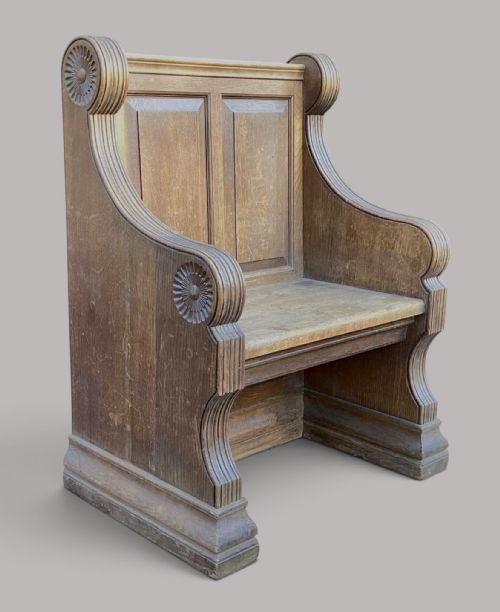
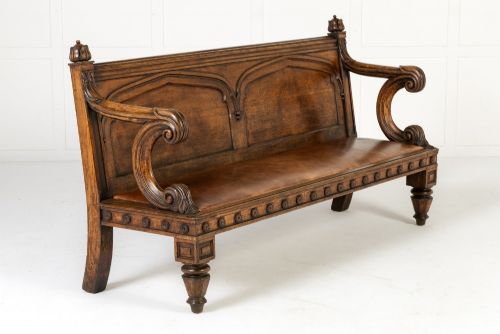


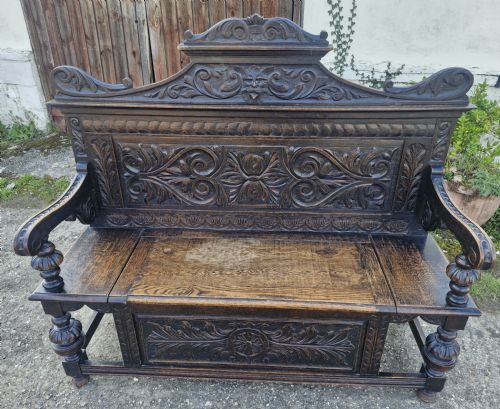


Gothic Carved Settle
A gothic carved settle brings a distinct architectural presence to an entrance hall, offering high-backed timber seating rooted in centuries of revival design.
Gothic Carved Settle
A gothic carved settle is a substantial wooden bench, often featuring a high panelled back and armrests designed to shield against drafts in large hallways and chambers. The pieces found here span the nineteenth and early twentieth centuries, alongside earlier examples, reflecting sustained interest in medieval and ecclesiastical design.
Beyond standard hall seating, variants incorporate architectural forms, burr elm accents, or church pews salvaged from historical parishes. The selection ranges from compact monk benches to large baronial settles intended for grand reception spaces.
Craft and Proportion
Quality rests in the crispness of the timber carving and the architectural proportion of the frame, where deep undercutting and balanced symmetry separate standard production from exceptional pieces. The weight and grain of the oak timber itself dictate the substance and longevity of the seat.
Integration of secondary elements, such as working brass hinges, sound panel construction, and well-fitted storage boxes, marks the distinction between utilitarian workshop items and master-carved reception furniture.
Listings feature solid oak alongside walnut, pine, and burr elm across nineteenth-century and early twentieth-century periods.
GIllows
The Gothic Carved Settle Glossary
- Settle
- A wooden bench with a high back, solid arms, and often a closed base or storage compartment underneath. This form provided shelter from cold draughts in traditional hallways.
- Monks bench
- A convertible piece of furniture featuring a hinged back that folds down over the arms to form a table surface. These versatile seats combine resting space with a tabletop function.
- Green Man
- A sculptural motif depicting a human face carved with leaves, vines, or foliage emerging from the mouth. This ancient symbol frequently decorates the panels of gothic revival woodwork.
- Box settle
- A type of bench incorporating a hinged seat that lifts to reveal a storage chest below. It served a dual purpose for seating and stowing household items.
- Reformed Gothic
- A nineteenth-century design movement promoting simpler, structural forms influenced by medieval construction rather than excessive surface ornamentation. This style emphasises honesty in materials and joinery.
Gothic Carved Settle: Frequently Asked Questions
Where should I place a gothic carved settle?
These benches suit entrance halls, boot rooms, or large reception spaces where their high backs create a strong architectural focal point. They also function well against long walls in living areas needing substantial timber furniture.
Because of their depth and solid construction, measure the floor space and clearance for any lift-up seats or folding tabletops before positioning the piece.
How do I maintain solid oak furniture?
Keep wooden surfaces clean using a dry cloth and apply occasional natural beeswax to nourish the timber grain. Avoid placing antique oak near direct heat sources or in fluctuating humidity to prevent splitting.
Protect the finish from standing moisture by using coasters on any flat surfaces, particularly on convertible monks bench tabletops.
What is the difference between a settle and a pew?
A settle typically includes solid wooden arms and a high enclosed back, designed for domestic comfort and draught exclusion in a hallway or parlour. Pews originate from churches and feature open ends without arms, built in long runs for communal congregation.
Both appear frequently in oak, but settles generally offer integrated storage beneath the seat or a more decorative architectural facade.
How do I identify Victorian gothic revival pieces?
Look for characteristic motifs such as pointed arch tracery, cusping, linenfold panels, and heavy linen-fold or strapwork carving. These elements mimic medieval church architecture adapted for nineteenth-century domestic interiors.
Examine the construction fasteners and timber oxidation underneath to confirm period authenticity and nineteenth-century origin.