

Gothic Carved Oak Table
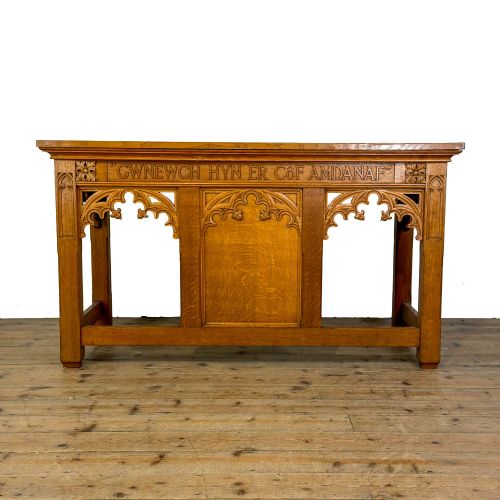
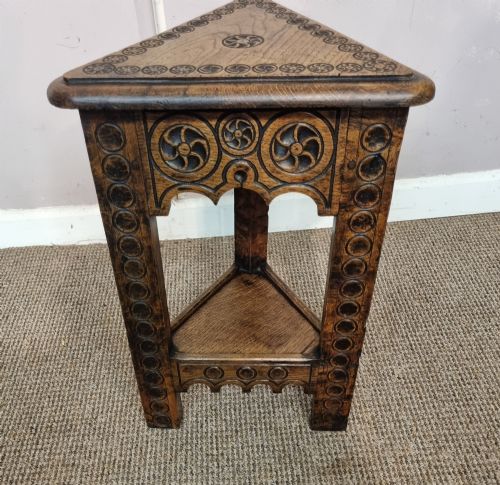
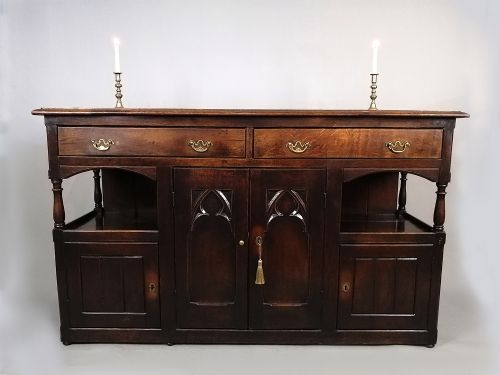
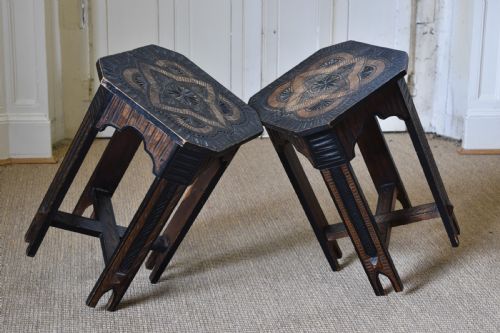
A gothic carved oak table brings substantial architectural character and rich hand-carved detail into a room, drawing the eye with dark timber and medieval motifs.

Gothic Carved Oak Table
A gothic carved oak table encompasses various domestic and institutional forms, ranging from compact side pieces and writing desks to substantial centre and library tables. Buyers seeking this phrase frequently encounter Victorian interpretations that adapt medieval architectural vocabulary for domestic interiors.
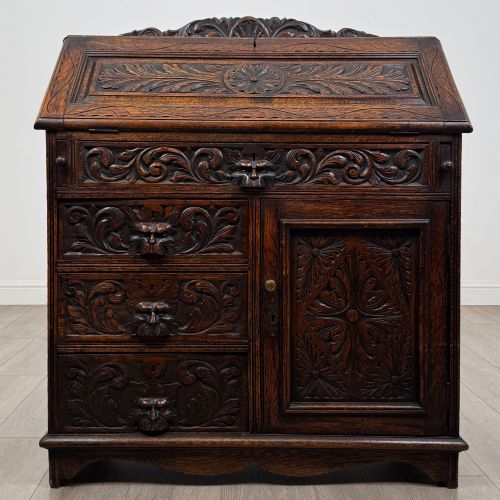
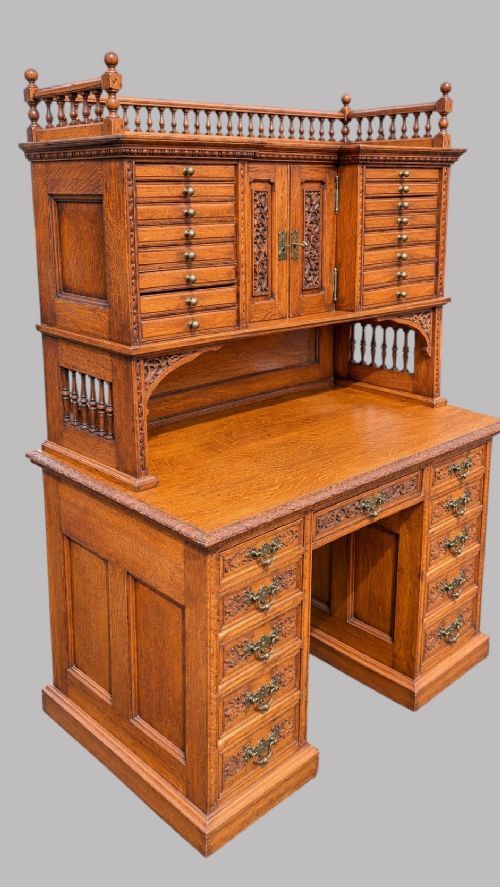
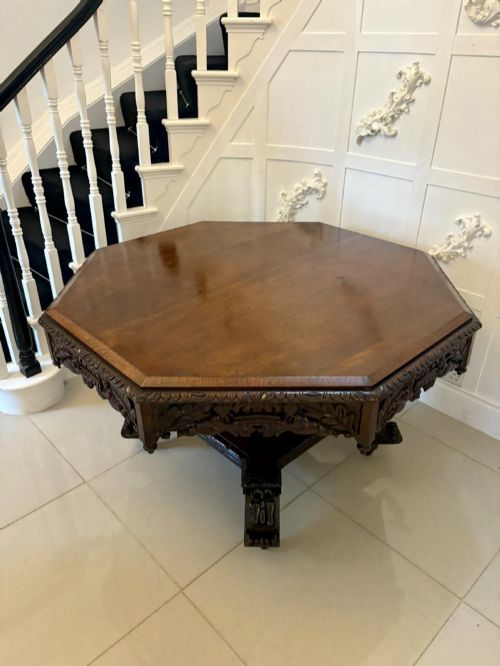
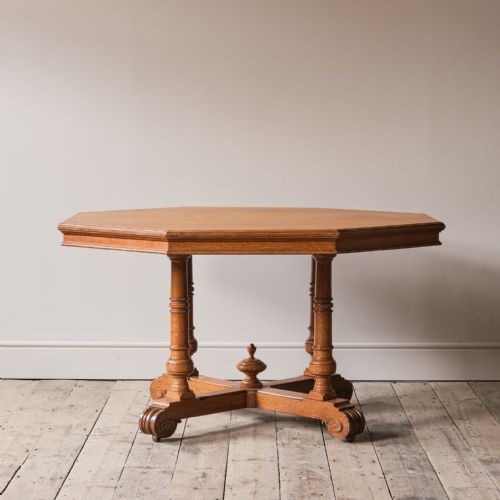
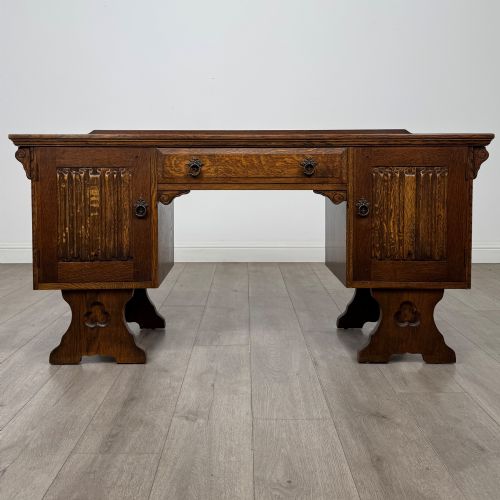
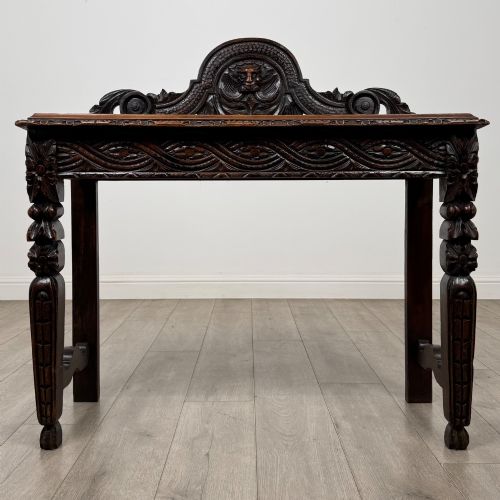
The selection includes occasional tables, desks with drawers, and octagonal centre pieces that demonstrate the enduring popularity of Gothic Revival design throughout the nineteenth century. These items were built to anchor a room, offering sturdy construction alongside decorative panels and linenfold or Green Man carvings.
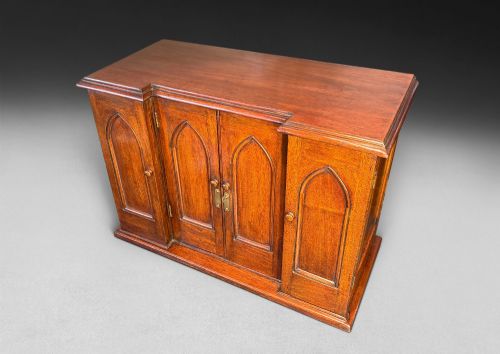
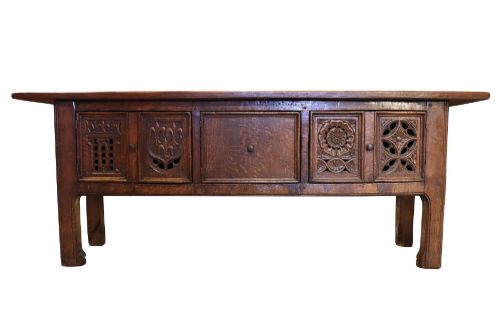
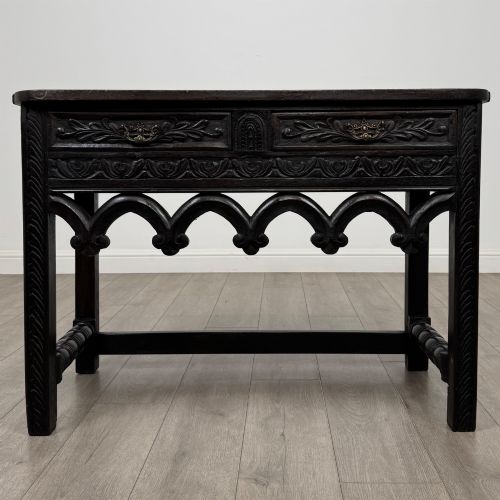
Originating largely from the nineteenth century, with examples spanning from the eighteen-eighties to the Edwardian era, these tables reflect diverse regional influences including English country house and continental Flemish styles. The typical surviving piece combines functional surface space with heavy timber framing and characteristic pointed arch or trefoil motifs.
Materials and construction
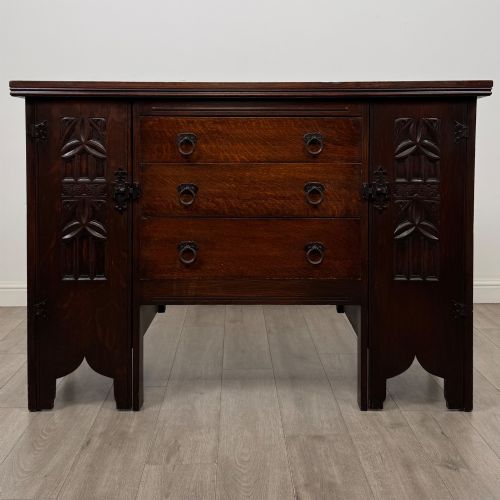
The primary material across all examples is solid oak, selected for its durability and capacity to hold deep, crisp chisel work. Cabinetmakers utilised supplementary elements such as brass handles, iron hardware, and occasional leather writing inserts to complete the functional surfaces.
Construction relies on traditional joinery techniques, including mortise and tenon frames designed to support heavy tabletops and intricate apron carvings. Surface finishes range from natural waxed grain to ebonised treatments and limed effects, depending on the specific revival movement of the period.
Some nineteenth-century tables conceal hidden compartments behind intricate linenfold panels, offering secret storage for documents and small valuables.
Factors of execution
The distinction between standard and superior pieces rests heavily on the depth and animation of the carving. Master carvers produced figures such as the Green Man and geometric tracery with sharp undercut details, whereas lesser examples rely on shallow, mechanical stamping.
Proportion and structural integrity define the upper tier of these tables. Well-balanced library and centre tables maintain rigidity across large expanses without sagging, while employing dense, quarter-sawn oak that exhibits pronounced medullary rays.
The Gothic Carved Oak Table Glossary
- Gothic Revival
- An architectural and decorative style that revived medieval forms, pointed arches, and ecclesiastical motifs during the eighteenth and nineteenth centuries. This aesthetic heavily influences the ornamentation found on nineteenth-century furniture.
- Linenfold
- A style of wood carving that imitates vertical folds of fabric, frequently used on panels for desks and cabinets. It provides a flat yet textured decorative surface popular in revival periods.
- Green Man
- A sculptural ornament depicting a human face surrounded by or sprouting from foliage, vines, and leaves. This motif appears frequently on nineteenth-century carved woodwork.
- Trefoil
- A graphic ornament composed of three overlapping rings or lobes, commonly seen in Gothic window tracery and furniture panels. It serves as a geometric indicator of period style.
- Quarter-sawn
- A method of milling logs radially to produce timber with greater dimensional stability and prominent grain figuring. This cut is typical in higher quality antique oak furniture.
Gothic Carved Oak Table: Frequently Asked Questions
How do I date a gothic carved oak table?
Dating relies on examining the construction methods, hardware, and specific stylistic revival indicators present in the piece. Nineteenth-century examples often feature machine-sawn secondary timbers alongside hand-carved primary surfaces.
Changes in screw types, drawer construction, and finish also help narrow down the decade of manufacture, distinguishing early Victorian revival work from later Edwardian production.
What rooms suit a gothic carved oak table?
These pieces function effectively as centre tables in libraries, writing desks in studies, or striking hall furniture in period homes. Their dark timber and heavy presence anchor a room, contrasting well against lighter walls.
Side tables and occasional pieces fit comfortably into living spaces or hallways, providing both surface utility and strong architectural interest.
How should I care for antique oak?
Maintenance requires regular dusting with a soft, dry cloth and occasional application of traditional beeswax to nourish the dry timber. Avoid placing the wood near direct heat sources or in strong sunlight to prevent splitting.
Keeping the environment at a stable humidity level preserves both the structural joints and the intricate surface carvings over time.
What is the difference between Arts and Crafts and Gothic Revival?
Arts and Crafts pieces emphasise honest construction, simplicity, and visible joinery, often reflecting the hand of the individual maker. Gothic Revival focuses more heavily on historical ecclesiastical motifs, pointed arches, and elaborate architectural ornamentation.
While both traditions utilise solid oak, Arts and Crafts design leans toward functional clarity, whereas Gothic Revival embraces theatrical medieval decoration.