

Gothic Carved Oak Cabinet
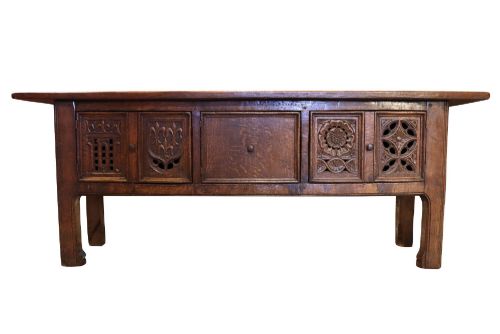
These heavy, timber-framed pieces known as a gothic carved oak cabinet bring architectural presence and historic ecclesiastical forms directly into a room.
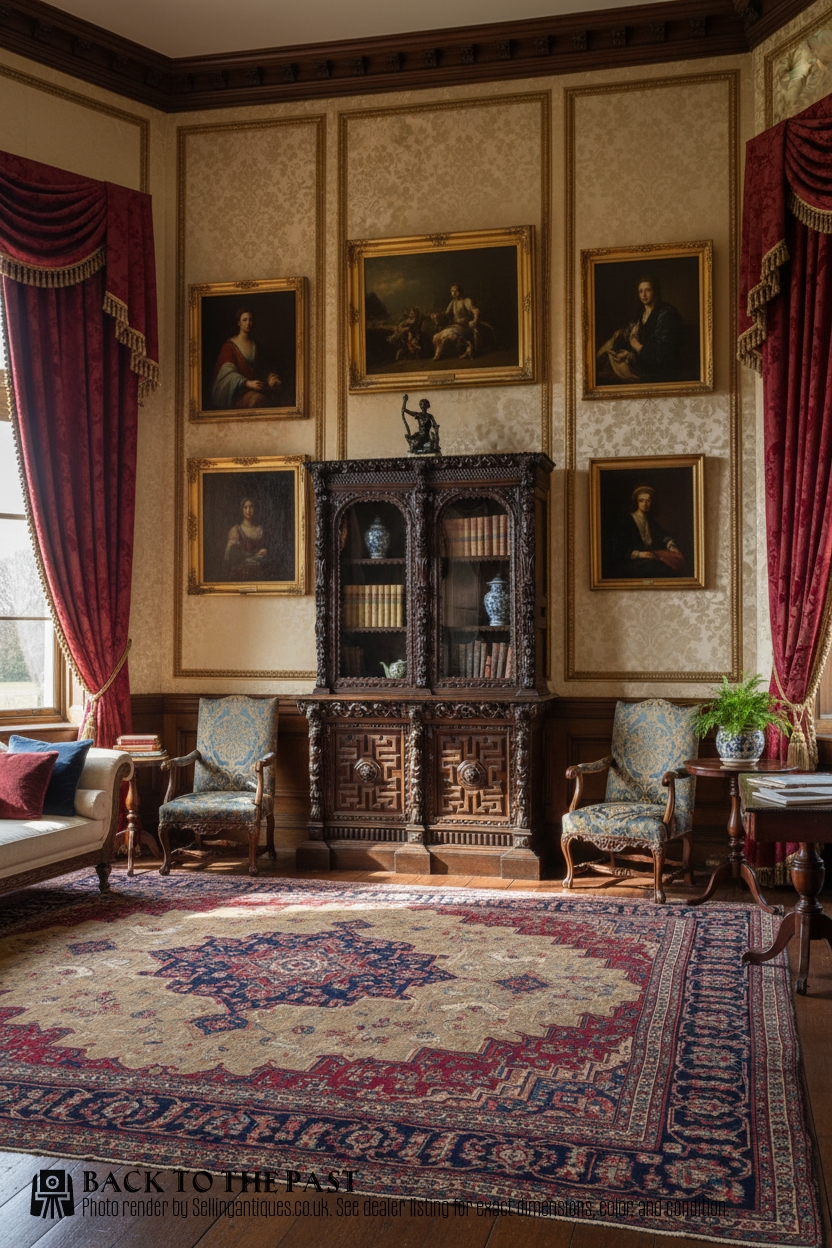
Gothic Carved Oak Cabinet
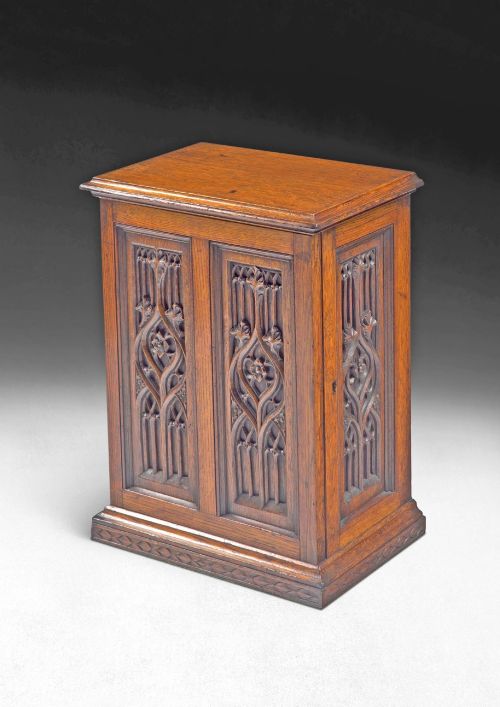
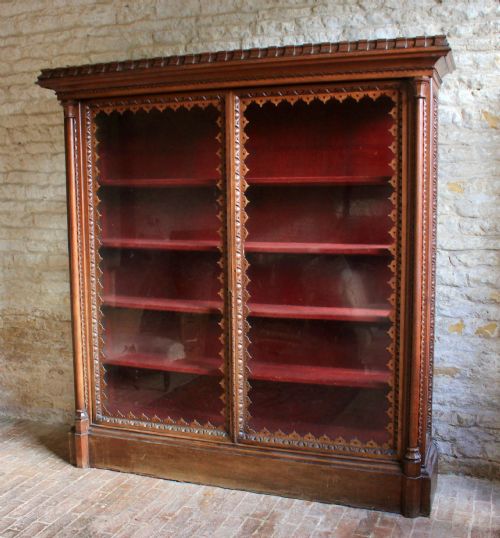
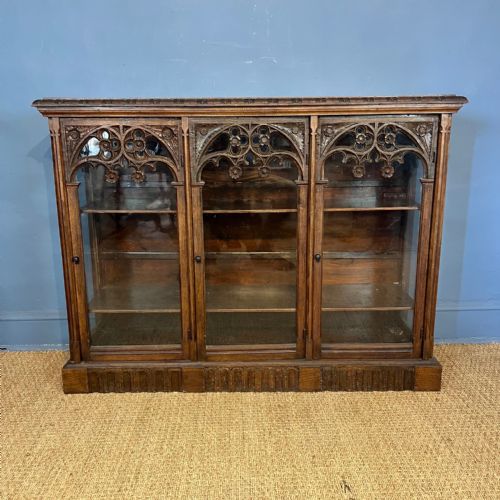
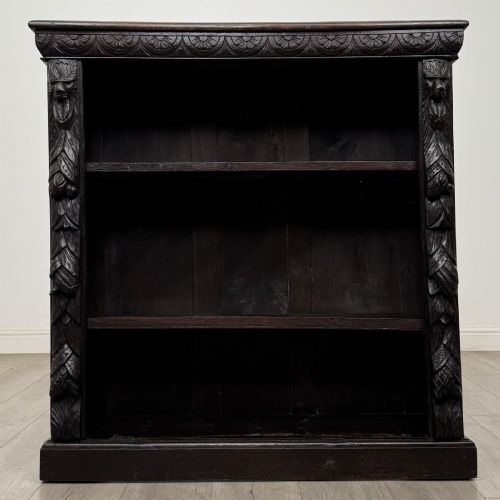
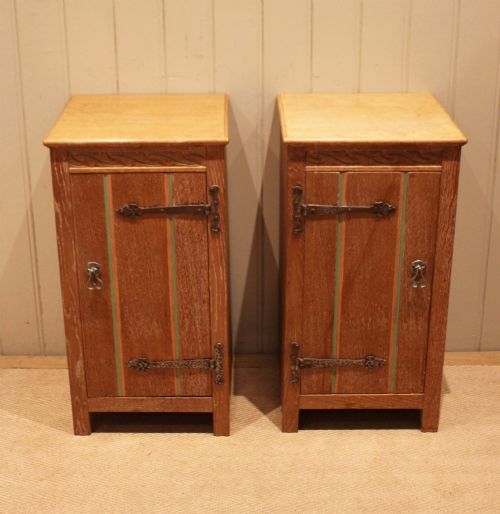
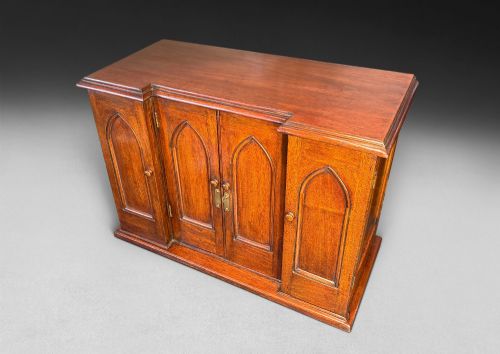
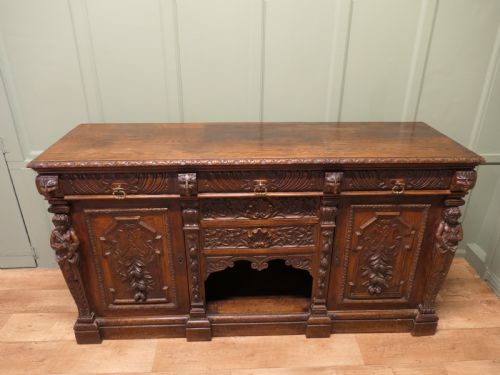
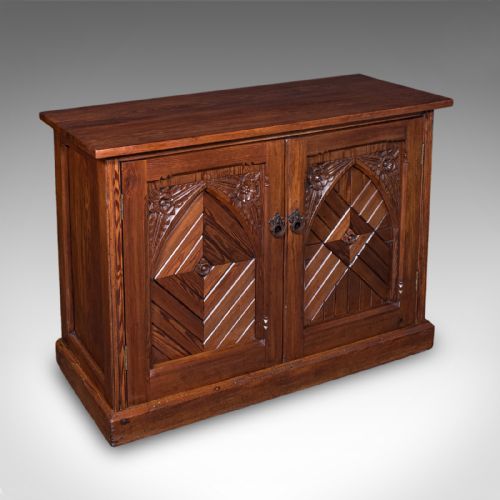
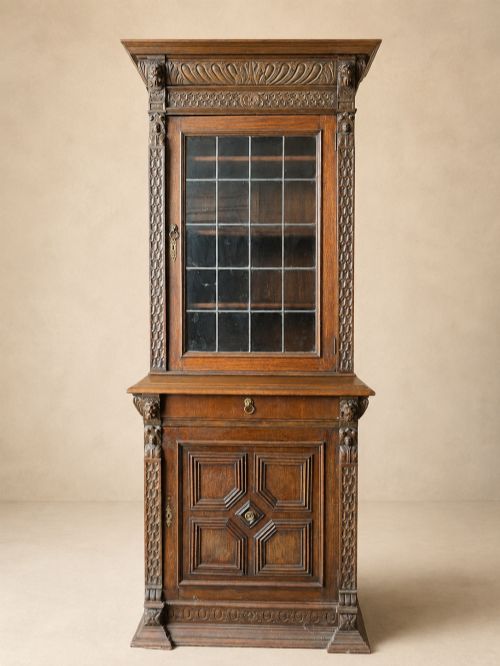
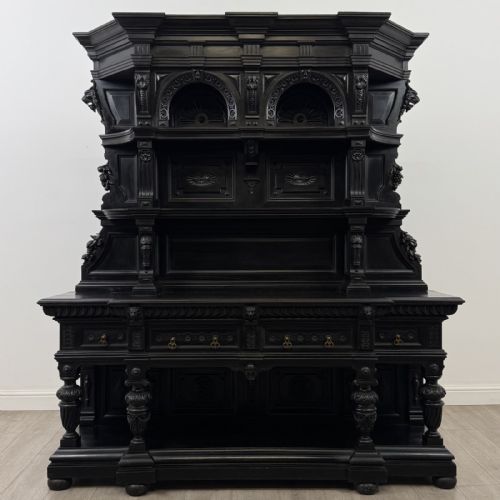
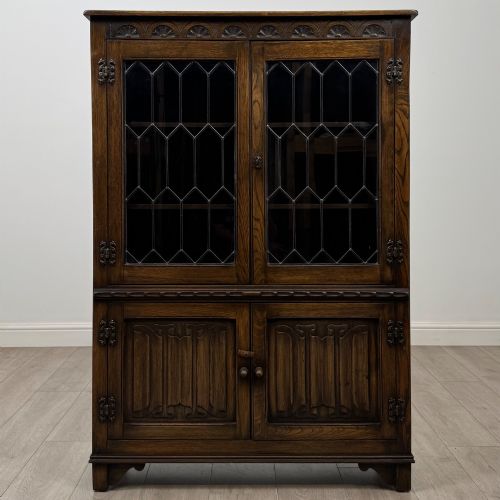
A gothic carved oak cabinet unites heavy timber construction with medieval architectural motifs, ranging from tall library bookcases and glazed display cabinets to low dresser bases and bedside chests. These items emerge primarily from the Victorian and Edwardian eras, alongside earlier examples from the nineteenth century, reflecting revivalist tastes that favoured dark woods and pointed arches.
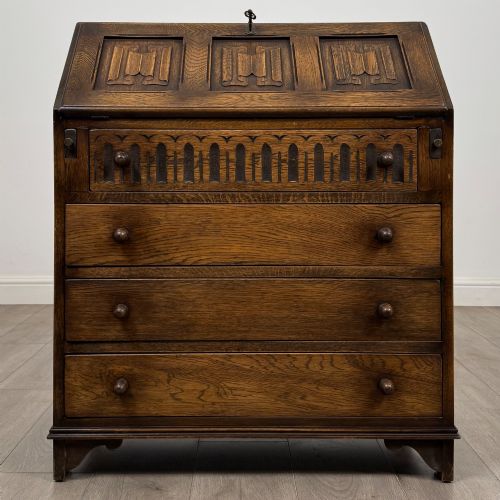
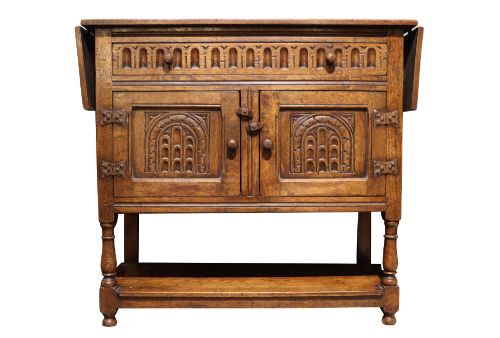
The forms span domestic storage and display, appearing as sideboards, hall cupboards, bureaux, and narrow corner cabinets. Makers channelled historical designs through stylistic movements including Gothic Revival, Jacobean Revival, and Arts and Crafts, creating functional storage infused with pointed tracery, linenfold panelling, and occasional grotesque carvings.
How they were made
Construction relies heavily on solid oak and heavy timber framing, often reinforced with secondary metals such as brass, iron, and wrought iron for hinges, handles, and strapwork. Glazed doors incorporate lead cames to hold small panes of glass, while interior shelving utilises matching oak boards.
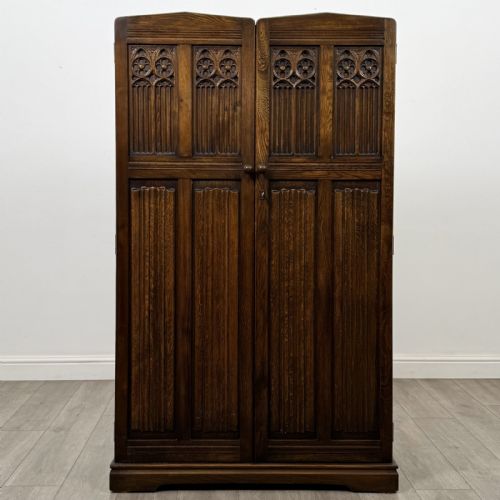
Carving defines the surface treatment, employing deep relief work to render linenfold patterns, architectural tracery, and figurative elements like Green Man motifs by hand. Joinery techniques prioritise traditional mortise and tenon joints to support the substantial weight of the dense timber frame.
Gothic Carved Oak Cabinet Retail Price Guide 2026
Typical asking prices for gothic carved oak cabinet among the pieces listed under this phrase on Sellingantiques today, from the lower quarter to the upper quarter. They describe what is for sale here now, not the wider market.
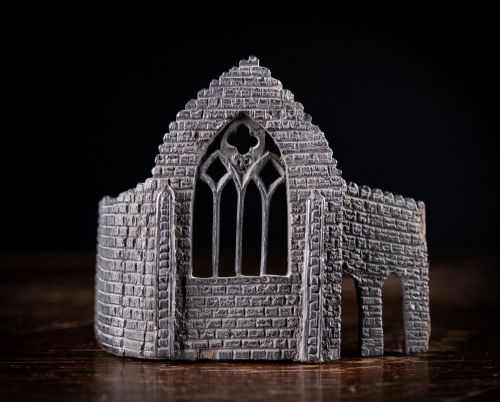
One unexpected ecclesiastical refugee serves as a carved oak pulpit bar.
What varies in quality
Depth and crispness of the hand carving separate standard production pieces from exceptional examples, with finer items displaying sharp undercutting and spirited figural detail. The selection of the oak timber itself dictates overall merit, where straight-grained quarter-sawn boards with prominent medullary rays command greater regard than plain timber.
Structural integrity and the retention of original hardware, including decorative brass panels and wrought iron hinges, influence the standing of a piece. Proportion also plays a role, as narrow formats or balanced architectural compositions demonstrate superior design intent compared to heavy, unrefined carcasses.
Arthur Simpson of Kendal·Leonard Wyburd
The Gothic Carved Oak Cabinet Glossary
- Tracery
- Stonework-inspired intersecting ribwork in window or door panels. This Gothic architectural element translates into wooden fretwork on cabinet doors.
- Linenfold
- A style of wood carving that mimics folded fabric or linen. It frequently appears on sixteenth-century revival panels and cupboard doors.
- Green Man
- A sculptural motif of a human face disgorging foliage or vines. It symbolises rebirth and appears frequently in nineteenth-century architectural wood carving.
- Quarter-sawn
- A method of cutting logs radially to the growth rings. This produces timber with enhanced durability and prominent decorative grain patterns.
- Cames
- Slender grooved strips of lead used to hold together pieces of stained or clear glass in cabinet doors. They allow geometric leaded light patterns to form.
Gothic Carved Oak Cabinet: Frequently Asked Questions
How do I date a gothic carved oak cabinet?
Dating relies on combining stylistic clues with construction methods, such as examining the drawer linings, backboards, and hinge types. Victorian and Edwardian revivals often exaggerate medieval proportions, whereas pieces from the nineteenth century utilise machinery alongside hand carving.
Hardware and glass characteristics also offer clear chronological markers. Hand-blown or early drawn glass panels differ significantly from later machine-rolled panes, while nineteenth-century screws and machine-cut dovetails help narrow down the decade of production.
Where should I place a heavy oak cabinet?
These substantial pieces require stable flooring and walls capable of supporting significant weight, particularly tall bookcases and wardrobes. Positioning them away from direct heat sources prevents the solid oak timber from drying out and splitting.
Consider room lighting when placing glazed or leaded display cabinets to highlight interior collections. Their dark timber tones and architectural presence anchor large reception rooms, hallways, or libraries effectively.
Are these cabinets purely decorative?
Despite their ecclesiastical aesthetics and ornamental carving, these items served entirely practical domestic functions. Sideboards, dressers, and cupboards provided heavy-duty storage for dining ware, linens, and books in period homes.
Interior configurations often include adjustable shelving, drawers, and hanging space depending on whether the piece functions as a wardrobe, bookcase, or cabinet. Their robust construction ensures they remain suited for active everyday storage.
What is linenfold panelling?
Linenfold panelling is a decorative wood-carving technique designed to resemble stiff fabric folded in vertical pleats. It became prominent during the Tudor period and saw widespread revival during the nineteenth and twentieth centuries on cabinet doors and bureau fronts.
The complexity and depth of the folds indicate the skill of the carver. Finer examples display subtle undulations and crisp edges that genuinely evoke draped cloth across the oak surface.