





Gothic Brass Clock
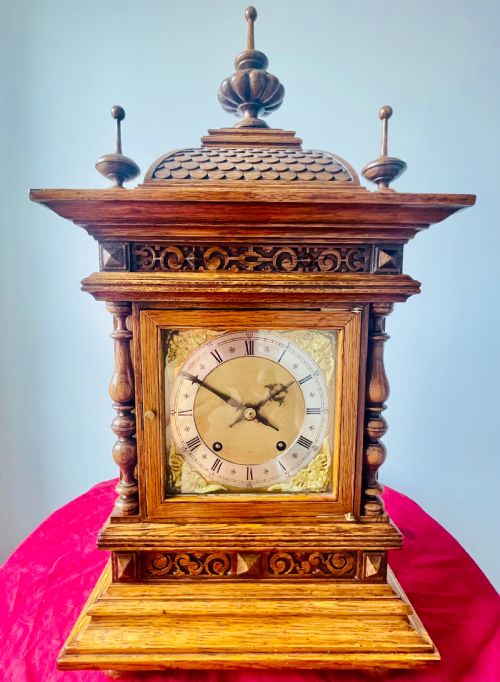
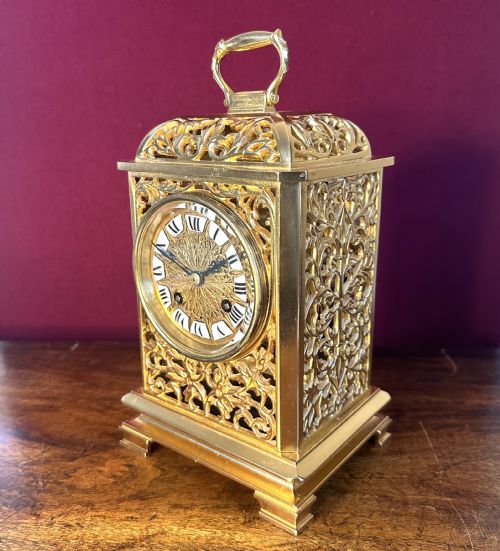
When you search for a gothic brass clock, you are looking at striking architectural timepieces cast in metal and framed by pointed arches.
Gothic Brass Clock
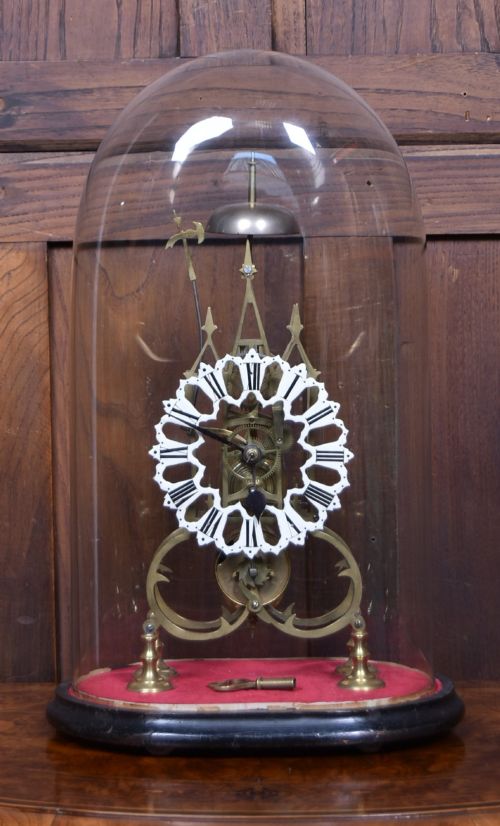
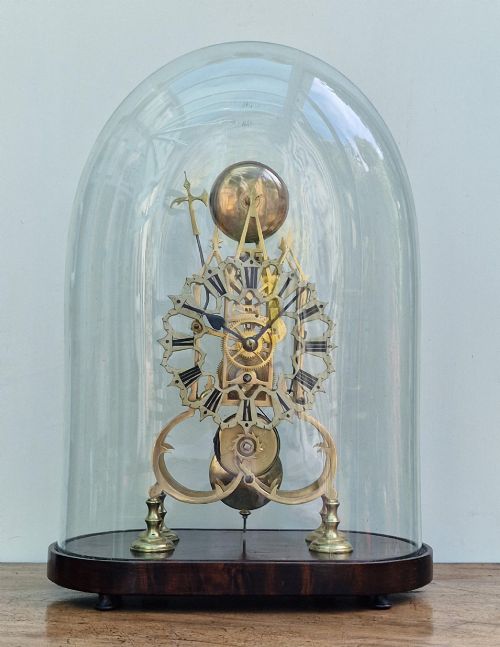
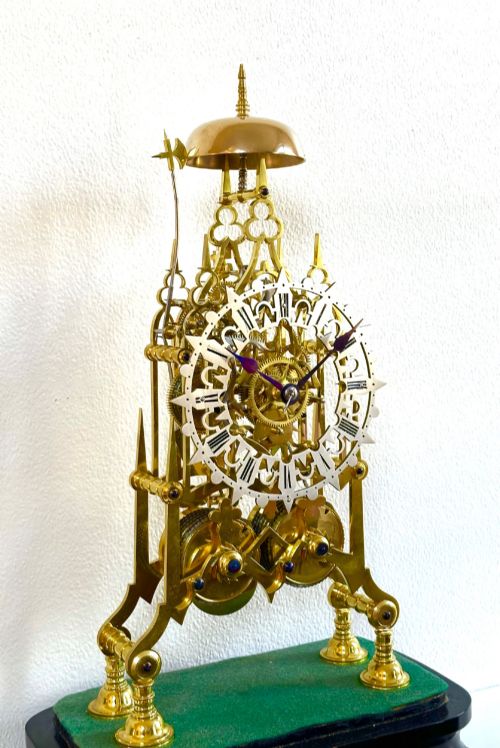
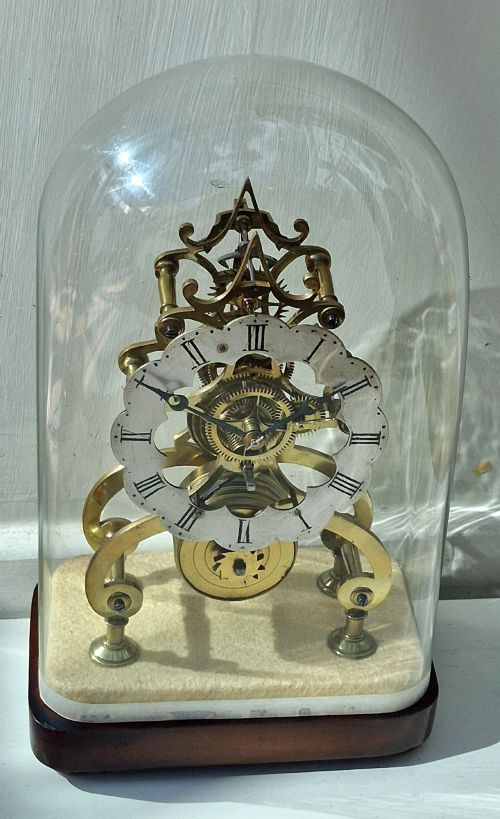
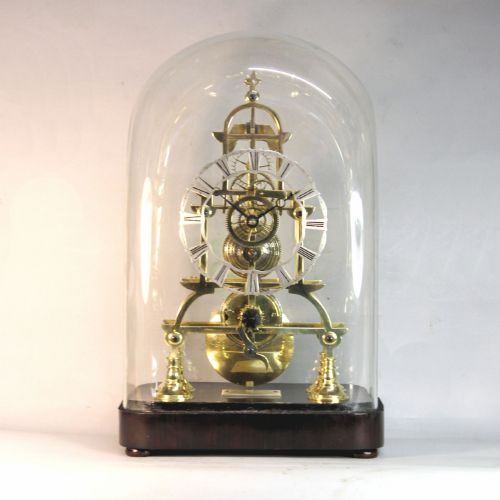
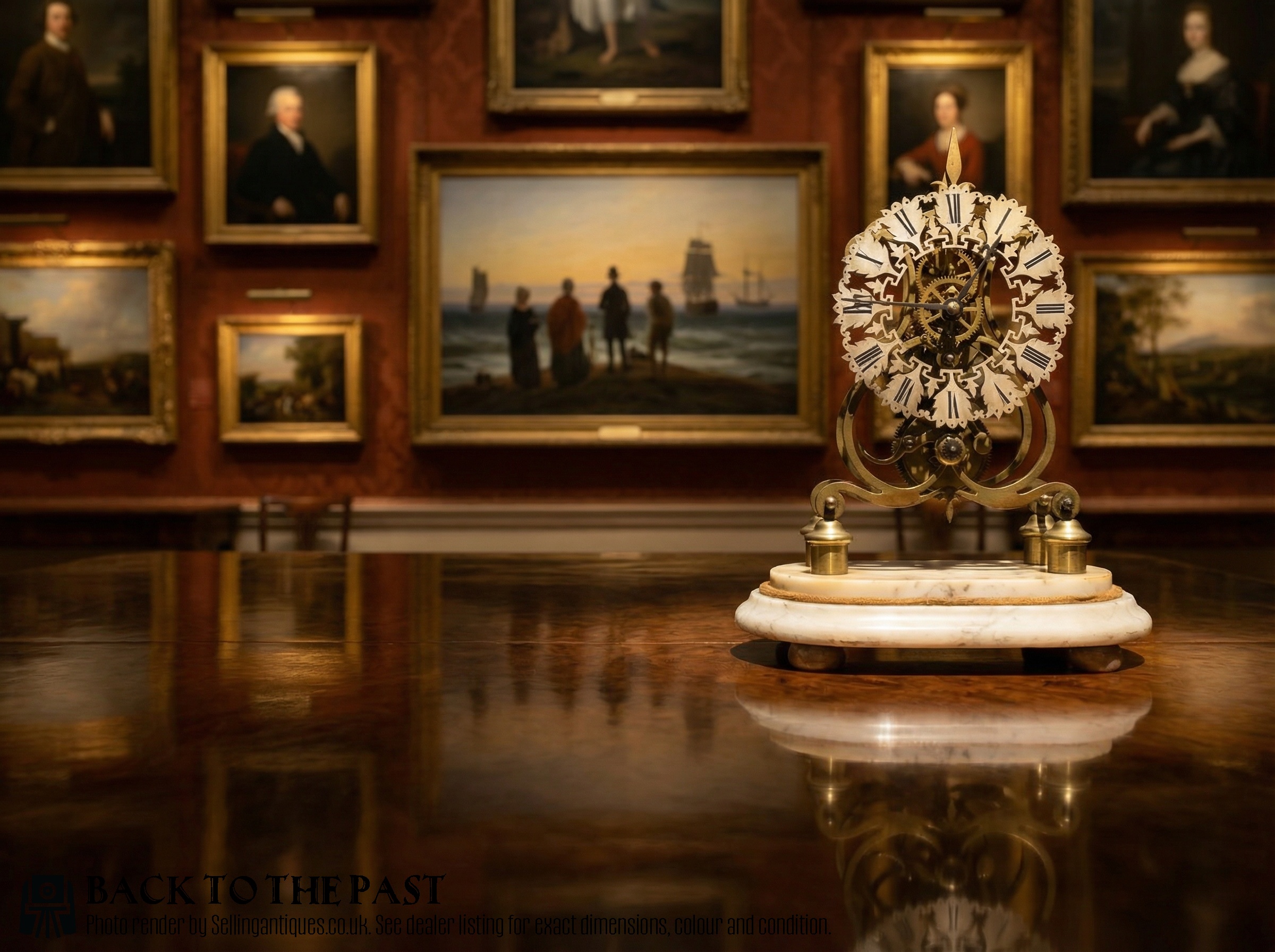
A gothic brass clock brings medieval architectural motifs into domestic interiors through pointed arches, tracery, and exposed brass frameworks. These timepieces range from heavy table sets and carriage clocks to delicate skeleton movements sheltered beneath glass domes.
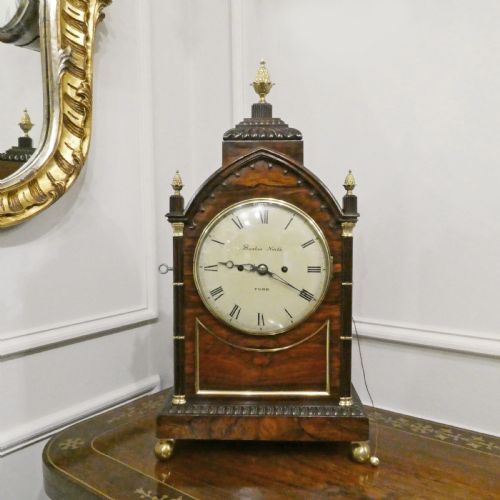
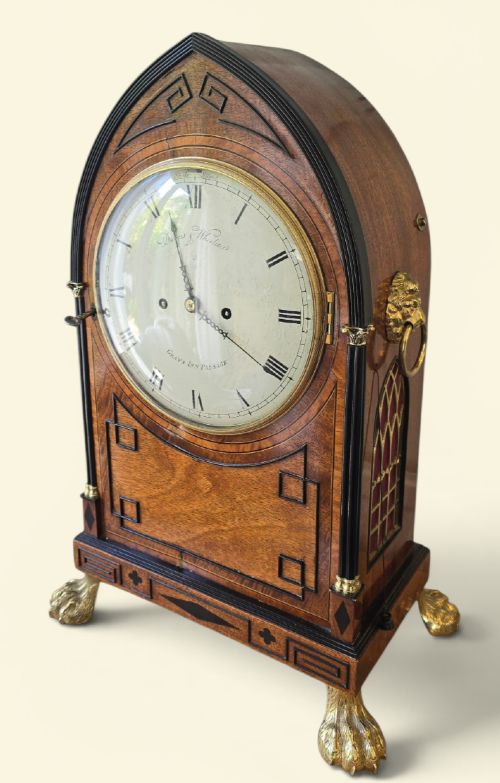
The selection on this page centres primarily on Victorian and nineteenth-century examples, alongside Regency and Edwardian interpretations. You will find carriage clocks, mantel pieces, and bracket clocks carrying the characteristic metallic lustre and ecclesiastical ornamentation of the revival styles.
Materials and construction
The construction of these pieces relies heavily on cast and gilded brass, frequently paired with glass domes, enamel dials, and wooden bases in mahogany, rosewood, or oak. Movement mechanisms utilise fusee or spring-driven systems developed by skilled clockmakers across Britain and continental workshops.
Casing techniques combine heavy brass casting with fine hand-chased detailing to recreate gothic window tracery and sculptural elements. Metalwork components are finished with silvering, gilding, or polished brass surfaces to highlight the structural ironwork and geometric lines.
Listings feature movements housed in brass, glass, mahogany, marble, enamel, oak, and rosewood.
Markers of distinction
Quality in these timepieces rests upon the crispness of the brass casting and the architectural fidelity of the gothic ornamentation. Superior examples display deeply chiselled tracery, well-proportioned architectural framing, and movements signed by noted makers rather than mass-produced generic assemblies.
Winterhalder And Hofmeier·Japy Freres·Samuel Marti·Vincenti Et Cie·Thwaites Of London
The Gothic Brass Clock Glossary
- Fusee
- A conical pulley used in clock movements to maintain even tension on the gear train as the mainspring unwinds. This mechanism ensures more accurate timekeeping throughout the duration of the winding cycle.
- Skeleton clock
- A timepiece designed with an open metal framework that exposes the entire gear train and movement plates. They are frequently displayed beneath a protective glass dome.
- Carriage clock
- A small, portable spring-driven timepiece originally designed for travelling officers and gentry. They typically feature brass cases with bevelled glass panels.
- Lancet top
- A clock case shaped with a pointed, arched top resembling a medieval lancet window. This silhouette is particularly common in Regency and Victorian bracket clocks.
- Grand sonnerie
- A complex striking mechanism that chimes the hours and the quarters automatically on every quarter-hour. It represents a high level of horological skill.
Gothic Brass Clock: Frequently Asked Questions
How do I wind a fusee clock?
Winding a fusee clock requires inserting a key into the dial or backplate and turning it gently until resistance is met. Care should be taken not to overwind the mainspring.
Consulting the specific movement requirements ensures the delicate brass gears and escapement remain undamaged. Regular maintenance helps preserve the historical mechanism.
Where should I place my clock?
These clocks suit stable, level surfaces away from direct sunlight, draughts, and sudden temperature fluctuations. Mantelpieces, sturdy sideboards, and dedicated bracket shelves provide ideal locations.
Ensuring the surface is completely flat allows the pendulum or balance wheel to beat evenly. Glass domes should be handled carefully when placed over sensitive movements.
How do I identify the period?
Dating these pieces involves examining the style of the brass casting, the shape of the hands, and the signature of the maker on the dial or movement backplate. Nineteenth-century examples often display distinct gothic revival proportions.
Materials used for the base, such as mahogany or rosewood, also offer clues to the manufacturing era. Archival records and maker directories help confirm the timeline.