
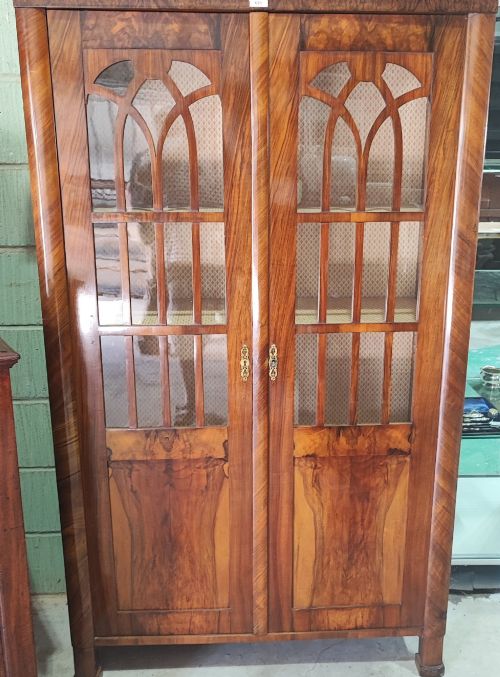
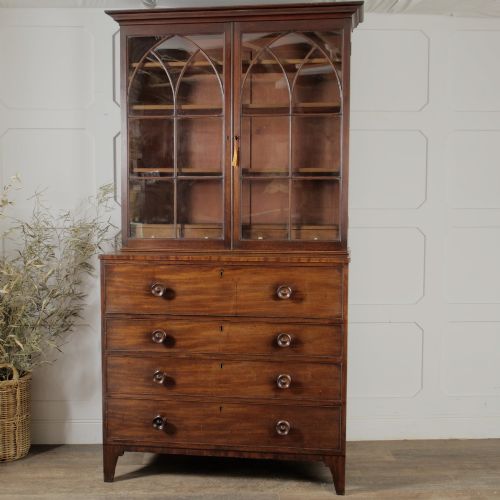
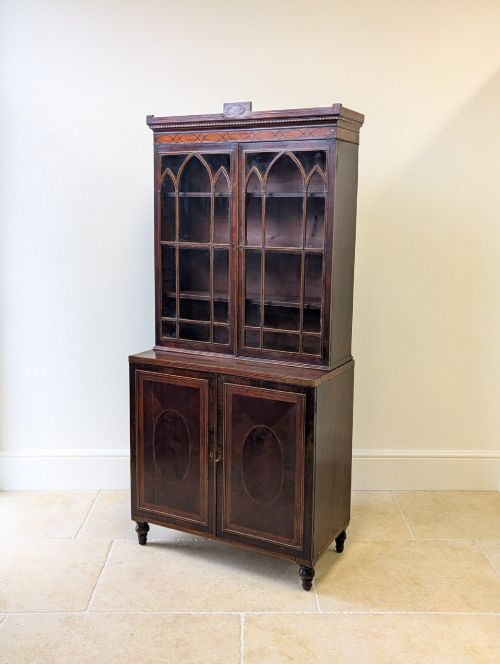


Gothic Arch Glazed Bookcase
These gothic arch glazed bookcase pieces bring architectural depth to a room through pointed tracery and timber frames.
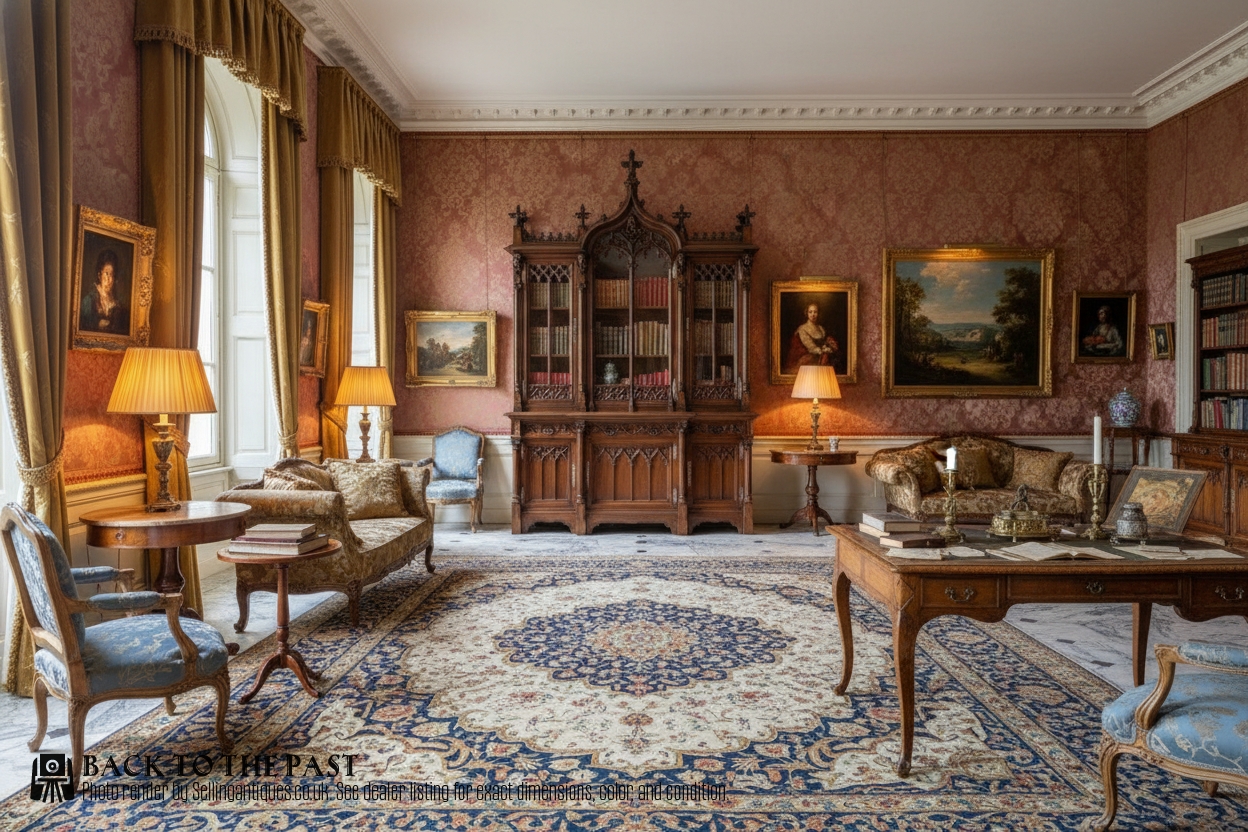
Gothic Arch Glazed Bookcase
When you search for a gothic arch glazed bookcase, you encounter tall storage furniture designed to display volumes behind glass doors with pointed structural framing.
The selections span the Georgian, Regency, and Victorian eras, alongside specific nineteenth-century revivals that embrace Gothic Revival and Biedermeier styles.
You meet upright two-door library pieces, breakfront configurations, and corner cabinets shaped in mahogany, walnut, rosewood, oak, and pine.
Materials and Construction
Cabinetmakers utilised dense hardwoods like mahogany, walnut, and rosewood for structural stability, while secondary timbers like pine appear in regional kitchen dressers and cupboards.
Glazing bars create the characteristic pointed arches, holding individual panes of glass within the upper display sections while lower sections often utilise solid timber panel doors.
Surface decoration includes marquetry, Tunbridgeware inlay, brass fittings, scrumbled paint, and black paint finishes applied across English, Irish, Welsh, and Northern European workshops.
Assessing Quality and Execution
The standard of a piece rests on the precision of the timber selection, particularly where figured mahogany, walnut, or rosewood veneers show balanced grain patterns across large surfaces.
Construction excellence appears in the joinery of the intricate arch glazing bars and the smooth operation of secretaire drawers, heavy breakfront bases, and cupboard doors.
Proportion and regional origin dictate the character, separating standard utility furniture from sophisticated architectural library pieces designed for country houses.
The Gothic Arch Glazed Bookcase Glossary
- Gothic Revival
- An architectural and decorative style drawing on medieval forms, featuring pointed arches and structural tracery. This aesthetic defines the overarching character of these bookcases.
- Breakfront
- A cabinet design where the central section projects forward from the flanking wings. This configuration adds architectural presence to larger library bookcases.
- Secretaire
- A desk form incorporating a drop-front writing drawer fitted with internal pigeonholes and small drawers. These integrated writing compartments sit neatly beneath the upper glazed shelving.
- Tunbridgeware
- A form of decorative woodwork utilising tiny mosaic tiles of natural timbers to create geometric pictorial patterns. This technique appears on specific inlaid cabinets.
- Scrumbled
- A decorative painting technique involving layers of translucent glaze manipulated to imitate the grain of more expensive hardwoods. This finish is found on pine country pieces.
Gothic Arch Glazed Bookcase: Frequently Asked Questions
How do I date a gothic arch glazed bookcase?
Dating relies on timber choice, construction methods, and stylistic cues present in the cornices and glazing bars. Georgian and Regency pieces tend to show lighter linear proportions, while Victorian iterations often display heavier moulded details.
Secondary woods inside drawers and backboards offer further clues to the period of manufacture. Examining the hinge types, screw heads, and glass characteristics helps confirm whether a piece belongs to the early nineteenth century or later revival periods.
How were these bookcases used historically?
These pieces served primarily in libraries, studies, and drawing rooms of large houses to store and protect leather-bound volumes from dust and moisture. The glazed upper doors allowed owners to view book spines without opening the case.
Many examples also doubled as display cabinets for ceramics and curiosities, while secretaire versions provided a concealed writing surface for correspondence and estate management.
How do I care for antique mahogany and walnut?
Maintenance involves keeping timber away from direct heat sources and dramatic humidity fluctuations that cause wood to split and veneers to lift. Regular dusting with a dry, soft cloth preserves the polished surface.
Occasional application of appropriate wax feeds the grain without building up heavy residues. Avoiding direct sunlight prevents the rich tones of rosewood and mahogany from fading over time.