

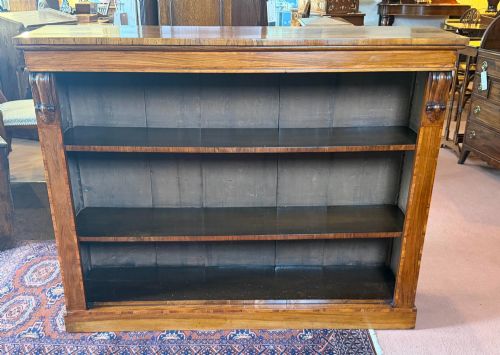
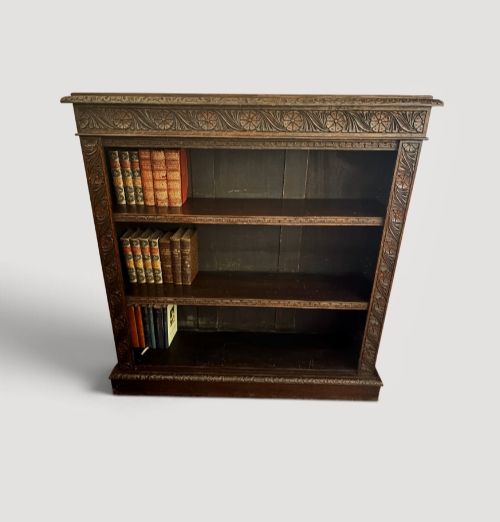
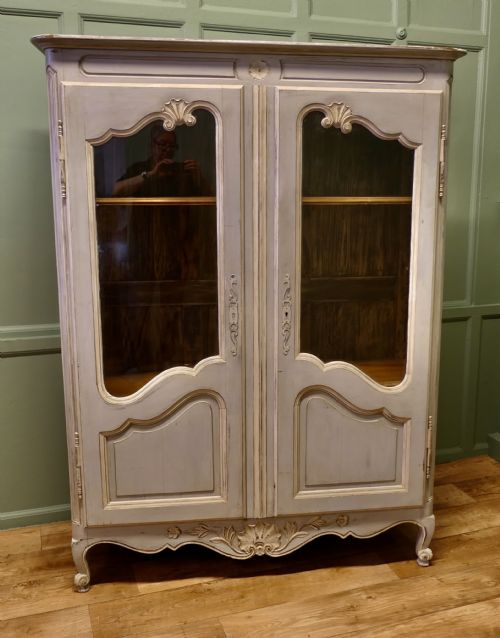
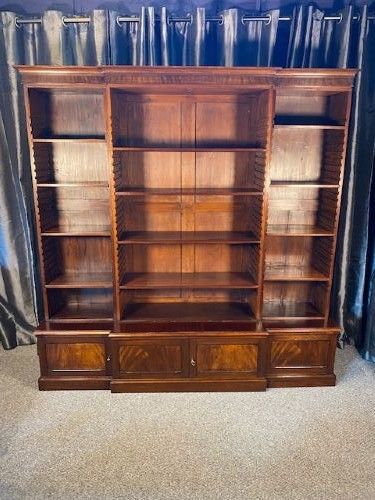
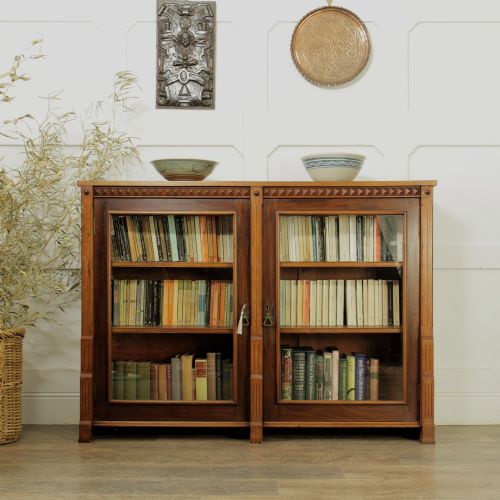
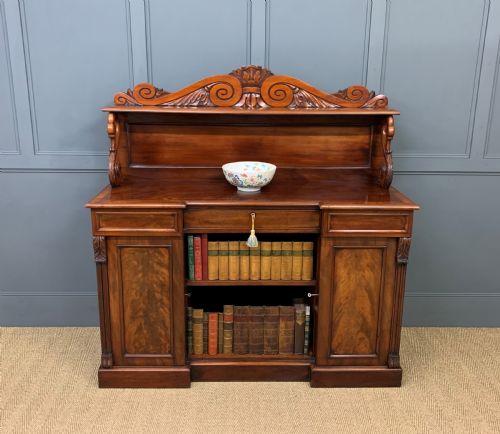
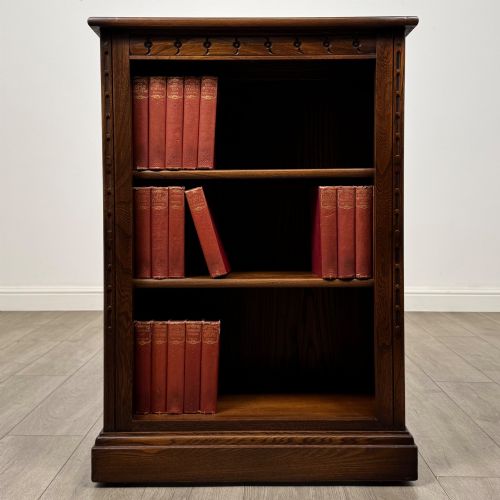
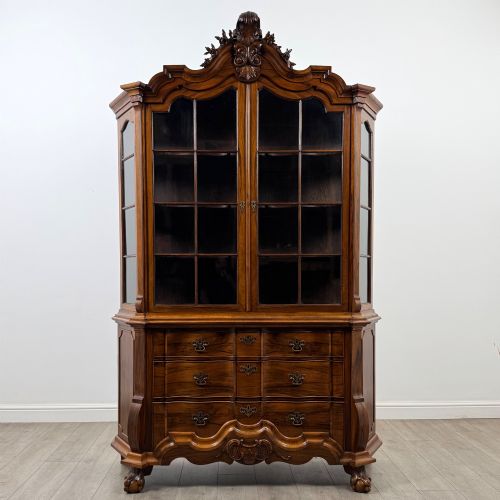
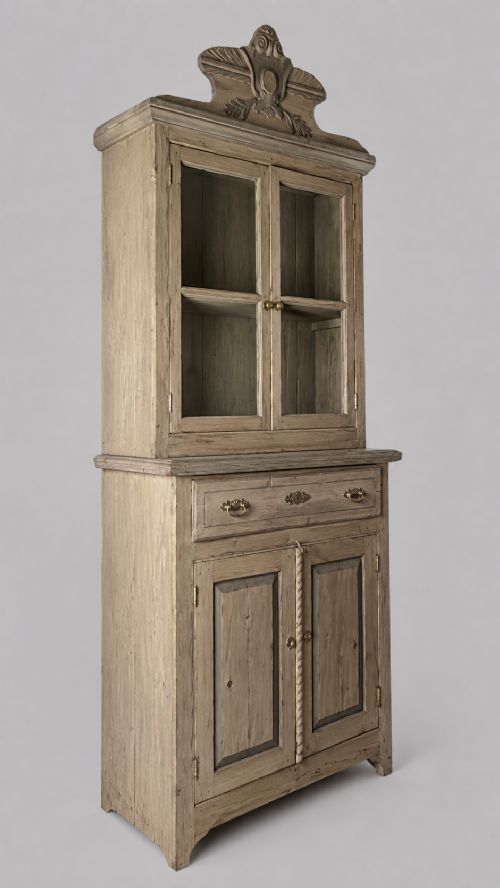
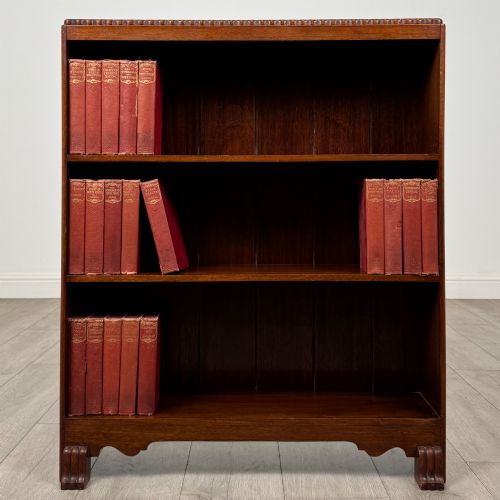
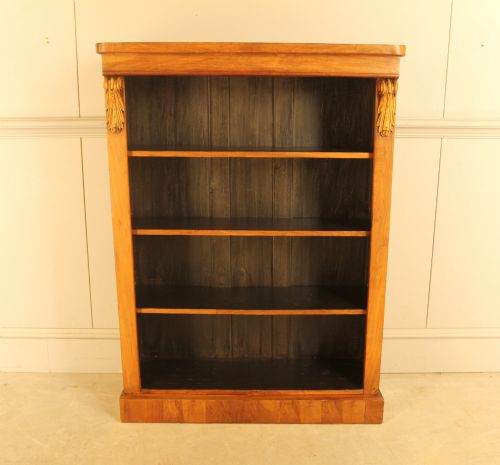
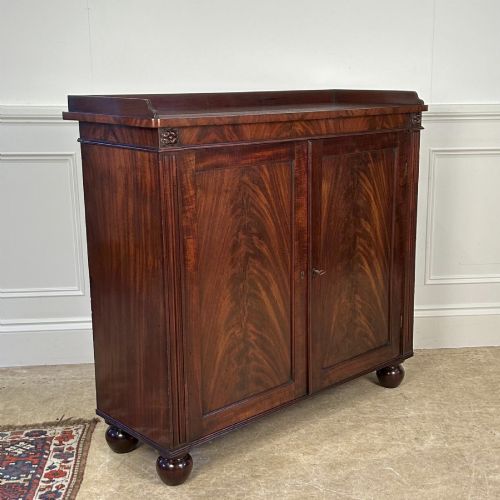
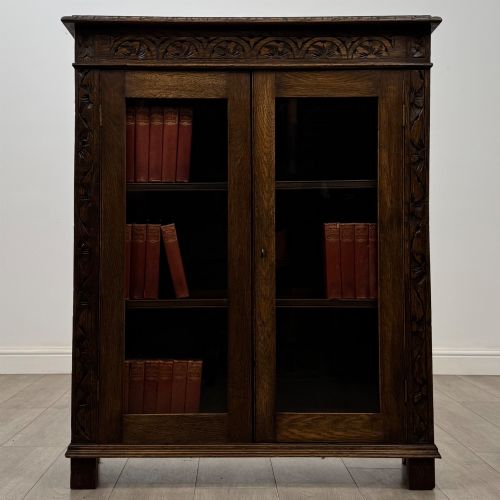
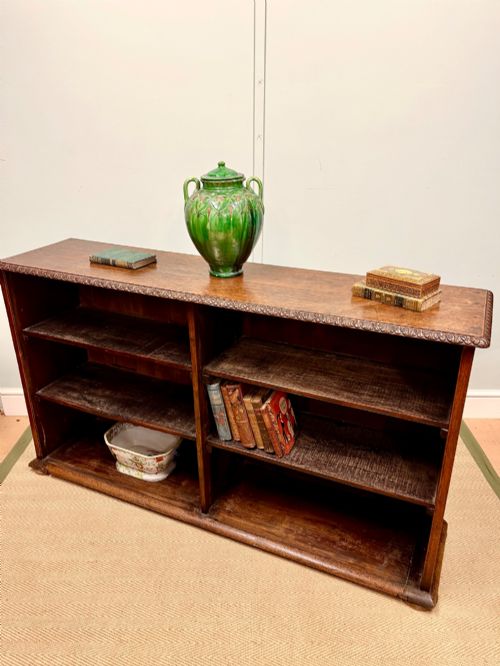
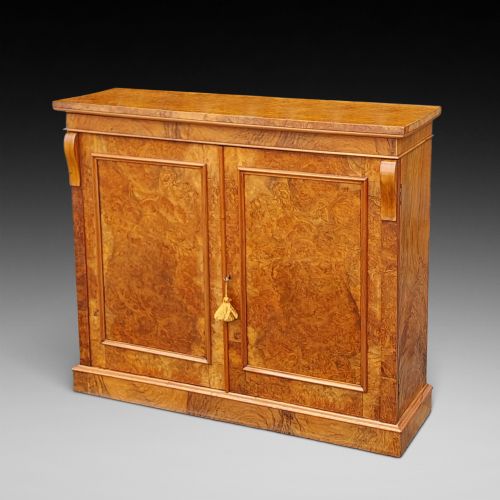
Carved Wooden Bookcase Cabinet
A carved wooden bookcase cabinet brings architectural presence and organised display into a room, uniting timber construction with glazed or open storage.
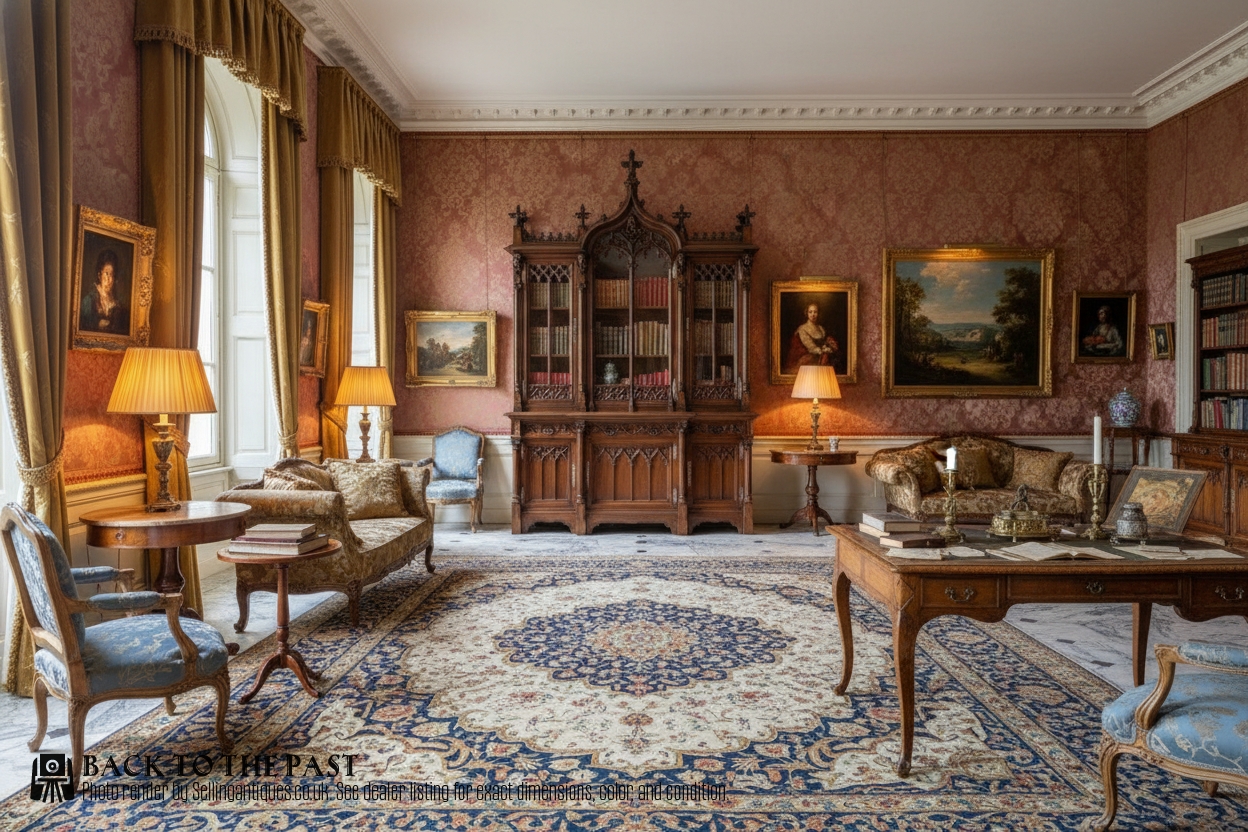
Carved Wooden Bookcase Cabinet
A carved wooden bookcase cabinet combines the function of a library shelf with the enclosed display of a cabinet, frequently seen across nineteenth-century and early twentieth-century periods. These pieces range from compact open pine and oak shelves to large breakfront libraries and glazed vitrines rendered in mahogany, walnut, and elm.
The domestic interior shapes these forms, yielding everything from narrow Edwardian variants to monumental mid-Victorian library cases. Buyers encounter regional stylistic influences spanning French provincial work, Dutch walnut cabinets, and British revival designs.
Open bookcases share space with glazed cupboards, chiffoniers, and secretaire variants on this page. Each piece provides distinct storage configurations tailored for books, display items, and papers.
How they were made
Cabinetmakers constructed these pieces using solid timbers like oak, walnut, mahogany, and elm, frequently applying flame mahogany veneer or satinwood highlights to primary surfaces. Carved ornamentation, turned legs, and inlaid details distinguish the joinery across different workshops.
Glazing bars frame the glass doors of display cabinets and vitrines, whilst interior shelving often incorporates adjustable wooden supports. Brass hardware provides functional hinges and pulls on doors and drawers.
Chimney cupboards offer narrow proportions once designed to utilise awkward spaces beside early fireplaces.
What varies in quality
The calibre of timber selection and depth of hand-carved detail separate standard workshop output from exceptional cabinet work. Choice veneers, substantial solid carcases, and refined architectural proportions elevate certain examples above utility items.
Original hardware, sound glass panels, and the precision of the joinery dictate the enduring integrity of each piece. Superior execution appears in the crispness of the carving and the stability of the timber over time.
Gillows
The Carved Wooden Bookcase Cabinet Glossary
- Breakfront
- A cabinet design where the central section projects forward from the flanking wings, creating a pronounced architectural facade. This layout adds visual depth to large library bookcases.
- Vitrine
- A glass-fronted display cabinet intended for showing porcelain and small objects. These pieces often feature glazed side panels alongside front doors.
- Chiffonier
- A low cabinet equipped with shelves or enclosed storage below, bridging the function of a sideboard and a bookcase. They emerge frequently in nineteenth-century interiors.
- Etagere
- A piece of furniture consisting of a set of open shelves for displaying small ornaments. They utilise slender supports rather than heavy enclosed sides.
- Secretaire
- A cabinet incorporating a pull-down writing drawer fitted with small compartments and pigeonholes. This hybrid form conceals a desk surface within the bookcase structure.
Carved Wooden Bookcase Cabinet: Frequently Asked Questions
How do I choose between open shelves and glazed doors?
Open shelves offer immediate access to books and allow titles to form part of the room's everyday visual texture.
Glazed cabinets protect delicate bindings and collected objects from household dust while maintaining visibility across the collection.
Are the shelves adjustable in antique bookcases?
Many nineteenth-century and Edwardian examples feature movable shelving supported by traditional wooden racks or metal pins.
Some earlier or simpler regional pieces retain fixed shelves determined by the original construction of the carcase.
Where should I place a large breakfront bookcase?
These substantial pieces require a primary wall in a library, study, or generous drawing room where their architectural proportions can breathe.
Sufficient floor space ensures the projecting central section and opening doors function without obstruction.
How do I care for polished wood and veneer surfaces?
Maintain timber finishes by applying quality beeswax periodically and buffing gently with a soft, lint-free cloth.
Protect the wood from direct sunlight and steady heat sources to prevent the timber or delicate veneers from drying out.