


Gothic Arch Cabinet
These gothic arch cabinet examples bring together pointed tracery and timber, offering sturdy storage rooted in centuries of architectural design.
Gothic Arch Cabinet
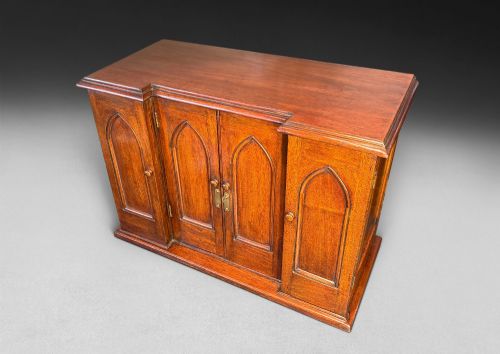
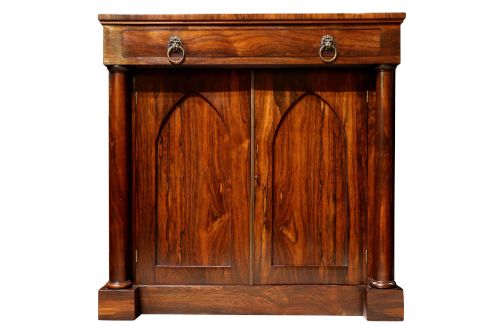
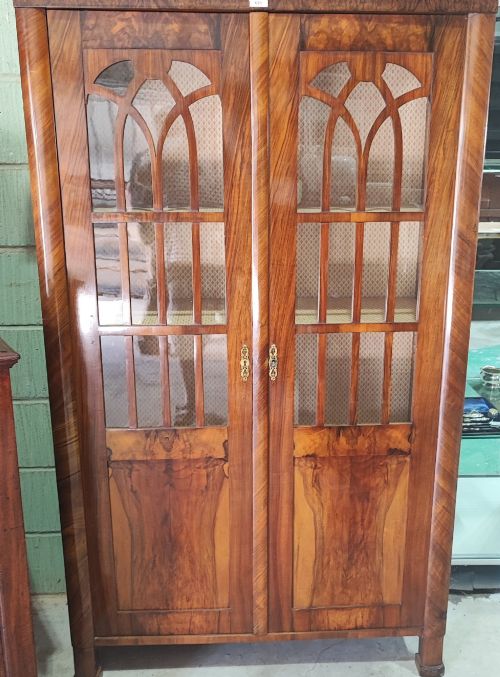
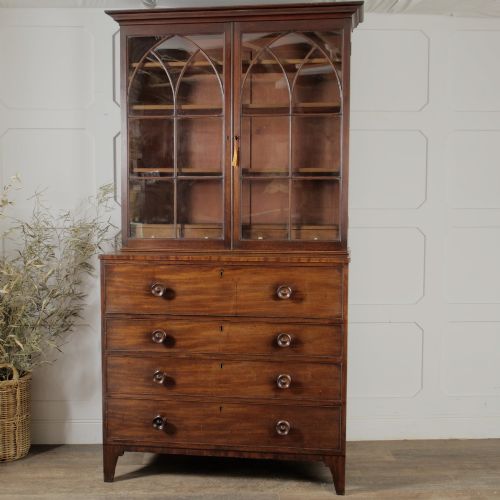
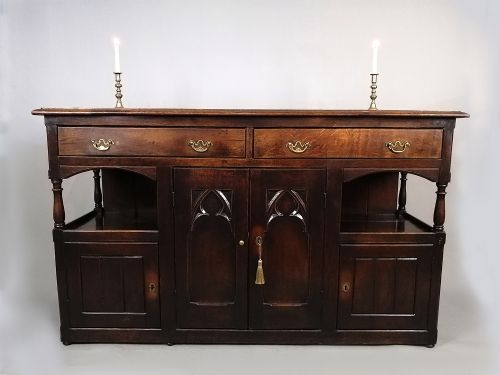
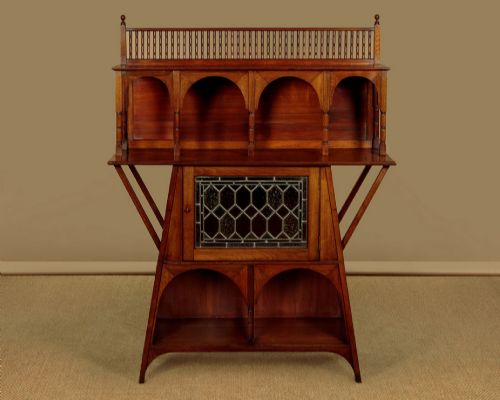
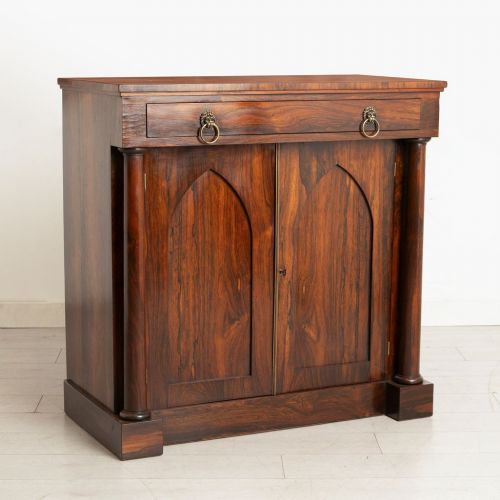
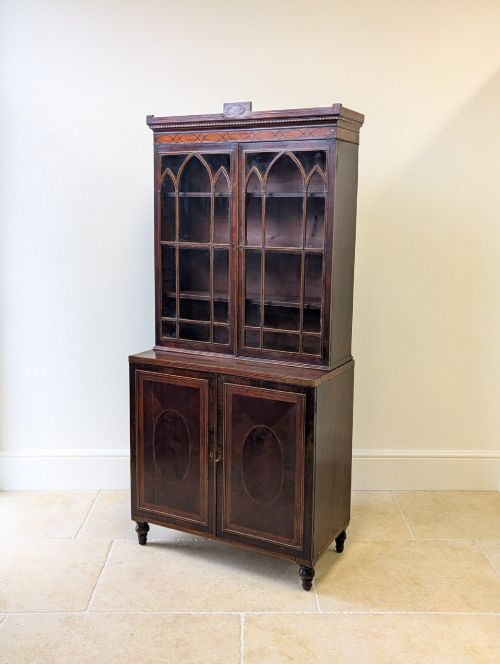
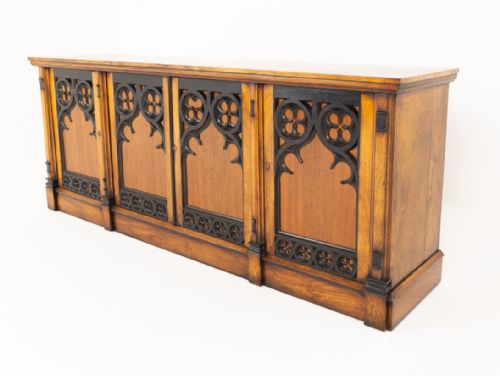
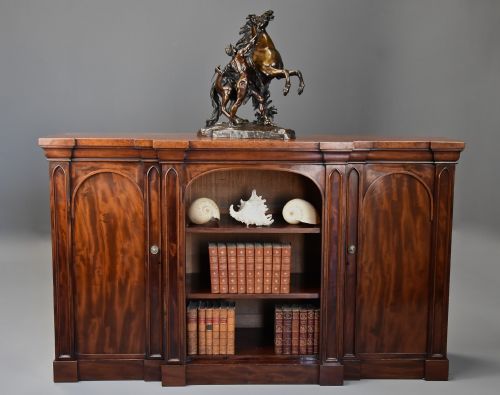
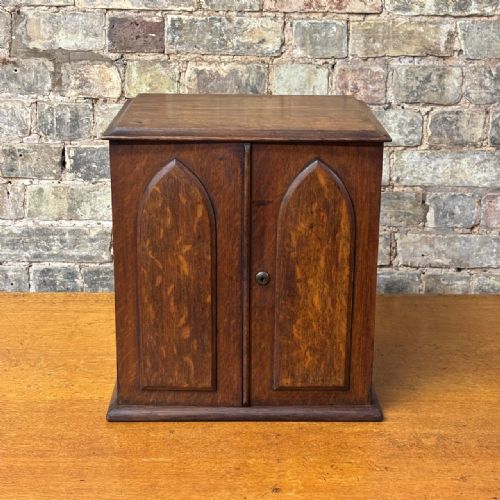
A gothic arch cabinet brings architectural pointed framing into storage furniture, frequently appearing as bookcases, display cabinets, and smaller table-top cupboards. You encounter these most often in nineteenth-century oak, mahogany, and rosewood, spanning periods from the Georgian era through the Victorian Gothic Revival.
The defining feature across these forms is the arched opening or panel door, which echoes medieval stone tracery. Pieces range from grand breakfront bookcases down to modest table cabinets and chiffoniers, reflecting diverse interpretations of Gothic style over successive centuries.
Materials and construction
Cabinet makers relied primarily on timbers such as mahogany, oak, and rosewood, often enhanced with flame mahogany veneer or walnut. These dense woods provided the structural integrity required to support heavy glazed doors and intricate panel work.
Brass fittings, glass panes, and occasionally fabric linings complete the construction of these cabinets. Joinery techniques ensured that large breakfront bookcases and smaller side cabinets remained stable while displaying delicate architectural proportions.
Gothic Arch Cabinet Retail Price Guide 2026
Typical asking prices for gothic arch cabinet among the pieces listed under this phrase on Sellingantiques today, from the lower quarter to the upper quarter. They describe what is for sale here now, not the wider market.
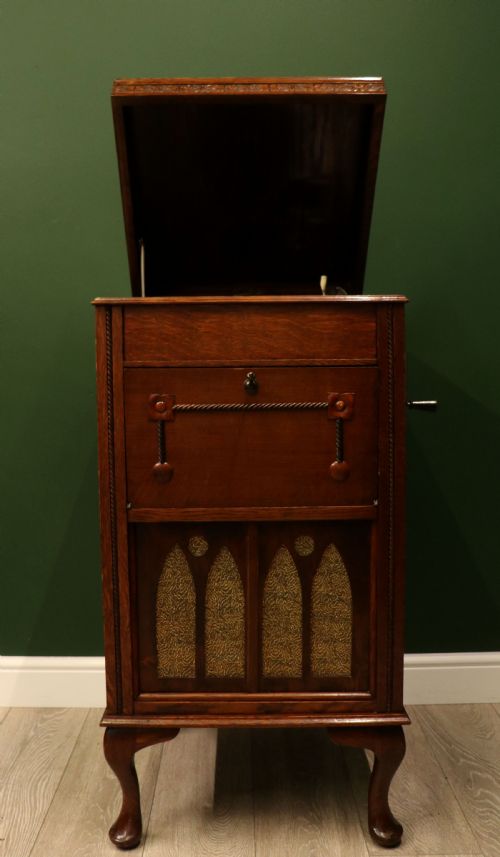
An upright parlour gramophone by U Phone of Leeds sits among the heavy timber cabinets.
Judging cabinet quality
Quality rests upon the crispness of the architectural detailing in the arched woodwork and the selection of timber figures, such as flame mahogany or figured walnut. Superior examples demonstrate precision in joinery where the pointed arches meet the frame.
The integration of original brass hardware and well-fitted glass panes distinguishes finer pieces from later reproductions. The harmony between the heavy timber carcase and the lighter Gothic tracery dictates the overall success of the design.
Liberty & Co.·U Phone of Leeds
The Gothic Arch Cabinet Glossary
- Breakfront
- A cabinet design where the central section projects forward from the flanking wings. This format is common in large nineteenth-century bookcases.
- Tracery
- Architectural stonework ribbing adapted into timber joinery to form pointed arches on cabinet doors. It defines the Gothic Revival style.
- Chiffonier
- A low sideboard or cabinet featuring enclosed cupboards below, developed during the Regency and Victorian periods. They frequently incorporate panelled doors.
- Secretaire
- A cabinet or bookcase containing a pull-down writing drawer fitted with small compartments and pigeonholes. These often date from the Georgian and Regency eras.
- Biedermeier
- A Central European style emphasising clean lines and utilitarian comfort without excessive ornamentation. Walnut examples appear within nineteenth-century furniture.
Gothic Arch Cabinet: Frequently Asked Questions
What periods do these cabinets span?
The pieces draw primarily from the nineteenth century, including Georgian, Regency, and Victorian Gothic Revival eras. Later examples extend into the early twentieth century.
Craftsmen adapted medieval architectural motifs across these periods, resulting in diverse interpretations ranging from formal breakfront bookcases to compact table cabinets.
How were these cabinets used originally?
Larger formats served primarily as libraries for storing books and displaying collections behind glazed doors. Smaller variations functioned as side cabinets, chiffoniers, or tabletop receptacles.
Their enclosed lower cupboards and shelved upper sections provided practical storage tailored to domestic requirements of the period.
How do I identify Gothic Revival features?
Look for pointed arch panels, glazed doors with geometric tracery, and structural elements derived from medieval architecture. These details appear across various timbers including oak, mahogany, and rosewood.
Makers applied these ecclesiastical shapes to domestic furniture to create a solemn, historic aesthetic.
What timbers should I expect to find?
Mahogany and oak dominate the selection, frequently paired with rosewood, walnut, and flame mahogany veneer. Pine also appears in concealed structural components.
Cabinet makers chose these hardwoods for their durability and capacity to hold fine architectural carving.