



Golden Wood Chest of Drawers
A golden wood chest of drawers brings warmth and striking grain patterns to a room, ranging from pale satinwood to deep mahogany.
Golden Wood Chest of Drawers
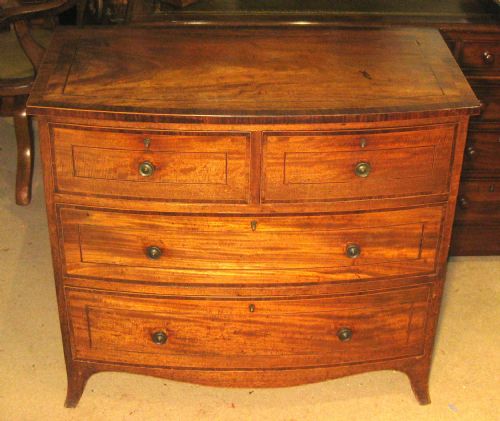
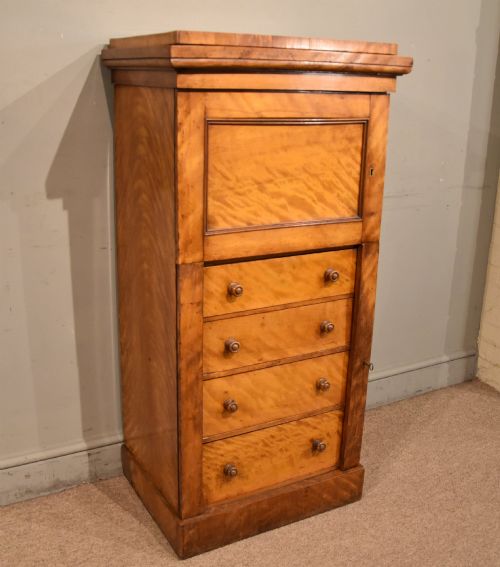
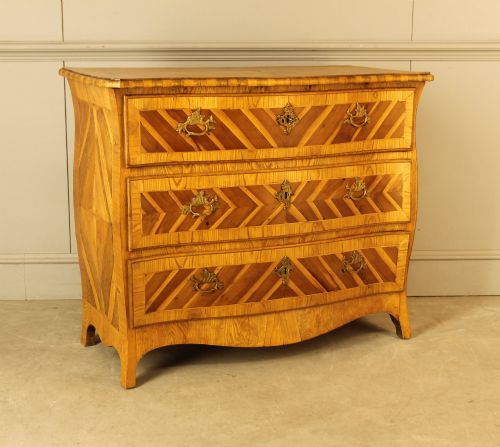
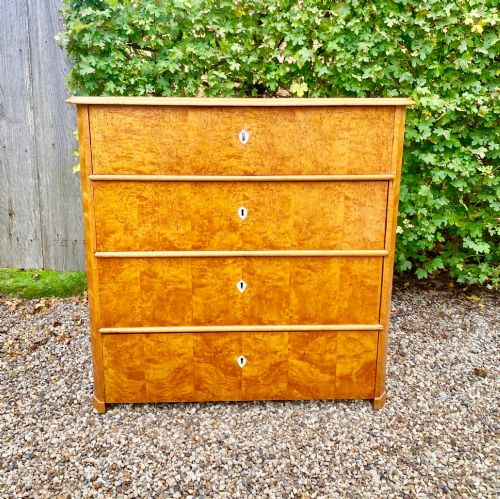
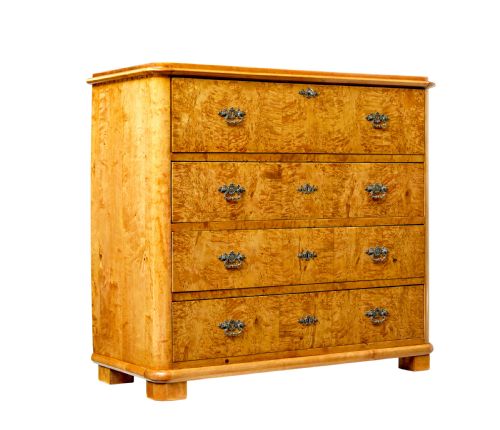
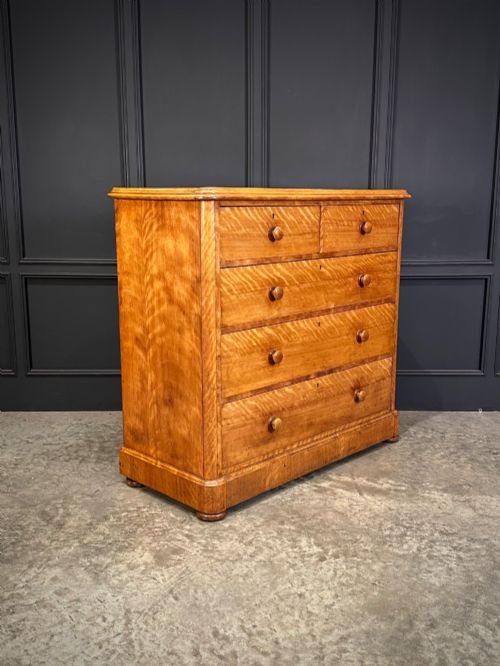
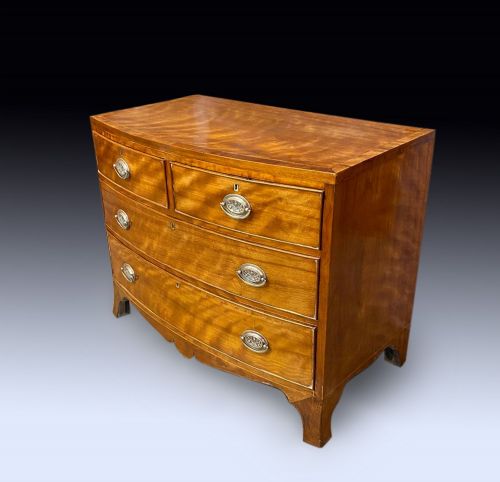
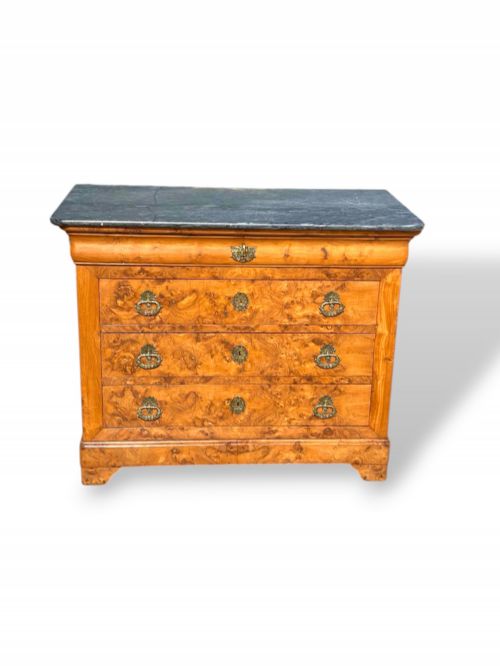
The selections on this page are dominated by 19th-century Swedish birch chests alongside Georgian, Victorian, and Edwardian examples in satinwood and burr elm. Forms range from straight-drawer chests and bow fronts to commodes, Wellington chests, and secretaire variants, offering both compact bedside options and imposing tallboys.
How they were made
Cabinet makers utilised choice timbers such as satinwood, birch, and mahogany, frequently selecting burr, tiger, or bird's-eye variations to create visually engaging surfaces. These decorative veneers and solid woods were carefully arranged to highlight natural figuring.
Construction often incorporated brass hardware, glass, bone, and metal details to complement the timber carcases. Drawers were fitted precisely into frames, and surfaces received polished finishes that enhanced the warm tones of the wood.
Keep your candles ready with a Victorian dressing chest thoughtfully fitted with its own candle sconces.
What varies in quality
The visual impact of a golden wood chest of drawers largely depends on the choice of timber and the ambition of its grain, where highly figured tiger birch, burr elm, or meticulously matched satinwood elevates a piece above plain surfaces. Master cabinet makers deployed these veneers with deliberate symmetry, ensuring the natural patterns animate the entire facade.
Execution of form and detail also distinguishes standard examples from finer works, visible in sophisticated silhouettes like bombe curves, bow fronts, or intricate inlay work. The integration of period-appropriate brass handles and clean structural proportions marks the difference between utilitarian storage and exceptional design.
Harris Lebus of Tottenham·Edward Barnsley
The Golden Wood Chest of Drawers Glossary
- Satinwood
- A dense, durable timber yielding a lustrous, golden-yellow finish that became highly fashionable for fine cabinet making during the Georgian and Edwardian periods. It takes a high polish and accepts delicate stringing and inlay exceptionally well.
- Bow front
- A convex, outwardly curved cabinet front that softens the silhouette of a chest of drawers. This design element requires precise woodworking to shape drawers and frames harmoniously.
- Wellington chest
- A tall, narrow chest of drawers typically secured by a hinged vertical locking sidebar fastened with a key. Originating in the 19th century, this form maximises vertical storage space with a compact footprint.
- Commode
- A low chest of drawers or cabinet, often of French or Swedish origin, designed with decorative proportions. These pieces frequently feature prominent veneers and curved or bombe profiles.
- Secretaire
- A chest of drawers incorporating a fitted writing drawer that pulls down to reveal a leather-lined writing surface and small pigeonholes. This dual-purpose form combines everyday storage with a compact bureau.
Golden Wood Chest of Drawers: Frequently Asked Questions
What is a golden wood chest of drawers?
A golden wood chest of drawers is a storage piece constructed from naturally pale or honey-toned timbers such as satinwood, birch, yew, and mahogany. These items highlight luminous grain patterns and range from Georgian bow fronts to 19th-century Swedish commodes.
Buyers choose these pieces to introduce warmth, elegance, and practical storage into bedrooms, living rooms, and hallways. The variety of woods ensures that each chest possesses a distinct character and surface texture.
How do I identify Swedish birch chests?
Swedish birch chests typically date from the 19th century and are easily recognised by their pale, silvery-gold timber, often featuring striking tiger or flame grain figures. Common forms include clean straight drawers, caddy tops, and secretaire compartments.
These pieces reflect Scandinavian neoclassical and Biedermeier design sensibilities, prioritising uncluttered lines and exceptional wood selection. They bring a luminous, airy quality to interior spaces compared to darker native hardwoods.
Where were satinwood chests used?
Satinwood chests were primarily commissioned for fashionable Georgian and Victorian bedchambers, dressing rooms, and formal drawing rooms. Their bright, reflective surfaces were prized for brightening rooms lit by candlelight or early gas lamps.
Over time, these chests transitioned into versatile statement pieces suitable for modern hallways and sitting rooms. Their refined appearance pairs well with both period antiques and contemporary minimalist interiors.
How do I care for antique wood furniture?
Caring for antique golden wood involves keeping pieces away from direct sunlight and strong heat sources, which can dry out timber and fade delicate veneers. Regular dusting with a soft, dry cloth maintains the polished finish without building up residue.
Applying a traditional beeswax polish sparingly helps nourish the wood and preserve its natural lustre. Maintaining stable room humidity prevents the timber from expanding or contracting excessively.